
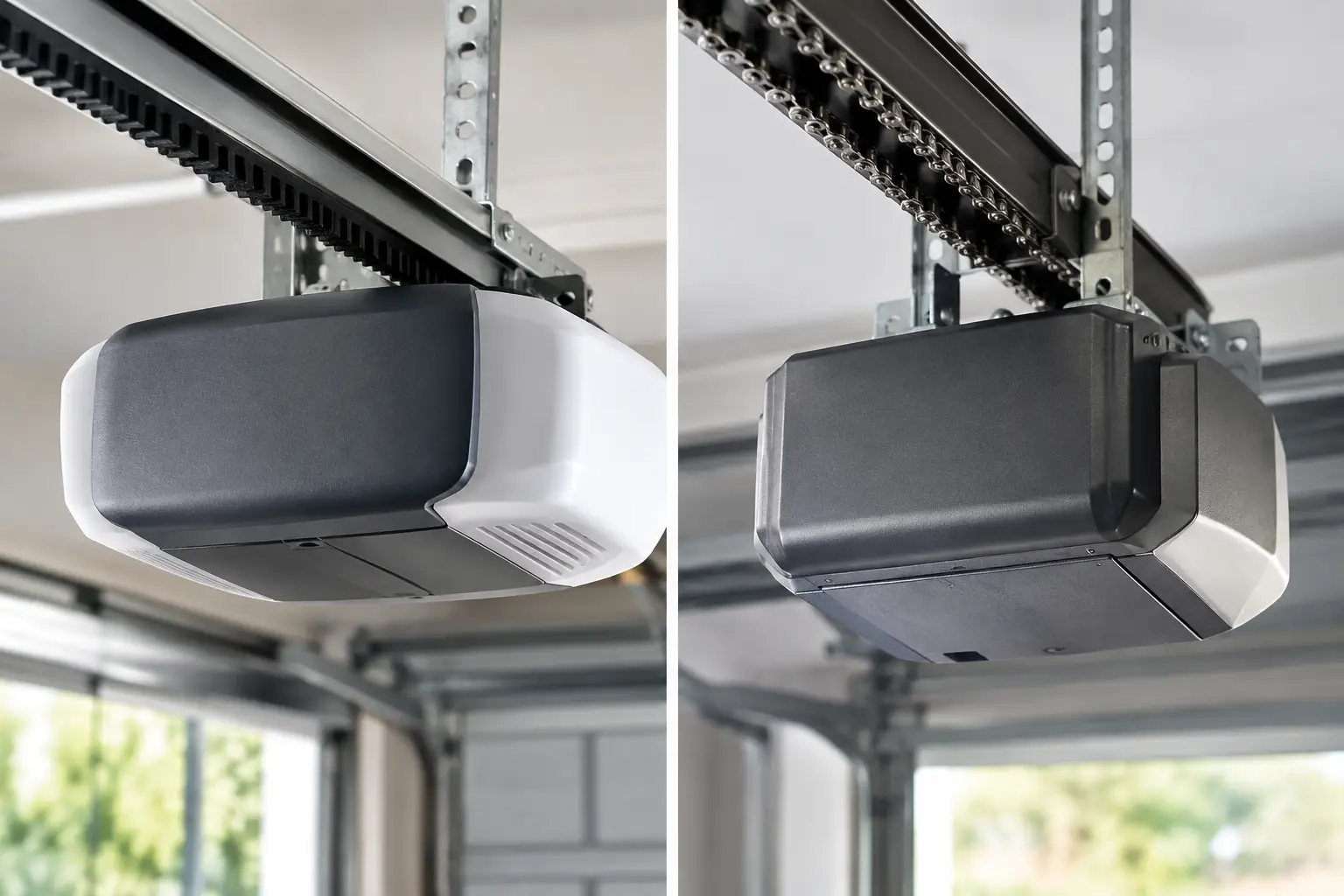
A garage door opener can work perfectly for years, then suddenly become the loudest thing in the house. When replacement time comes, the belt drive versus chain drive decision usually comes down to one practical question: do you want the lowest upfront price or a quieter daily operation? Both types can safely lift a properly balanced garage door. The right choice depends on where your garage sits, how often the door runs, and the condition of the door itself.
For Longmont homeowners, that decision matters most when there is a bedroom, nursery, office, or living space directly above or beside the garage. A noisy opener may not be a safety problem, but it can become a daily annoyance fast. On the other hand, a dependable chain-drive unit is often a smart value for a detached garage or a rental property where noise is less of a concern.
How Garage Door Opener Drives Work
The drive system is the part of the opener that moves the trolley along the rail to open and close the door. It does not do all the lifting by itself. Springs counterbalance much of the door's weight, which is why a properly balanced door is critical regardless of which opener you choose.
A chain-drive opener uses a metal chain, similar in appearance to a bicycle chain. The motor turns the chain, and the chain moves the trolley. A belt-drive opener works in the same general way but uses a reinforced rubber belt instead of a metal chain. Most modern belts are built with steel or fiberglass cords inside, so they are much stronger than they look.
The door, springs, rollers, hinges, track alignment, and opener all affect how the system sounds and performs. Replacing an opener will not solve a door that is binding in the track, has worn rollers, or has a broken spring.
Belt Drive Versus Chain Drive: The Main Differences
The biggest difference is noise. A belt drive runs more quietly because the belt absorbs vibration and does not create the metal-on-metal sound of a chain moving over sprockets. You will still hear the door rollers, hinges, and motor, but the overall operation is usually smoother and less disruptive.
Chain-drive openers are louder, especially with older steel rollers or a heavy door. That does not mean chain drives are poor-quality equipment. They have been used for decades because they are durable, straightforward, and dependable when installed correctly. For many homeowners, the extra sound is a fair trade for a lower purchase price.
Cost is the other major difference. Chain-drive openers usually cost less than comparable belt-drive models. Belt-drive units often carry a higher initial price, although the gap is not always huge. If your garage is attached to the home, paying more for a quieter opener can be worth it every time someone leaves early or comes home late.
When a Belt-Drive Opener Makes Sense
A belt-drive opener is usually the better fit for an attached garage, especially when living space sits above it. If a child naps over the garage, someone works from a nearby home office, or you regularly use the door early in the morning, reduced noise is a real benefit rather than a luxury.
Belt drives are also a good choice for homeowners replacing an older, rattling opener and looking for a noticeable improvement. The operation tends to feel smoother and quieter, particularly when paired with nylon rollers and a well-maintained garage door.
Modern belt-drive systems handle standard residential doors very well. The old idea that a chain drive is always stronger is too simple. The proper opener should be selected based on the door's size, weight, construction, and usage. A heavy insulated door, wood door, or oversized door may need a specific motor capacity or rail setup, whether it uses a belt or chain.
A belt-drive opener may not be the best value if the garage is detached and noise does not matter much. In that setting, spending extra for quiet operation may not solve a problem you actually have.
Belt Drive Pros and Trade-Offs
Belt-drive openers are quieter, smoother, and well suited to attached garages. They generally require less visible lubrication than a chain system. Their main trade-off is cost: the opener and replacement belt can be more expensive than chain-drive parts.
Belts are durable, but they are still components that should be inspected during regular garage door service. Extreme wear, improper tension, and a door that is hard to move can shorten the life of any drive system.
When a Chain-Drive Opener Is the Better Choice
Chain-drive openers make sense when you want proven performance at a practical price. They are often a strong option for detached garages, workshops, sheds with overhead doors, and homeowners who want to keep replacement costs under control.
A chain-drive model can also be a good fit for a frequently used garage door, provided the opener is properly matched to the door and maintained. The chain itself is tough, and replacement parts for common models are widely available. Some homeowners simply prefer the familiar design because it is easy to understand and has a long track record.
The downside is the sound. A chain drive can produce vibration that travels through the garage framing, especially when the opener is mounted to loose supports or the door hardware is worn. If the garage shakes, bangs, or rattles during operation, the issue may be more than the chain. A technician should inspect the mounting, rail, rollers, hinges, springs, and door balance before assuming the opener is the only problem.
Chain Drive Pros and Trade-Offs
Chain-drive openers are usually less expensive, durable, and a sensible choice where noise is not a priority. They may need periodic lubrication and tension checks, depending on the manufacturer and model. They are not automatically better for every heavy door, so avoid choosing one based on the chain alone.
What Matters More Than the Drive Type
Homeowners often focus on belt versus chain and overlook the parts that have the biggest effect on safety and opener life. A garage door should move smoothly by hand when disconnected from the opener. If it feels heavy, drops quickly, sticks, or takes real effort to lift, the springs or other door components may need service.
An opener is designed to guide a balanced door, not force an unbalanced one open. Continuing to run an opener against a failing spring, damaged rollers, bent track, or binding door can strip gears, damage the rail, or burn out the motor. It can also create a safety issue for everyone using the garage.
For a replacement opener, look beyond the drive system. Battery backup is valuable during a power outage. Motion-controlled lighting can improve visibility, and built-in camera or app features may be useful for homeowners who want to check whether the door is closed. These options are helpful, but reliable installation and a properly working door come first.
Choosing the Right Opener for a Longmont Home
If quiet operation matters, choose a belt-drive opener. It is usually the better investment for attached garages and homes with rooms near the garage. If budget and dependable function are the priorities, a chain-drive opener remains a solid choice, particularly for detached garages.
The best answer is sometimes neither option until the door itself is inspected. An opener replacement estimate should account for the door's condition, weight, spring system, rail needs, safety sensors, and mounting hardware. That is how you avoid paying for a new opener only to keep dealing with the same loud or unreliable door.
Repair Bro's provides garage door repair and opener replacement guidance for Longmont homeowners, with free estimates before work begins. If your current opener is noisy, unreliable, or struggling to lift the door, getting the full system checked can make the decision clearer. A quiet belt drive or a hardworking chain drive will both perform better when the garage door they serve is balanced, secure, and ready for daily use.