
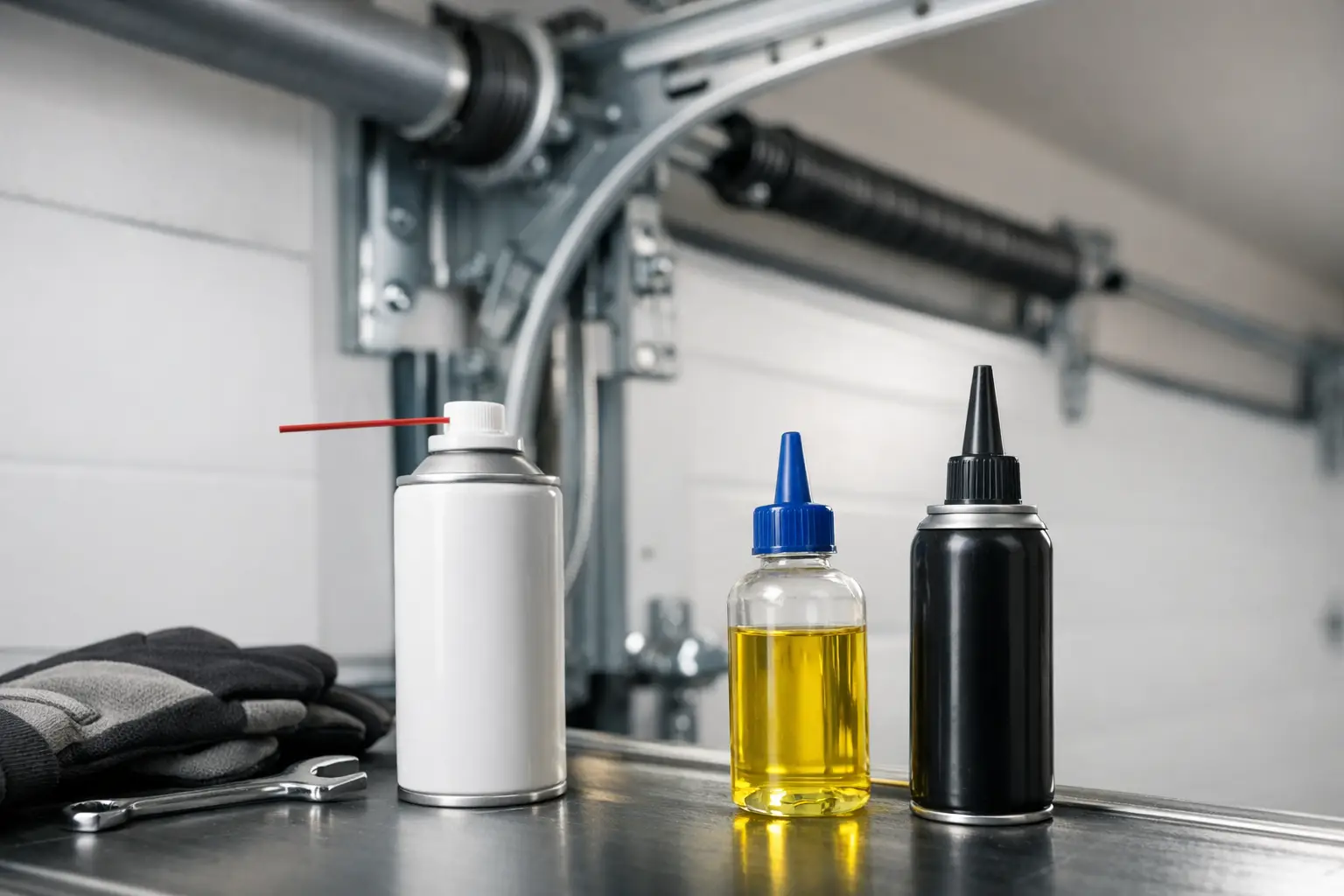
A garage door that groans, squeaks, or shudders every time it opens usually needs attention before it needs a major repair. Choosing the best garage door lubricant types can quiet normal metal-on-metal movement, reduce wear, and help your door run more smoothly through Longmont's cold winters and dry, dusty stretches.
The key is using the right product on the right part. A can of general-purpose spray may make the noise disappear for a day or two, but it can also collect dirt, wash away quickly, or leave the wrong parts slick. Garage doors have heavy moving components, and some of them should never be handled casually.
Best Garage Door Lubricant Types for Each Part
For most residential garage doors, silicone spray and white lithium grease are the two most useful choices. Products labeled specifically for garage doors are usually a good bet because they are designed to cling to moving hardware without becoming a sticky mess.
Here is where each type works best:
- Silicone-based garage door spray works well on hinges, metal rollers, bearing plates, and the torsion spring. It resists moisture and handles changing temperatures well, which matters in Colorado.
- White lithium grease is a thicker lubricant suited to metal hinges, roller stems, and bearings. It stays in place longer than thin spray lubricants, but a little goes a long way.
- Synthetic garage door lubricant is often sold in an aerosol can with a straw applicator. It is a convenient all-purpose option for homeowners because it sprays into tight spots and is made for door hardware.
- Dry graphite lubricant can be useful for a sticky key lock, but it is generally not the first choice for the door's main moving hardware. It can be messy and does not provide the same lasting protection on exposed parts.
For homeowners who want one product, a quality silicone or synthetic garage-door-specific spray is usually the simplest choice. If hinges and metal roller stems are especially dry or noisy, white lithium grease can provide longer-lasting coverage.
Silicone Spray: The Best All-Around Option
Silicone spray is popular because it leaves a light, water-resistant coating without the heavy buildup associated with some greases. It works especially well when a garage door has started squeaking after wet weather, snow, or wide temperature swings.
Use it sparingly on the pivot points of each hinge, the roller bearings or roller stems, and the center bearing plate above the door. If your door uses metal rollers, lubricating the bearings can noticeably reduce noise. If it has nylon rollers, do not spray the nylon wheel itself. Lubricate only the sealed bearing or metal stem if applicable.
Silicone is also a good choice for the torsion spring, but this is one area where caution matters. Spray only a light coat along the spring coils while the door is closed. Do not touch, loosen, adjust, or attempt to remove the spring. Garage door springs are under extreme tension and can cause serious injury.
White Lithium Grease: Good for Heavy Metal Contact
White lithium grease is thicker than silicone and is useful when metal parts need a more durable coating. It is a solid choice for hinges that creak under the door's weight, steel roller stems, and exposed bearings.
The downside is that too much grease attracts dust and grit. In a garage, that buildup can turn into a black paste that makes components wear faster. Apply a small amount, operate the door a few times, and wipe away any excess that squeezes out.
White lithium grease is not the right product for the tracks. More on that in a minute.
What Not to Lubricate on a Garage Door
Many noisy garage doors get worse because lubricant is sprayed everywhere. The tracks are the most common mistake. Garage door tracks should be clean, not greasy. Lubricant in the vertical and horizontal tracks catches dirt, sand, and road dust, creating a sticky surface that can interfere with roller movement.
Wipe tracks with a clean rag and a mild household cleaner if needed. Then dry them thoroughly. The rollers should roll inside clean tracks without needing a coating on the track itself.
Also avoid lubricating the belt on a belt-drive opener. Belts do not need lubricant, and adding it can cause damage or attract debris. If you have a chain-drive opener, the chain may need a light lubricant approved for opener chains, but check the opener manual first. Some newer openers require very little routine maintenance.
Do not use motor oil, cooking oil, or thick automotive grease. These products may seem handy, but they can drip, collect grime, and stain the floor. Standard WD-40 is also not a lasting garage door lubricant. It can help loosen a stuck fastener or displace moisture, but it is primarily a cleaner and water displacer, not the final lubricant for hinges and rollers.
How to Lubricate Your Garage Door Safely
Start with the garage door closed and the opener unplugged. This keeps someone from accidentally running the door while you are working around the hardware. If the opener is hardwired, turn off the circuit at the breaker.
Inspect the door before spraying anything. Look for loose hinge screws, cracked rollers, bent tracks, frayed cables, or gaps in the torsion spring. Lubricant cannot fix worn or damaged parts. In fact, a suddenly noisy door may be warning you about a roller that is failing or a hinge that is starting to crack.
Apply lubricant to each hinge pivot where the hinge sections move. Treat the roller bearings or stems next, followed by the end bearing plates and center bearing plate. Add a light coating to the torsion spring coils if the spring is exposed and appears dry. Work in short bursts rather than soaking the parts.
Afterward, reconnect power and run the door through two or three full open-and-close cycles. Listen for changes. A properly lubricated door should sound smoother, but it should not jerk, shake, scrape, or slam. Those symptoms point to a mechanical issue rather than a maintenance issue.
How Often Should You Lubricate a Garage Door?
Most Longmont homeowners can lubricate garage door moving parts about twice a year. A good schedule is once in the spring and once before winter. If your garage is used heavily, exposed to windblown dust, or opened several times a day, you may need to inspect and lubricate it more often.
Noise alone is not always the best schedule. Check the door whenever you notice slower operation, squeaking hinges, grinding rollers, or visible dryness on the spring and bearings. Catching small issues early may help prevent a door from getting stuck when you are trying to leave for work or get the car inside during a storm.
When Lubricant Will Not Solve the Problem
Lubrication helps normal wear, but it will not correct a door that is out of balance, off track, or struggling to lift. If the opener strains, the door feels unusually heavy, or one side hangs lower than the other, stop using it until the issue is checked.
A loud bang from the garage is often a broken torsion spring. A door that closes crookedly may have a damaged cable, roller, track, or hinge. These are not DIY lubrication jobs. Springs and cables can release stored force without warning, and repairs should be handled by a trained garage door technician.
If your door is noisy but still working, use the right lubricant in the right places and keep the tracks clean. If it is noisy, uneven, slow, or unreliable, get it inspected before a small hardware problem turns into a door that will not open at all. Repair Bro's provides garage door repair in Longmont with free estimates, so homeowners can get a clear answer before committing to repairs.