
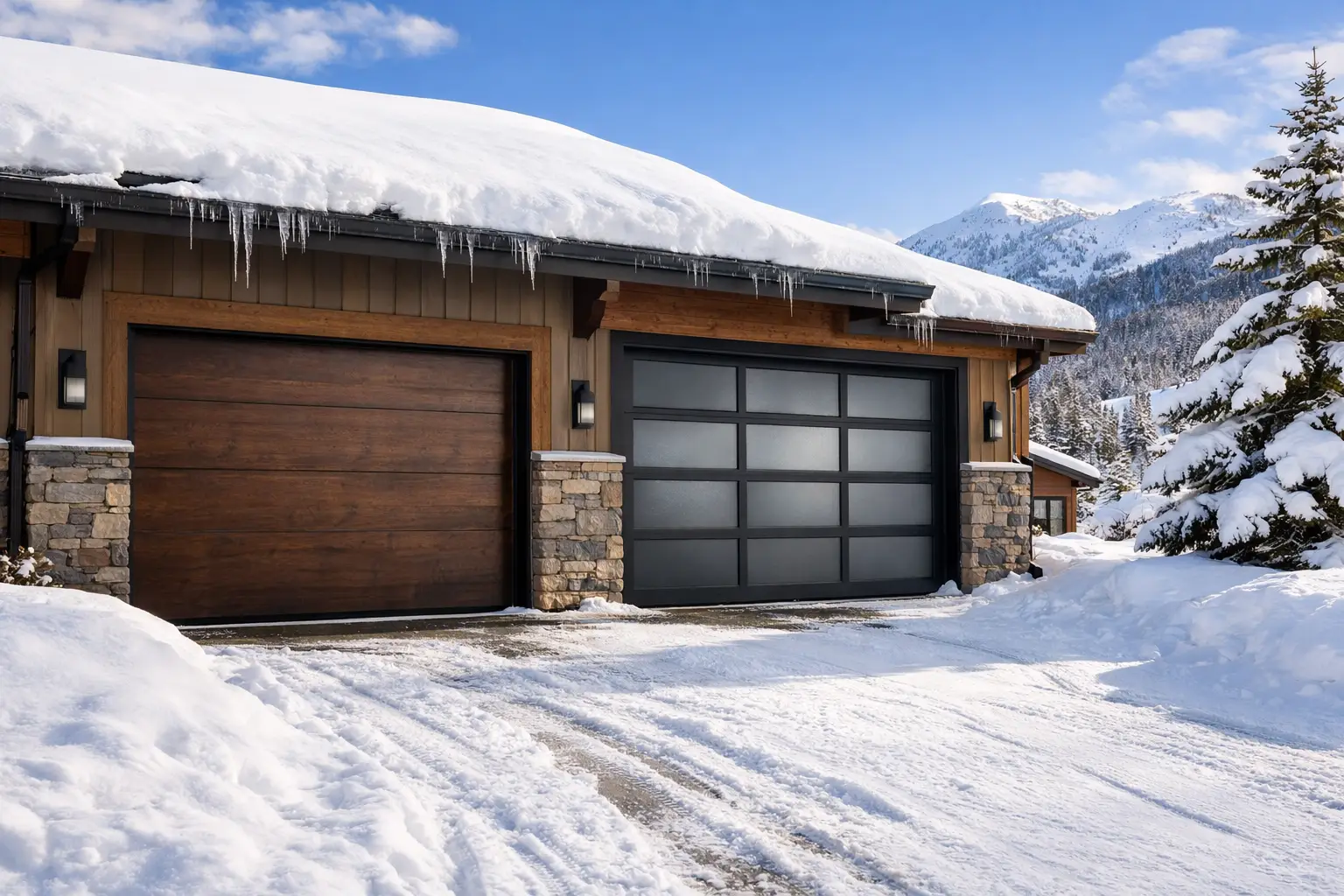
A Longmont garage door can work perfectly in October and become a daily headache after the first heavy snow. Ice builds along the bottom seal, cold air gets into the garage, and an older door can struggle to move when temperatures drop. The best garage doors for snow are built for insulation, moisture resistance, dependable hardware, and a tight seal at the floor.
For Colorado homeowners, the right choice is usually not the fanciest door. It is a properly sized, insulated steel door with quality weatherstripping and a garage door system that has been installed and adjusted correctly. That combination handles snow, cold nights, wind, and the freeze-thaw cycles that cause many winter garage door problems.
What Snow Actually Does to a Garage Door
Snow does not usually sit on the garage door long enough to create a major weight issue. The bigger problem is what happens around it. Drifting snow packs against the bottom section, melts during the day, then freezes overnight. That can bond the bottom seal to the concrete and make the door feel stuck when the opener tries to lift it.
Moisture also works its way into worn seals, rust-prone hardware, and unprotected steel edges. Cold temperatures can make old rollers noisy and stiff. If the door is already out of balance or the springs are worn, winter weather often exposes the problem fast.
A good winter-ready door needs to keep cold air and water outside while continuing to move smoothly. That means looking beyond the panel style and focusing on construction, insulation, seals, and hardware.
Best Garage Doors for Snow: Insulated Steel Doors
For most homes in Longmont and nearby areas, an insulated steel sectional door is the practical choice. Steel holds up well to wet snow and temperature swings, does not rot like untreated wood, and is available in a wide range of styles and price points.
Look for a door with two layers of steel and an insulated core. Three-layer construction, with steel on both sides of the insulation, is even better for attached garages, garages used as workspaces, or homes where a bedroom sits above the garage. It provides a sturdier feel and helps reduce outside noise as well.
Steel does have one trade-off: it can dent if it is hit by a vehicle, sports equipment, or heavy tools. A heavier-gauge steel skin can help, but it will cost more. For most homeowners, a quality insulated steel door offers the best balance of price, durability, and winter performance.
Choose insulation based on how you use the garage
An uninsulated door may be fine for a detached garage used only for parking and storage. But in a Colorado winter, it will do little to stop cold air from entering the space. That can make the garage uncomfortable and increase heat loss from an attached home.
Insulated doors are rated by R-value. Higher numbers generally mean better resistance to heat transfer, but the door is only part of the picture. A high R-value will not help much if the bottom seal is cracked or gaps are visible along the sides.
For an attached garage, many homeowners find a mid-range to high R-value door worthwhile. If the garage is conditioned, used as a workshop, or located below living space, stronger insulation makes even more sense. If budget is tight, prioritize a well-built insulated door with complete weather seals over decorative upgrades.
Polyurethane and polystyrene insulation are both useful
Polyurethane insulation is injected into the door panels and expands to fill the space. It tends to offer higher R-values in a thinner panel and can make the door more rigid. It is often the better choice for homeowners who want maximum insulation and a solid-feeling door.
Polystyrene insulation comes in rigid panels. It can still provide worthwhile insulation at a lower cost, especially when replacing an older uninsulated door. The right option depends on the door model, your garage setup, and how much time you spend in the space during winter.
Weather Seals Matter as Much as the Door
A garage door can have great insulation on paper and still let in snow, wind, and cold air through a worn seal. In snowy conditions, the bottom seal is especially important. It needs to stay flexible in cold weather and make full contact with the concrete when the door closes.
Side and top weatherstripping also deserve attention. These vinyl seals close the gap between the door and the frame. If they are brittle, cracked, flattened, or pulled away from the trim, wind-driven snow can get into the garage.
The threshold itself matters too. A damaged, uneven, or sloped garage floor can leave gaps under the door. A new bottom seal may improve the problem, but it cannot correct a major concrete issue by itself. An inspection can determine whether the issue is the seal, the door adjustment, or the floor.
Avoid Wood Doors Unless You Are Ready for the Upkeep
Wood garage doors can look great on Colorado homes, but they are rarely the easiest choice for snow and moisture. Wood needs regular painting or staining, and neglected finishes can allow water in. Over time, that may lead to swelling, warping, cracking, or rot.
A wood-look steel door gives many homeowners the appearance they want without the same maintenance demands. It is a sensible option if curb appeal matters but you also want a door that can handle wet weather with less effort.
Fiberglass and aluminum doors can work in certain situations, but they are not always the top choice for a snow-country garage. Aluminum is lightweight and corrosion-resistant, yet it can dent easily and may not insulate as well as a quality steel door. Fiberglass resists moisture but can be more limited in availability and repair options.
Do Not Ignore the Opener, Springs, and Rollers
A new insulated door will not solve a system problem. If the door is hard to lift by hand, shakes on the tracks, makes grinding noises, or reverses when closing, the opener may be working against a mechanical issue.
Garage door springs carry most of the door's weight. When springs weaken or break, the opener is not designed to do the heavy lifting alone. Cold weather can make a worn spring fail at the worst time, leaving your vehicle stuck inside or your garage unsecured.
Nylon rollers are often quieter than old metal rollers and can improve movement on a properly maintained system. Tracks should be clean and aligned, hinges should be in good shape, and moving parts need the correct garage door lubricant. Avoid spraying thick grease on the tracks. It collects dirt and can create more trouble.
If ice has frozen the door to the ground, do not keep pressing the opener button. That can damage the bottom seal, strain the opener, or bend a section. Carefully clear loose snow and ice around the base first. If the door still will not move, it is better to have the system checked than force it.
Window and Style Choices for Winter
Windows bring natural light into a garage, but they are a trade-off. Basic glass can lose more heat than insulated door panels. If you want windows, choose insulated glass when possible and consider placing them in the top section so they provide light without reducing privacy.
Carriage-house designs, flush-panel doors, and traditional raised-panel doors can all perform well in snow. Style does not determine winter durability nearly as much as material, insulation, and installation quality. Pick a design that fits your home, then make sure it has the construction needed for your garage.
Color is mostly a visual choice, though dark colors can show salt residue and winter grime more easily. Whatever finish you choose, rinse off road salt and dirt when conditions allow. It helps protect the door's finish and keeps hardware cleaner.
When It Is Time to Replace Instead of Repair
A repair is often the right call when the issue is a worn seal, damaged roller, failed spring, or misaligned sensor. But replacement may be the smarter long-term move when an older door is uninsulated, badly rusted, sagging, repeatedly coming off track, or showing major panel damage.
Homeowners also commonly replace a door after realizing how much cold air is coming through it. If the garage connects directly to the house, a better-insulated door can make the space more usable and reduce the drafty feeling in rooms nearby.
Repair Bro's provides garage door repair and replacement help for Longmont homeowners, including free estimates when you need a clear answer on whether a repair or new door makes more sense. Before the next snowstorm, check the bottom seal, listen for new noises, and make sure your door opens and closes without hesitation. A small issue is much easier to handle before ice and cold turn it into a stuck garage door.