
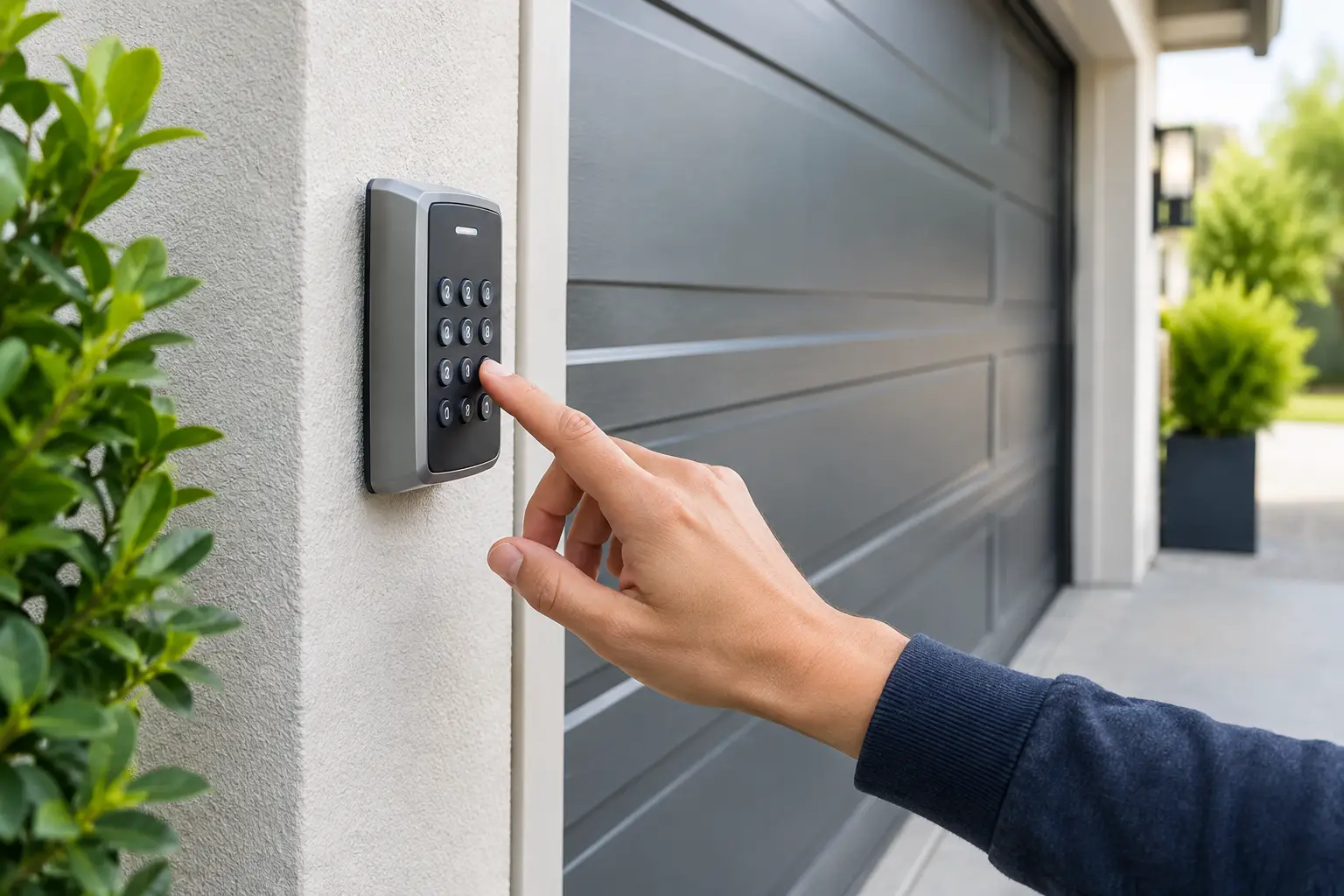
A garage keypad should let you leave for a bike ride, walk the dog, or send the kids home from school without handing out remotes or hiding a key under a rock. The best garage keypads make that simple. The wrong one can leave you standing in the driveway punching buttons while the door refuses to move.
For Longmont homeowners, the first rule is simple: buy a keypad that works with your existing opener. Brand, frequency, age, and programming technology all matter. A keypad may look like a quick do-it-yourself upgrade, but compatibility is what decides whether it is actually useful.
What Makes the Best Garage Keypads Worth Buying?
A good garage keypad is not necessarily the one with the most buttons or the flashiest design. It is one that reliably communicates with your garage door opener, holds up through Colorado weather, and gives your household secure, easy access.
Start with compatibility. Many openers use brand-specific radio systems, meaning a keypad designed for one brand may not operate another. Some universal models work with several major opener brands, but “universal” does not mean every opener ever made. Check the opener brand, model number, and manufacturing date before buying anything.
Security matters, too. Look for a model that uses rolling-code technology. Instead of sending the same access signal every time, rolling-code systems change the code after each use. That makes it much harder for someone to copy the signal from an old remote or keypad transmission.
The best choice should also have a weather-resistant cover, clear backlit buttons, and a battery compartment that is easy to access. Longmont gets cold winters, bright sun, wind, and sudden temperature swings. A cheap keypad with faded labels or a loose battery door can become a headache fast.
The Main Types of Garage Door Keypads
There are three common keypad routes for residential garage doors. The right one depends on the opener you have and how you use the garage.
Brand-Matched Wireless Keypads
A brand-matched keypad is built specifically for one opener manufacturer. If you have a newer LiftMaster, Chamberlain, Genie, Craftsman, or similar system, a compatible keypad from that same family is usually the easiest choice.
The main advantage is dependable programming and full access to the opener’s security features. These keypads are often the best fit for homeowners who want one code for the family and a temporary code for a contractor, house cleaner, or visiting relative.
The trade-off is that a brand-matched unit may not work if you replace the opener with a different brand later. Before ordering, inspect the motor unit on the ceiling and write down the model information. Do not rely on the remote alone, since remotes may have been replaced over the years.
Universal Wireless Keypads
Universal keypads are useful when you need flexibility. They can often operate openers from multiple major brands and are a practical option for detached garages, rental homes, or properties where the existing opener details are unclear.
Still, universal keypad setup can take more patience. You may need to select a brand setting, use the opener’s learn button, and test several programming steps. Older openers and certain security systems may not be supported. If your garage door has two different openers, confirm that the keypad can control both before you install it.
A universal keypad can save money, but only when it is truly compatible. If programming turns into repeated failed attempts, the problem may not be the keypad. The opener’s receiver, antenna, wiring, or logic board could be the real issue.
Wired Garage Door Keypads
Wired keypads are less common on newer homes but can still be a solid solution. Instead of running on batteries and sending a wireless signal, they connect directly to the opener system.
They can be dependable, especially where wireless signal interference is a problem. But installation is more involved because the wire must be routed properly and protected from damage. A wired keypad is usually better handled during a repair, opener replacement, or new garage door installation rather than as a quick weekend project.
Features That Actually Help at the Garage
When comparing the best garage keypads, focus on the features your household will use. A backlit keypad is helpful for early mornings, late-night arrivals, and winter evenings. Large, raised buttons are easier to use with gloves or when the numbers are hard to see in low light.
Temporary PIN capability is one of the most useful features for busy households. You can give a delivery person, pet sitter, or service professional a code without sharing your main family code. Once the job is done, remove or change that temporary code.
A flip-up protective cover is another practical feature. It keeps snow, rain, dust, and direct sun off the buttons. It also makes accidental button presses less likely. For an exposed keypad on the outside trim beside the garage door, that cover can extend its working life.
Some systems connect through a smartphone app or home automation platform. Those features can be convenient, but they are not required for a reliable keypad. If you mainly want a simple way to get into the garage without a remote, a well-matched basic keypad is often the better value.
Check Compatibility Before You Buy
Before choosing a keypad, take two minutes to inspect your opener. Find the manufacturer name and model number on the motor housing. Then locate the learn button, usually found under a light cover or near the antenna wire. Its color and placement can help identify the opener generation.
Also consider the age of the unit. An opener that is 15 to 20 years old may still run, but it may use technology that does not work with current keypad options. In that case, you may be better off putting the cost toward a new opener instead of trying to make outdated equipment work.
If your current wall button and remotes work but the keypad does not, the keypad may simply need a new battery or reprogramming. If nothing works consistently, do not assume a new keypad will fix it. The issue could be a failing receiver, damaged photo-eye wiring, a bad circuit board, or interference affecting the opener signal.
Common Keypad Problems That Need More Than a New Battery
Dead batteries are common, but they are not the only reason a keypad quits. Buttons can wear out, especially on older units exposed to direct weather. Moisture can corrode the battery contacts. A keypad can also lose its programming after a power outage, battery change, or opener reset.
Sometimes the keypad accepts a code and flashes normally, but the door does not respond. That points more toward a communication problem than a keypad problem. Check whether the remote works from the driveway. If the remote also has limited range or inconsistent operation, the opener antenna or receiver may need attention.
If the garage door starts to move and then stops, reverses, or strains, the keypad is not the cause. That is a door system issue. Broken springs, worn rollers, a misaligned track, or a failing opener can all make a door act like it has an access problem when the actual trouble is mechanical.
Never try to adjust garage door springs yourself. Springs are under extreme tension and can cause serious injury. A keypad replacement is manageable for many homeowners. Spring, cable, track, and opener repairs are not the same kind of job.
Where to Mount a Garage Keypad
Mount the keypad on the exterior trim next to the garage door, where it is easy to reach but not directly in the path of rain runoff. Keep it high enough that young children cannot casually operate it, while still making it convenient for adults.
Avoid placing it where sprinklers hit it every day or where it is hidden behind a gate, shrub, or parked vehicle. Good access matters during a power outage or when you need to get inside quickly. If your garage has more than one door, label the keypad functions clearly or choose a unit designed to control multiple doors.
After installation, test it several times from normal standing distance. Then test it again at night. Make sure every adult in the household knows the code and understands how to close the door after entering.
A Practical Choice for Longmont Homes
For most homes, the best option is a weather-protected, rolling-code wireless keypad that is confirmed to work with the existing opener. Choose a universal model only when its compatibility list specifically includes your opener, or choose a brand-matched keypad when you want the simplest setup.
If the keypad will not program, the remote range is poor, or the door is noisy and unreliable, it may be time for a professional diagnosis instead of another accessory purchase. Repair Bro’s provides garage door repair in Longmont with free estimates, so you can get a clear answer before committing to a repair or replacement.
A keypad should make coming home easier, not give you one more thing to troubleshoot in the driveway. Pick the right match for your opener, protect it from the weather, and take a failing door seriously before it leaves your car stuck inside or your home unsecured.