
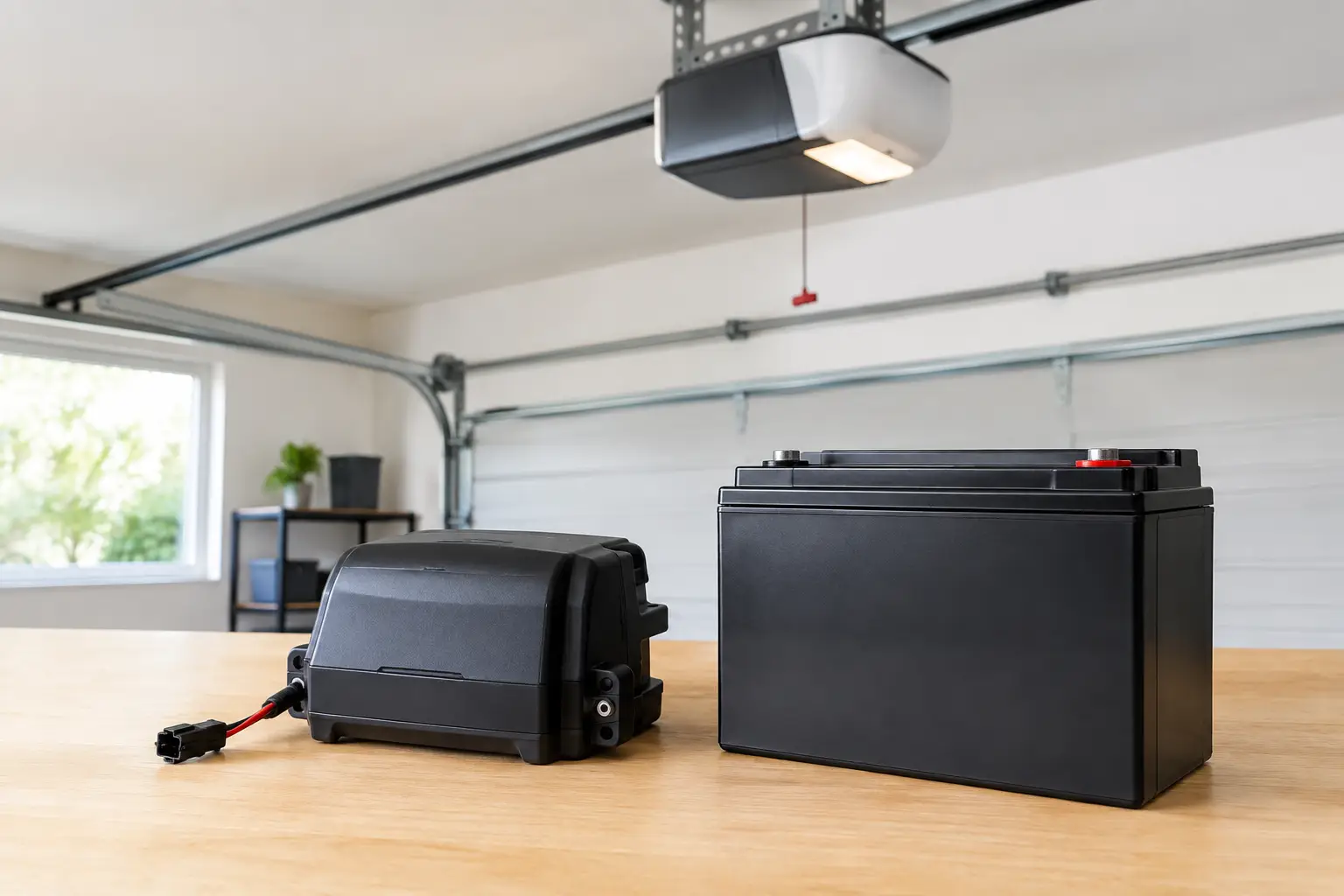
A power outage should not leave your car trapped in the garage. For most homeowners, the best garage opener backup battery is not simply the biggest battery on the shelf. It is the battery backup system that is built for your specific opener, holds enough charge for normal use, and is ready when Colorado weather knocks out power.
In Longmont, outages can happen during heavy snow, high winds, or electrical work in the neighborhood. A working battery backup gives you a way in and out without pulling the emergency release and lifting a heavy garage door by hand. That is a major convenience, but it also matters for safety, mobility, and home security.
What Makes the Best Garage Opener Backup Battery?
The right answer depends on the opener you already own. Most modern battery backup units are not universal add-ons. The opener needs the correct charging circuit, wiring connection, and control board to operate on backup power. Buying a random replacement battery or external power pack may not solve the problem.
For a garage door opener with a built-in battery backup feature, the best choice is usually the manufacturer-approved replacement battery. It is designed to fit the compartment, connect properly, and work with the opener's charging system. LiftMaster and Chamberlain models often use similar battery systems, while Genie and other brands may require different parts.
If your existing opener does not support battery backup, replacing the battery alone will not add that feature. In that case, you need an opener designed with battery backup capability or a compatible retrofit system approved for that specific model. This is where a quick professional inspection can save money. It is easy to spend on a battery that cannot be used with your equipment.
Start With Opener Compatibility
Before choosing a backup battery, locate the opener model number. It is usually on a label on the motor housing, near the light cover, or on the side of the unit. Write down the brand, model, and approximate age of the opener.
Then check whether the opener has a battery compartment or battery backup indicator. Many models have a small panel for the battery and may show a status light or alert when the battery is weak. If there is no battery connection inside the unit, do not force a battery installation or modify the wiring.
A compatible battery should match the required voltage, connector type, physical size, and battery chemistry. Sealed lead-acid batteries are common in garage door backup systems because they are affordable and dependable when maintained properly. Some newer systems may use a different battery setup, so the owner's manual or model-specific part information matters.
The simplest rule is this: match the battery to the opener, not the other way around. A lower-priced battery that does not fit correctly can cause poor charging, error codes, or no backup operation at all.
OEM vs. aftermarket replacement batteries
An original equipment manufacturer battery is typically the safest choice for homeowners who want a straightforward replacement. It is made or approved for the opener and is less likely to create compatibility problems. The trade-off is cost. OEM batteries can cost more than an aftermarket equivalent.
A quality aftermarket battery can be a reasonable option when it has the same electrical specifications and connector as the original. However, quality varies. Avoid unbranded batteries with vague ratings, missing dates, or no clear compatibility information. A garage opener backup battery may sit unused for long periods, so poor build quality often shows up when the power actually goes out.
For most homes, the small savings from an unknown battery are not worth the uncertainty. If you are unsure, use the approved replacement or have a garage door technician identify the correct part.
How Much Runtime Do You Need?
Backup power is meant for getting in and out during an outage, not for running the door all day. A healthy battery backup system commonly provides multiple open-and-close cycles after the power goes out. The exact number depends on the opener, door weight, temperature, battery condition, and whether the garage door is balanced.
A lightweight, properly balanced single door puts less strain on the opener than a large insulated double door. Cold weather can also reduce battery performance. That matters in Longmont, where a battery that seems fine in warm weather may deliver less runtime during a winter outage.
Do not judge a battery only by advertised cycles. The more useful question is whether your opener and door are operating efficiently. If a door binds in the tracks, has worn rollers, or has weak springs, the opener works harder. That can reduce backup performance and put extra stress on the entire system.
If your door is unusually loud, slow, jerky, or heavy when disconnected from the opener, repair the door issue before blaming the battery. The opener should guide the door, not fight it.
Signs Your Backup Battery Needs Replacement
Most garage opener backup batteries last about one to two years, though usage, heat, cold, and charging conditions can shorten that lifespan. A battery can look normal from the outside and still fail to hold a useful charge.
Watch for warning signs such as a beeping opener, a battery status light, an error message, or a battery alert through your opener's control system. Some openers beep periodically after a power outage to tell you the backup battery is weak or disconnected.
You may also notice that the opener does not operate during a brief outage, even though it works normally once utility power returns. That usually points to a dead battery, loose battery connection, failed charging circuit, or a model that does not have battery backup installed.
A swollen battery case, corrosion around terminals, leaking fluid, or a burnt smell requires attention right away. Turn off power to the opener before handling the battery. Do not place a damaged battery in household trash. Sealed lead-acid batteries should be recycled through an appropriate battery recycling program.
Test the System Before You Need It
A battery backup is only useful if it works before an emergency. Test it once or twice a year, preferably before winter weather arrives.
First, make sure the garage door is fully closed and the area around it is clear. With the opener plugged in and functioning normally, disconnect power to the opener by unplugging it from the outlet. Then use the wall button or remote to run the door through one complete cycle. Restore power afterward and confirm the opener returns to normal operation.
Keep hands away from moving sections of the door, springs, cables, and the opener rail during testing. Never test a garage door with damaged cables, broken springs, bent tracks, or a door that will not stay open on its own. Those are repair issues, not battery issues.
Testing also gives you a chance to listen for trouble. Grinding, popping, straining, or repeated reversing can mean the door needs service. A new battery will not correct worn rollers, failing springs, misaligned sensors, or an opener that is nearing the end of its service life.
When Replacing the Opener Makes More Sense
A replacement battery makes sense when the opener is in good condition and was built for backup power. But if the opener is older, unreliable, loud, or missing modern safety features, a new opener with an integrated backup battery may be the better long-term move.
This is especially true if you have had repeated issues with the motor, remote controls, safety sensors, or travel limits. Newer openers can offer quieter operation, better lighting, improved security controls, and battery backup designed into the unit from day one. The upfront cost is higher than a battery replacement, but it may prevent repeated repair calls on aging equipment.
For landlords and property managers, battery backup can be a practical upgrade for tenants who rely on the garage as their main entrance. For families, it can mean getting home during a storm without manually lifting a door in the dark.
Get the Right Fix for Your Longmont Garage
If your opener is beeping, refusing to run during an outage, or showing a battery warning, start with the model number and a basic inspection. Do not assume the battery is the only problem. The charger, wiring, opener board, door balance, and battery itself all affect whether backup power works.
Repair Bro's can inspect the opener and garage door, explain whether a replacement battery is worthwhile, and provide a free estimate for repair or replacement in Longmont. You get a clear answer before putting money into the wrong part.
Before the next outage catches you off guard, test your system while the lights are on and the weather is calm. A working backup battery is a small piece of equipment that can make a frustrating day much easier.