
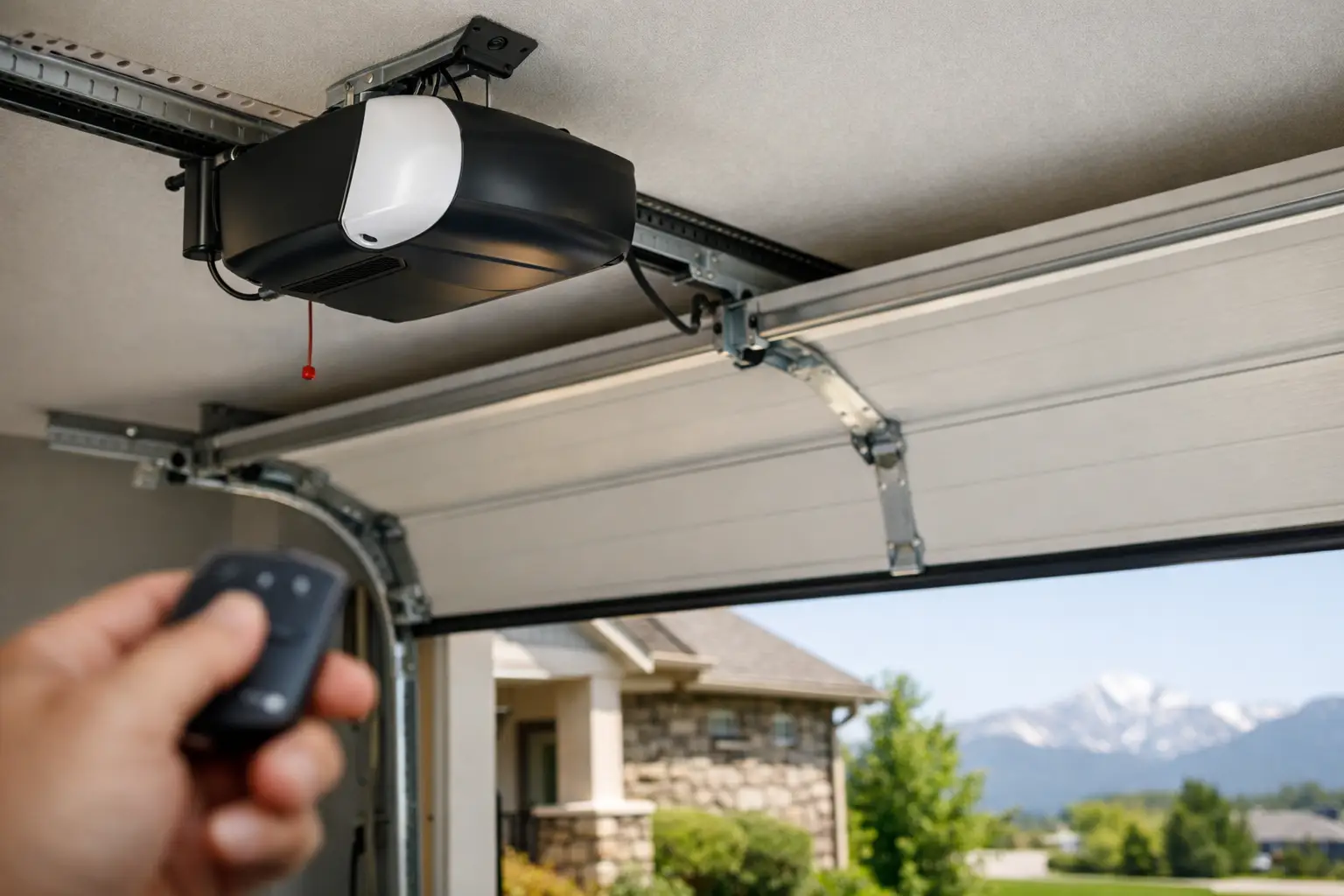
A loud garage door can wake a baby, rattle a bedroom wall, and make every early-morning departure feel like a neighborhood announcement. The best quiet garage door openers can make a real difference, especially in Longmont homes with bedrooms above or beside the garage. But the opener is only part of the equation. A worn door, loose track, tired rollers, or poorly balanced springs can still make plenty of noise.
If your current opener is working but sounds rough, start by figuring out whether the problem is the motor, the drive system, or the door itself. Replacing an opener without fixing a dragging or unbalanced door can leave you with a quieter motor and the same banging, squealing, and vibration.
What Makes the Best Quiet Garage Door Openers?
For most homes, a belt-drive opener with a DC motor is the quietest practical choice. Instead of a metal chain moving over a sprocket, a belt drive uses a reinforced rubber belt. That removes much of the clanking sound people associate with older garage doors.
A DC motor also starts and stops more smoothly than many older AC-motor units. This soft-start and soft-stop operation reduces the jolt that travels through the door, rails, ceiling hardware, and framing. It is a noticeable upgrade when the garage sits under a bedroom, home office, or nursery.
Wall-mount openers, sometimes called jackshaft openers, can be even quieter in the living space above the garage. They mount beside the door rather than hanging from the ceiling, so there is less vibration transferred through an overhead rail and support brackets. They are not right for every setup, though. Your garage needs the correct torsion spring system, enough side clearance, and a door that is in good working order.
Noise is also affected by the door's weight, roller type, track condition, and balance. A quiet opener cannot compensate for a door that is binding in the tracks or springs that are losing lift. Think of the opener as the power source, not the whole system.
The Best Quiet Opener Types for Different Homes
Belt-drive openers: the best all-around choice
A modern belt-drive opener is the best fit for most Longmont homeowners who want a quieter garage without changing the whole door setup. It provides dependable lifting power for standard sectional doors and is generally less expensive to install than a wall-mount system.
Look for a belt-drive unit with a DC motor, battery backup, and smart controls if those features matter to your household. Battery backup is useful during a Colorado power outage, allowing you to open and close the door when the electricity is off. Smart controls let you check whether the door was left open and operate it from a phone, but they are a convenience feature, not a replacement for a properly maintained door.
Common quiet belt-drive choices from established brands include LiftMaster and Chamberlain models with DC motors. The specific model matters less than matching the opener's capability to the door's size, weight, and use. A lightly used single-car door has different needs than a heavy insulated double door that runs several times a day.
Wall-mount openers: best for bedrooms over the garage
If the room above your garage gets shaken awake every time the door runs, a wall-mount opener deserves a close look. With the motor moved off the ceiling, there is no long overhead rail flexing and vibrating as the trolley moves. The garage ceiling also stays clearer for storage, lighting, or a car lift.
LiftMaster wall-mount models are a common option for residential doors with torsion springs. They are a premium choice, and installation is more dependent on the condition and layout of the existing door system. A technician should inspect the shaft, springs, cables, drums, and side room before recommending one.
Wall-mount units are not automatically silent. If the rollers are steel, the hinges are dry, or the door is out of balance, you will still hear the door moving. The difference is that you are removing a major source of motor and rail vibration from the ceiling.
Direct-drive openers: a simple low-vibration option
Direct-drive openers use a different design: the motor itself travels along the rail rather than pulling a trolley with a chain or belt. They have fewer moving parts than many conventional systems and can run very quietly when installed correctly.
These openers are less common than belt-drive models in some local markets, which can affect availability and future service options. They can be a good choice for a standard door where low vibration is the top concern, but a belt-drive unit is often easier for homeowners to compare and replace later.
Chain-drive openers: reliable, but usually not quiet
Chain-drive openers are durable and often cost less upfront. They can make sense for a detached garage, a budget-focused replacement, or a heavy door where living-space noise is not a concern.
For an attached garage, especially one under a bedroom, a chain drive is rarely the best quiet option. Even a well-maintained chain has more metal-on-metal sound and more noticeable vibration than a belt drive. If quiet operation is your priority, spend the extra money where it counts.
Features Worth Paying For
When comparing quiet openers, do not get distracted by every add-on. Focus first on the drive type, motor, installation quality, and door condition. After that, these features can make daily use safer and more convenient:
- Battery backup for access during outages.
- Motion-detection lighting for a darker garage or driveway.
- A camera if you want to see activity at the garage entrance.
- Smartphone control and alerts if you regularly wonder whether the door was left open.
- A quiet, bright LED light system that does not interfere with the opener remote.
For many families, battery backup is more valuable than a built-in camera. For landlords or homeowners who travel often, open-door alerts may be the feature they use most. Buy based on how you use the garage, not the longest feature list.
Do Not Blame the Opener for Every Noise
Homeowners often call for an opener replacement because the garage door is loud, then discover the opener is not the main problem. Rollers with worn bearings can rumble down the tracks. Loose hinges can click and pop. Dry torsion springs can creak, and an unbalanced door can force the opener to work harder than it should.
A properly balanced garage door should stay around the halfway point when disconnected from the opener and moved by hand. Do not attempt to adjust torsion springs yourself. Those springs are under high tension and can cause serious injury if handled incorrectly.
Nylon rollers are often quieter than standard steel rollers, particularly in an attached garage. Tightening hardware, lubricating the correct moving parts, replacing worn rollers, and aligning the tracks can reduce noise substantially. Avoid spraying grease on the tracks. Tracks need to stay clean so rollers can move properly; the rollers, hinges, bearings, and springs require the right garage door lubricant.
Choosing the Right Size and Installation
An opener should be selected for the door it must lift, not just the garage opening width. Heavy wood doors, insulated double doors, and doors with added glass may need a stronger unit or a more careful setup. More power does not fix a poorly balanced door, but an underpowered opener can wear out early.
The installation details matter just as much as the box on the shelf. Properly secured mounting brackets, a straight rail, correct travel limits, and safety sensor alignment all affect noise and reliability. The photo-eye sensors near the bottom of the tracks must be installed and working correctly to prevent the door from closing on a person, pet, or object.
Before replacing an old opener, have the complete system checked. If the springs, cables, rollers, or bearings are near the end of their service life, addressing them during the replacement can prevent another repair call a few months later.
A Quieter Garage Starts With a Healthy Door
The right opener should make your garage more comfortable without creating new problems. For most attached Longmont garages, a DC belt-drive opener is the practical place to start. For homes with a bedroom directly above the garage, a wall-mount opener may be worth the added cost if the door system qualifies.
If your door shakes, reverses unexpectedly, grinds, or has become much louder than normal, get it inspected before choosing a replacement. Repair Bro's can check the full system and provide a free estimate, so you can decide whether a repair, tune-up, or new quiet opener makes the most sense for your home.