
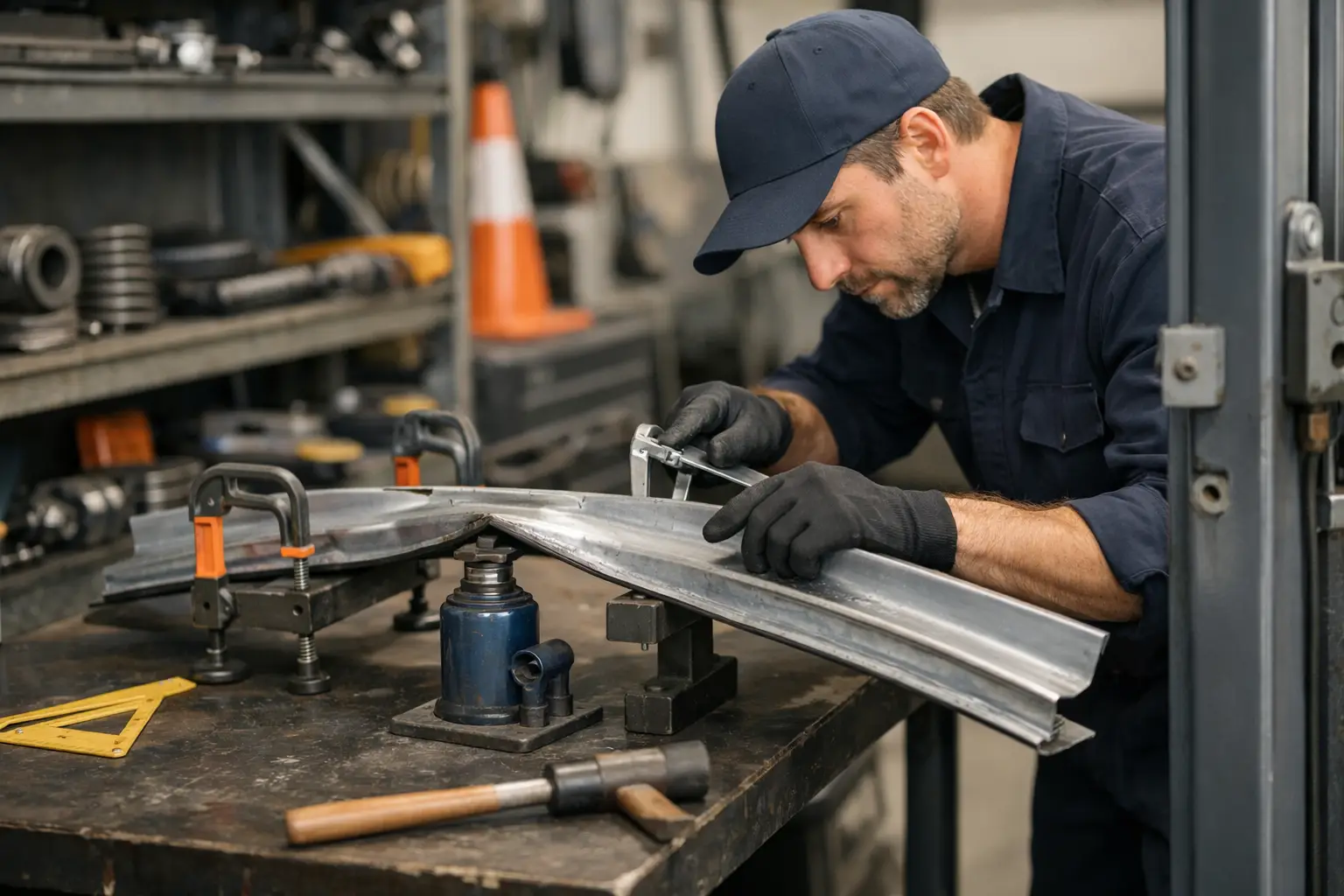
A garage door that suddenly scrapes, jerks, or stops halfway often has a track problem behind it. Can a bent garage track be repaired? Sometimes, yes. But the right answer depends on where the bend is, how severe it is, and whether the door has already come off its rollers. A small dent may be repairable. A badly twisted, cracked, or loose track usually needs replacement before it creates a bigger safety problem.
Garage door tracks guide a heavy moving door through every open and close cycle. When they are bent out of shape, the rollers cannot travel smoothly. For Longmont homeowners, that can turn a minor issue into a stuck car, damaged opener, or unsecured garage faster than expected.
When a Bent Garage Track Can Be Repaired
A repair may be possible when the damage is limited to a small section of the vertical or horizontal track and the metal is not split, crushed, or pulled away from the wall or ceiling. Minor dents from a bump, a misplaced ladder, or a roller that briefly bound up can sometimes be carefully reshaped and realigned.
The goal is not to make the track look perfect. The goal is to restore a smooth, consistent path for the rollers. A technician checks the track spacing, bracket placement, roller condition, and door balance before deciding whether straightening the section will actually solve the problem.
A repair is more likely to make sense when the door still moves evenly by hand with the opener disconnected, the rollers remain inside the track, and the track has no visible cracking. In that situation, a targeted adjustment can be less expensive than replacing a full track section.
That said, a track that has been bent once can be weaker at the damaged point. If it is repeatedly catching rollers or flexing under the door's weight, replacement is often the more dependable fix.
Signs the Track Should Be Replaced Instead
Some garage door track damage is not a good candidate for a quick straightening job. Replacement is usually the safer choice if the track is sharply kinked, flattened, cracked, rusted through, or visibly separating from its mounting brackets.
A track also needs replacement when the damage has changed its alignment. Garage door tracks must stay parallel and properly spaced from the door. Even a small alignment issue can make rollers bind, wear out early, or pop loose. Trying to force a bent track back into place without correcting the full alignment can make the door run worse than before.
Pay close attention if you see any of these problems:
- The door has come off one or more rollers.
- The track is pulling away from the wall, jamb, or ceiling.
- The door rubs hard against the track or makes a grinding sound.
- The opener strains, reverses unexpectedly, or cannot lift the door.
- A section of track is twisted, split, or badly crushed.
If the door is hanging crooked, do not keep pressing the opener button. The opener is not designed to pull a misaligned door back into position. Continuing to run it can bend the top section of the door, strip opener gears, damage cables, or cause the door to fall further out of track.
Why Garage Tracks Bend in the First Place
Most bent tracks are a symptom, not the only problem. A vehicle bump is an obvious cause, especially along the lower vertical track. But tracks can also bend because a roller failed, a bracket loosened, the door was hit while moving, or the door operated while badly out of balance.
Cold weather can expose existing garage door problems too. In Longmont, temperature swings can affect metal parts, dry out rollers, and make an already noisy system more likely to bind. The cold itself does not normally bend a solid track, but it can make an underlying alignment or hardware issue more noticeable.
A broken spring is another situation that can lead to track damage. Springs carry most of the door's weight. When one breaks, the opener may try to lift a door that is suddenly much heavier than normal. That extra strain can pull on rollers and tracks, especially if the door was already not running straight.
This is why a proper diagnosis matters. Replacing or straightening the track without addressing a worn roller, broken bracket, damaged cable, or balance issue may only buy a little time.
Can You Straighten a Bent Garage Door Track Yourself?
Homeowners sometimes see a small dent and reach for pliers, a hammer, or a block of wood. For a very light dent in an accessible section of track, it may be possible to smooth a rough edge enough to prevent roller contact. But DIY track work has limits.
Garage door track alignment is more exact than it looks. Hitting the metal too hard can pinch the channel, create a sharp edge, or move the track out of line. Loosening the wrong bracket can allow the door to shift. If the door is already off track, the risk goes up because the door's weight may not be supported correctly.
Do not attempt a repair if cables are loose, a spring is broken, the door is crooked, or a roller has come out of the track. Do not remove bottom brackets or work around spring hardware. Those components are under high tension and can cause serious injury.
If the door is closed and secure, leave it closed. If it is stuck open or partly open, keep people, vehicles, and pets away from the opening until a garage door professional can inspect it. A door that looks stable can shift without warning when its track or cable system is damaged.
What a Professional Track Repair Includes
A professional garage door repair is more than bending metal back into shape. The technician first checks whether the track itself is usable, then looks for the reason it bent. That inspection commonly includes the rollers, hinges, brackets, cables, springs, opener force settings, and door balance.
For a repairable track, the work may involve reshaping the damaged area, resetting track spacing, tightening mounting hardware, and replacing worn rollers that contributed to the problem. The door is then tested through a full open-and-close cycle to make sure it moves without binding or rubbing.
For a replacement, the damaged track section is removed and a correctly sized replacement is installed. Tracks are not one-size-fits-all parts. The right fit depends on the door height, track radius, lift type, and hardware setup. A proper installation keeps the door aligned with the opening and helps prevent repeat damage.
At Repair Bro's, the practical approach is simple: inspect the full system, explain whether a repair is realistic, and provide a free estimate before moving forward. That gives homeowners a clear answer without guessing whether a quick fix will hold up.
Do Not Ignore a Noisy or Binding Door
A bent track rarely improves on its own. The longer the door runs while binding, the more pressure is placed on rollers, hinges, cables, the opener, and the door sections themselves. What starts as a manageable track adjustment can become a larger repair if the door comes fully off track or the opener is damaged.
Call for service promptly if the door is making new grinding noises, moving unevenly, or leaving metal shavings near the track. Those signs point to friction that should be addressed before the system fails at the worst possible time.
The safest next step is to stop using a door that is scraping or running crooked and have the track inspected. A small repair may be all it needs, and getting a clear estimate early can help keep a bent track from becoming a full garage door replacement.