
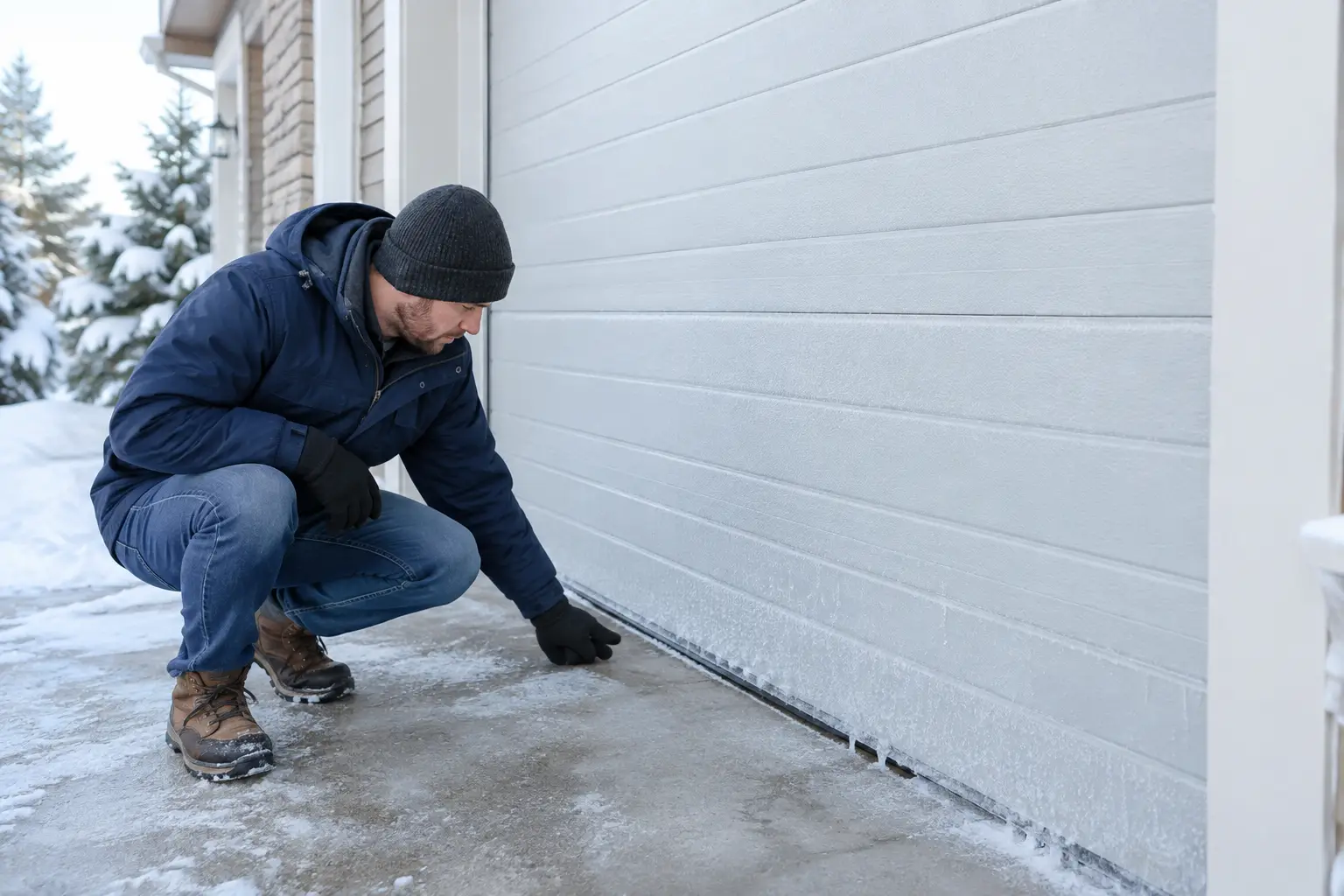
A garage door that will not open on a cold Longmont morning is more than an inconvenience. It can trap your vehicle, delay work, and leave you wondering whether the opener has failed. So, can garage doors freeze? Yes. The bottom weather seal can freeze to the concrete, moisture can ice up moving parts, and existing door problems can become much more obvious when temperatures drop.
The good news is that a frozen garage door is often manageable. The key is knowing when a little ice is the issue and when the cold has exposed a repair problem that needs professional attention. Forcing the door open can turn a simple frozen seal into a damaged opener, bent track, or broken spring situation.
Can Garage Doors Freeze in Colorado?
Garage doors can freeze when snow, rain, melted ice, or condensation collects along the bottom of the door and temperatures fall below freezing. In many cases, the rubber weather seal freezes directly to the driveway or garage floor. You press the opener button, hear the motor run, and the door may strain without moving.
Colorado's fast weather swings make this especially common. Snow can melt during the day, run toward the garage opening, then freeze solid overnight. A garage floor that is slightly out of level can make it worse by allowing water to pool at one section of the seal.
Not every cold-weather door problem is a frozen door, though. A weak spring, worn rollers, old lubricant, misaligned sensors, or a failing opener can all make a door slow or stuck when temperatures fall. The cold does not always cause the problem. Sometimes it reveals a part that was already near the end of its service life.
What Usually Freezes or Sticks
The bottom seal is the most common trouble spot. It sits directly against the concrete, catches moisture, and can freeze across the full width of the door. If the door will not lift at all but looked normal the day before a freeze, start there.
Ice can also build up in the tracks, around rollers, or near the door hinges. This is more likely if wind-driven snow gets inside the garage or if the door has gaps along the sides. Thick grease can stiffen in the cold as well, making the system work harder than it should.
A door may also feel frozen when the opener is actually the problem. If you hear a hum, a clicking sound, or the opener light flashes but the door does not move, stop trying repeatedly. Modern openers are designed to reverse or shut off when they sense too much resistance. Repeated attempts can strip gears or put unnecessary stress on the door hardware.
How to Safely Free a Garage Door
First, do not keep hitting the remote. Look along the bottom edge of the door from inside the garage if possible. If you see ice bonding the seal to the floor, use a plastic scraper to gently break up visible ice. Avoid metal shovels, pry bars, or anything that can cut the weather seal or damage the concrete.
Warm water can help melt a thin layer of ice, but use it sparingly. Water that is too hot can shock cold glass, warp some materials, and simply create more ice if it is not cleared away. A bucket of lukewarm water applied only where the seal is stuck is safer than dumping water across the entire driveway. Dry the area once the door is loose.
If the garage door has an emergency release cord and you can safely access it, disconnecting the opener lets you test whether the door itself will move. Lift with both hands and use steady pressure. Do not jerk it upward. If the door feels very heavy, crooked, jammed, or will not move after the ice is cleared, stop there.
Never pull hard on a door with a broken spring or damaged cable. Garage door springs and cables are under high tension and can cause serious injury. A door that is stuck halfway, hanging unevenly, or lifting only on one side needs a trained garage door technician, not more force.
Signs It Is More Than a Frozen Seal
A frozen seal should usually release once the ice is removed. If the door is still acting up, the problem may be mechanical. Watch for a loud bang from the garage, a visible gap in the torsion spring above the door, loose or frayed cables, bent tracks, or rollers that are coming out of their tracks.
Another warning sign is an opener that runs while the door stays put. This can happen if the door is frozen, but it can also point to a worn drive gear, disengaged trolley, or door that is too heavy for the opener to lift. Your opener is not meant to compensate for broken springs or a binding door.
Call for service if the door reverses immediately, shakes violently, makes grinding noises, or does not close securely. A garage door that will not close is also a home security issue. Do not leave it partially open overnight during freezing weather if you can avoid it.
Preventing a Garage Door From Freezing
The simplest prevention is moisture control. After snow or rain, clear slush and standing water away from the bottom of the garage door before temperatures drop. Check that downspouts, driveway grading, and melting snow are not directing water toward the garage opening.
Keep the bottom weather seal in good shape. A cracked, flattened, or torn seal holds water and does a poor job of blocking cold air. It may be time for replacement if you can see daylight under the closed door or feel a strong draft near the floor.
Use a garage-door-safe lubricant on rollers, hinges, and springs as part of regular maintenance. Avoid heavy grease, which can collect dirt and become sluggish in cold weather. Do not spray lubricant onto the tracks. Tracks need to stay clean so rollers can move correctly.
It also helps to test the door before the first hard freeze. Open and close it by hand with the opener disconnected, if you know how to do so safely. The door should move smoothly and stay roughly balanced when lifted halfway. If it is hard to lift, slams down, or feels heavier than usual, have it inspected before winter turns a small issue into a no-open situation.
When to Call for Garage Door Repair in Longmont
If clearing the ice does not solve the problem, a proper inspection is the fastest path forward. A technician can tell whether you are dealing with frozen weather stripping, a broken spring, worn rollers, an opener issue, or track damage. That diagnosis matters because the repair is different for each problem.
Repair Bro's provides local garage door repair in Longmont with free estimates, so you can get a clear recommendation before committing to the work. This is especially useful when the door is stuck, noisy, or unreliable and you need to know whether a repair makes sense or replacement is the better long-term call.
For now, treat a frozen garage door gently. Clear the ice, avoid forcing the opener, and pay attention to how the door moves once it is free. A door that still binds or feels heavy is asking for service before the next cold night leaves you stuck again.