
A garage door opener can make your whole house feel more convenient - or make every early departure sound like a construction site. When comparing a chain drive vs belt drive opener, the right answer usually comes down to where your garage sits, how much noise your household can tolerate, and what condition the rest of your door system is in.
For many Longmont homeowners, this is not just a shopping decision. It comes up after an old opener starts grinding, the door shakes on the way up, or the system quits when you need to leave for work. The drive type matters, but so do the springs, rollers, tracks, door balance, and installation quality. A new opener cannot fix a garage door that is heavy, binding, or out of balance.
Chain Drive vs Belt Drive Opener: The Main Difference
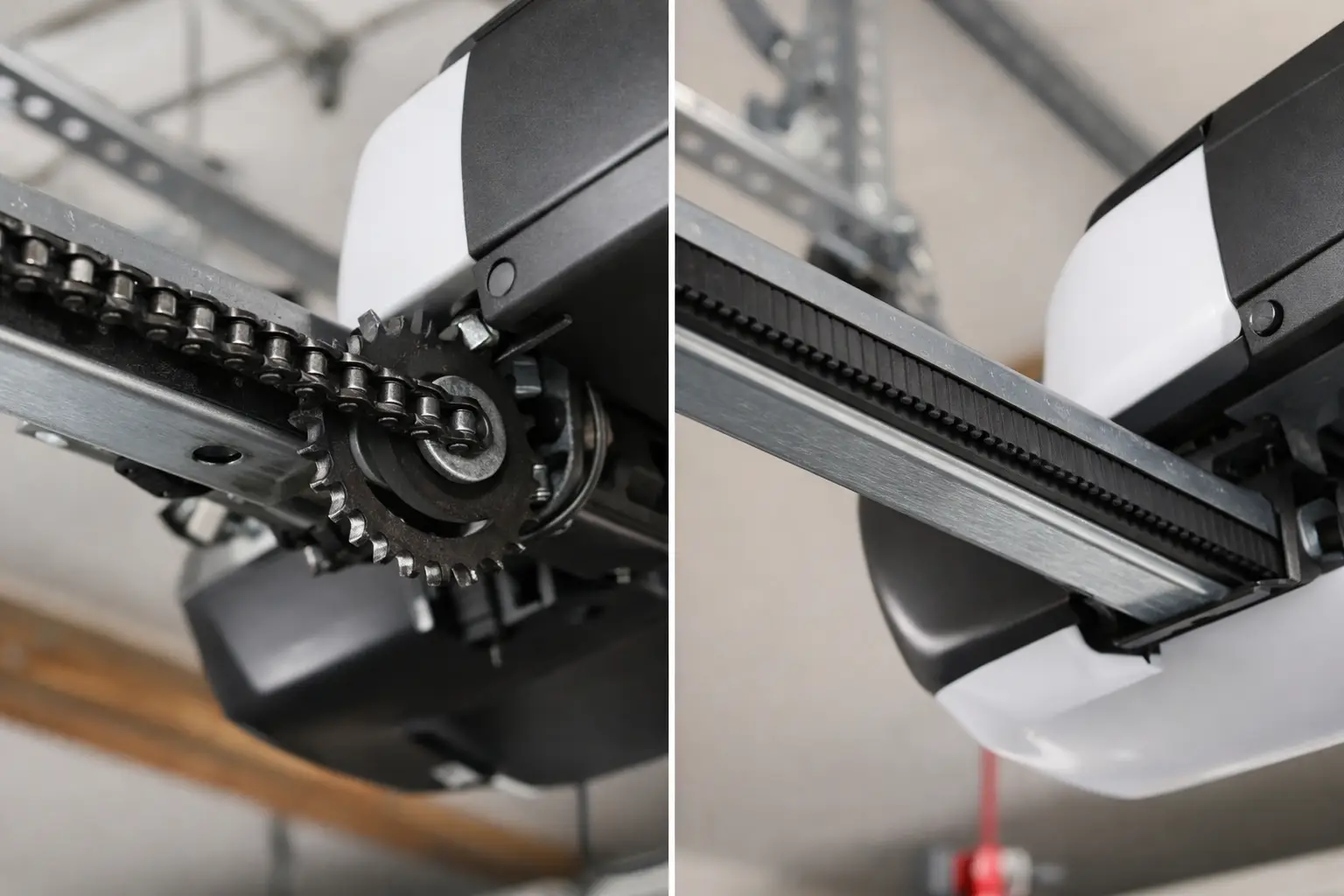
Both opener types use a motor and trolley system to move the garage door along a rail. The difference is in what pulls that trolley. A chain drive uses a metal chain, much like a bicycle chain. A belt drive uses a reinforced rubber belt, usually made with steel or fiberglass cords inside for strength.
Chain drives have been around for a long time because they are dependable, widely available, and usually less expensive. Belt drives are popular because they run more quietly and with less vibration. Neither one is automatically better for every home.
A detached garage with a workshop may be a great place for a chain drive. A garage directly under a bedroom, nursery, home office, or living room is often a better match for a belt drive. That difference in daily noise is the reason many homeowners choose a belt opener when replacing an older unit.
Noise Is the Biggest Day-to-Day Difference
A chain drive opener makes more metal-on-metal noise as the chain moves along the rail. It is not necessarily a problem, especially when the door is in good condition, but you will hear it. The motor vibration can also travel through the ceiling framing and walls.
A belt drive opener is much quieter. You may still hear the door rollers, hinges, and sections moving, but the opener itself produces less rattling and vibration. This is especially useful in attached garages where someone sleeps or works near the garage.
That said, a loud garage door is not always the opener's fault. Worn steel rollers, loose hardware, dry hinges, damaged bearings, or a poorly balanced door can make even a new belt drive sound rough. If your door suddenly gets noisy, do not assume an opener replacement is the only solution. A proper inspection can identify whether the problem is the drive system or the door itself.
Strength: Do Not Judge by the Chain Alone
Many people assume a chain drive is stronger simply because it is metal. In practice, both modern chain and belt drive openers can operate standard residential garage doors reliably when they are correctly sized and installed.
The opener is not supposed to lift the full weight of the door. Garage door springs do that work. The opener guides the balanced door up and down. If the springs are worn or broken, the opener has to pull far more weight than it was designed to handle. That can strip gears, damage the trolley, bend parts, or burn out the motor - regardless of whether the unit uses a chain or belt.
For a heavier insulated door, wood door, or oversized door, the right solution may be a higher-capacity opener or a setup designed for that door's size and weight. The best choice depends on the entire system, not just the type of drive.
Cost and Long-Term Value
A chain drive opener generally costs less upfront than a similar belt drive model. For homeowners focused on the initial budget, that can make it the practical choice. It is also a solid option for a detached garage where noise is less of a concern.
Belt drive openers often cost more, but the price difference may be worth it when quiet operation matters. If your garage shares a wall with the house or sits below a bedroom, the added comfort can be noticeable every day.
When comparing prices, look beyond the opener box. A complete replacement may involve a new rail, safety sensors, wall control, remotes, keypad programming, proper mounting, and adjustment of the door's safety settings. If the door has worn rollers or loose hardware, addressing those issues at the same time can help the new opener run the way it should.
The cheapest installation is not always the best value if it leaves a heavy or poorly aligned door connected to a new motor. A good repair recommendation should explain what needs attention now, what can wait, and what is included in the estimate.
Maintenance Needs for Chain and Belt Drives
Chain drives need occasional attention. Depending on the opener model, the chain may need proper tension and manufacturer-approved lubrication. A loose chain can slap against the rail and create extra noise. An overly tight chain can put unnecessary strain on the system.
Belt drives usually require less routine maintenance because there is no exposed metal chain to lubricate. The belt should still be checked for wear, cracking, fraying, or damage. It also needs the correct tension. A belt opener is lower-maintenance, not maintenance-free.
For either type, homeowners can help extend opener life by keeping the door system in good shape. Listen for new scraping or popping sounds. Watch for slow movement, uneven lifting, or a door that reverses unexpectedly. Keep the photo-eye sensors clean and aligned. Do not pull the emergency release unless you understand that the door may be heavy or difficult to control.
The most important safety point is simple: never adjust torsion springs, cables, or bottom brackets yourself. Those parts are under serious tension and can cause major injury. Call a garage door technician for spring, cable, or balance problems.
Which Opener Fits Your Longmont Home?
A chain drive opener makes sense when your garage is detached, noise is not a major concern, and you want a dependable option with a lower initial cost. It can also be a good fit for homeowners who prefer a straightforward, proven system.
A belt drive opener is usually the better fit for attached garages, homes with bedrooms above the garage, and households where people come and go at different hours. It is also a smart option when you want less vibration and a more comfortable day-to-day experience.
Longmont weather can also be hard on garage door systems. Cold temperatures, wind, and seasonal changes can expose problems with worn rollers, stiff hinges, aging springs, and poor door balance. Your opener choice matters, but a door that is properly maintained will be more reliable through changing conditions.
Signs Your Existing Opener May Need Service
An opener does not always need replacement when it starts acting up. Sometimes the repair is simple, such as sensor alignment, a worn gear, a damaged remote, or a limit-setting issue. Other times, replacement is the safer and more cost-effective call.
Pay attention if your opener hums but the door does not move, reverses before closing, jerks along the track, operates inconsistently, or makes new grinding sounds. A door that only opens a few inches may have a broken spring or another door-system problem rather than an opener issue.
If your opener is older and lacks modern safety features, replacement may give you better protection and reliability. Current systems typically include photo-eye sensors and auto-reverse functions, and many offer battery backup or smartphone control. Those features are useful, but the basic job remains the same: safely move a balanced door every time you use it.
Get the Door Checked Before Choosing an Opener
Before deciding between a chain or belt drive, have the garage door inspected for balance, spring condition, roller wear, track alignment, and hardware issues. This prevents you from putting a new opener on a door that is already overworking the old one.
Repair Bro's helps Longmont homeowners diagnose garage door and opener problems with clear recommendations and free estimates. Whether your current unit needs repair or it is time for a replacement, the goal is a door that opens safely, closes securely, and does not add another headache to your day.
Choose the drive that fits how your home is built and how your family uses the garage - then make sure the door itself is ready to support it.