
A garage door that will not open can turn an ordinary morning into a real problem fast. Your car may be trapped inside, you may be locked out of the house through the garage, or a door stuck partly open may leave your home exposed. Emergency access recovery means getting safe entry or exit restored without creating a bigger repair, injury risk, or security issue.
For Longmont homeowners, the right response depends on why the door stopped moving and whether anyone needs immediate access. The goal is not to force the door open. It is to protect people, prevent damage, and get a clear diagnosis from a garage door specialist.
When a Stuck Garage Door Is an Emergency
Not every garage door problem needs an after-hours response. A noisy door that still opens and closes can often wait for scheduled service. A door that traps a vehicle, blocks a needed exit, hangs open overnight, or has broken hardware is different.
Treat the situation as urgent when the garage is your only practical way in or out, when a vehicle is needed for work, school, medical care, or an appointment, or when the door cannot be secured. It is also urgent if the door has come off its tracks, a spring has broken, or the door is hanging crooked. Those conditions can make the door unstable.
If the garage connects directly to your home, check whether you can enter through another exterior door first. That may solve the immediate access problem and give you time to arrange a proper repair. Do not climb through a damaged garage door opening or try to squeeze beneath a door that is not fully supported.
A Broken Spring Changes the Situation
Garage door springs carry a large amount of stored force. When one breaks, you may hear a loud bang in the garage and find that the opener hums but cannot lift the door. The door may feel extremely heavy if you try to move it by hand.
Do not attempt to replace, adjust, or unwind a spring yourself. This is one of the most dangerous garage door repairs. A technician has the correct winding bars, parts, and training to handle the tension safely and set the door up to run properly afterward.
Safe Steps for Emergency Access Recovery
Start with the simplest checks, but stop immediately if the door is visibly damaged or the system does not respond normally. First, make sure the opener has power. Check whether a breaker has tripped, whether the outlet is working, and whether the opener light comes on. If the remote fails, try the wall button inside the garage if you can reach it.
Next, look at the photo-eye sensors near the bottom of the tracks. Small sensors on each side of the opening must face one another. Dirt, spider webs, a shifted bracket, or a box in the sensor path can keep the door from closing. Clean the lenses gently and remove anything blocking the opening. If one sensor light is off or blinking, the alignment may need adjustment.
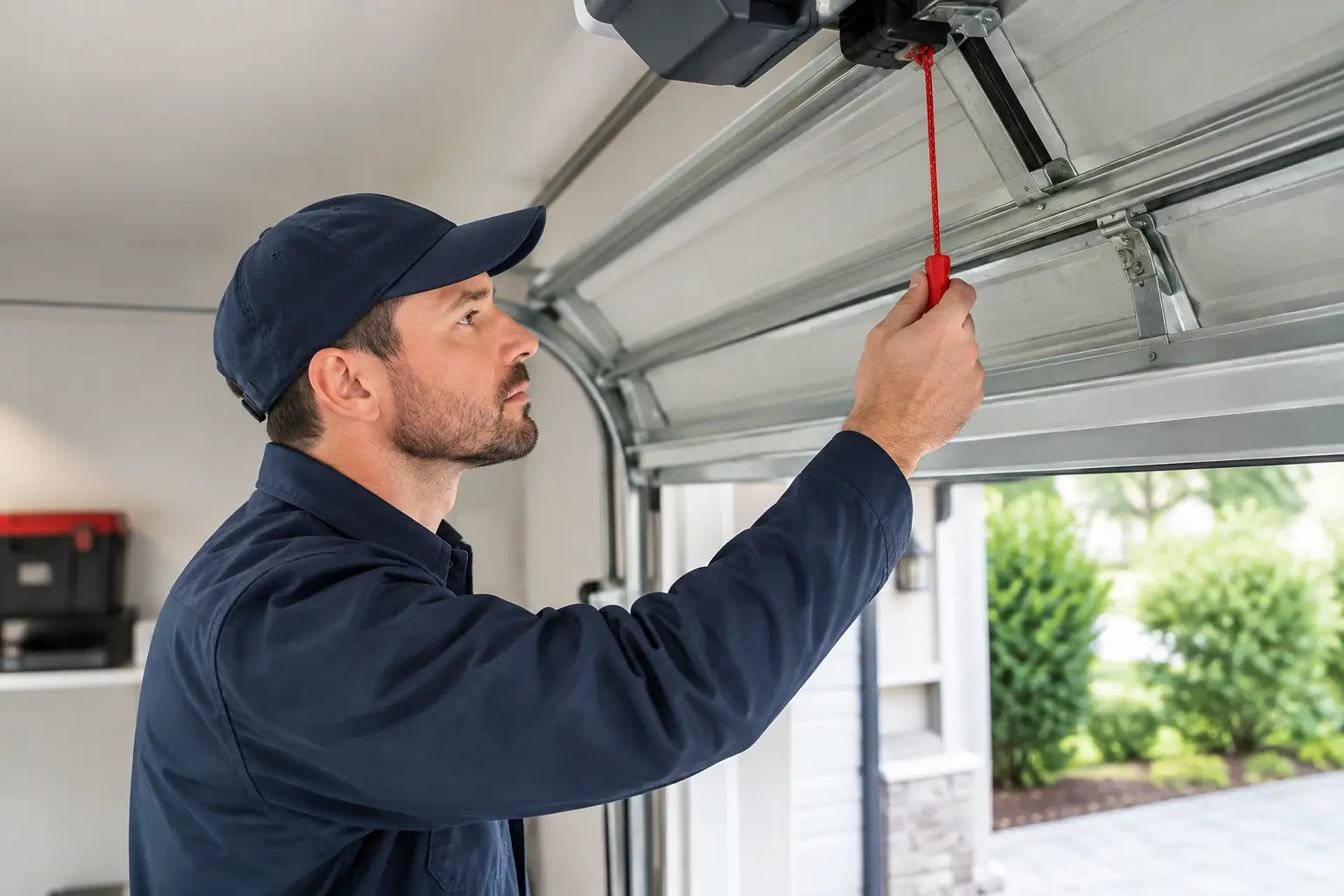
If the power is out and the door is closed, the emergency release cord can disconnect the door from the opener. This only helps if you already have access to the garage or an exterior emergency-release setup. Once released, a properly balanced door may be lifted manually by an adult. Keep the door fully open only if it stays securely in place. If it is heavy, uneven, jerky, or drops when released, stop and call for help.
Never pull the emergency release while the door is open unless you understand the risk. If a spring or cable has failed, disconnecting the opener can allow the door to fall. Keep children, pets, and bystanders clear of the opening while you assess the problem.
What Not to Do With a Garage Door Emergency
The fastest-looking fix is often the one that causes the most damage. Do not use a vehicle to push the door up or down. Do not pry a stuck door with a crowbar, pull on lift cables, or remove brackets from the bottom of the door. Bottom brackets are connected to cables under spring tension and should only be handled by a trained technician.
Avoid repeatedly pressing the opener button when the door will not move. If the opener is straining, each attempt can overheat the motor or damage gears. Stop using the opener if the door is off track, visibly crooked, or making grinding or popping sounds.
It is also a bad idea to leave a malfunctioning door partly open while you go to work or sleep. Aside from the security problem, a partially open door can shift unexpectedly in wind or under its own weight. If you cannot close and lock the garage safely, getting service quickly is the sensible call.
Common Reasons Garage Doors Stop Providing Access
A garage door has several systems working together. The opener is only one part of the setup. A problem with the springs, cables, rollers, tracks, sensors, remote, or door balance can stop normal operation.
Broken torsion or extension springs are a frequent cause of a door that will not lift. Frayed or slipped cables can make the door hang at an angle or come off track. Worn rollers can bind in the track, especially when cold weather exposes an existing problem. A damaged track, loose hardware, or an accidental impact from a vehicle can also stop the door in its path.
Sometimes the issue is electrical. Dead remote batteries, a failed wall control, a tripped GFCI outlet, or a worn opener gear can all look like a major door failure at first. That is why a professional inspection matters. The repair should address the actual cause, not just get the door moving for one cycle.
Cold Weather Can Expose Weak Parts
Longmont winters can be hard on garage doors. Cold temperatures stiffen old grease, dry weather affects worn rollers and hinges, and snow or ice near the threshold can interfere with closing. A door that sticks to the floor after a freeze should not be forced with the opener.
Clear snow and ice around the bottom seal carefully. If the door remains stuck, the seal may be frozen or the door may have another mechanical issue that needs attention. Forcing it can strip opener gears, bend sections, or pull cables out of place.
When to Call a Garage Door Technician Right Away
Call for professional service if the door is off track, a cable is loose or broken, a spring has snapped, the door will not stay open, or the opener runs without moving the door. The same applies when the door is stuck open and you cannot secure your home.
A technician can diagnose whether the repair involves the opener, spring system, tracks, rollers, or door panels. They can also check door balance and safety reversal after the repair. Those final checks matter because a door that appears fixed but is improperly balanced can put extra strain on the opener and fail again soon.
For homeowners who need garage door repair in Longmont, Repair Bro's provides focused service and free estimates before work begins. That gives you a clear picture of the needed repair, whether it is a straightforward adjustment or a replacement recommendation based on the condition of the door.
Preventing the Next Access Problem
Most emergency access calls start with a part that showed warning signs earlier. A door that becomes louder, slows down, shakes, reverses unexpectedly, or needs several remote presses is asking for attention. Scheduling service before the door stops completely is usually easier and less disruptive than dealing with a trapped vehicle or unsecured garage.
Homeowners can help by keeping the area around the tracks clear, testing the photo-eyes occasionally, and listening for changes in operation. Do not apply heavy grease to tracks. Tracks need to stay clean and aligned, while rollers, hinges, and springs require the right garage-door-specific lubrication and service approach.
If you use the garage as a main entrance, keep a backup plan. Carry a working house key, replace weak remote batteries before they fail, and make sure family members know not to force a damaged door. A little preparation will not prevent every breakdown, but it can reduce the pressure when one happens.
When access matters, safety comes first. Get through another entrance if possible, keep clear of unstable hardware, and let a garage door professional handle springs, cables, tracks, and a door that will not stay put.