
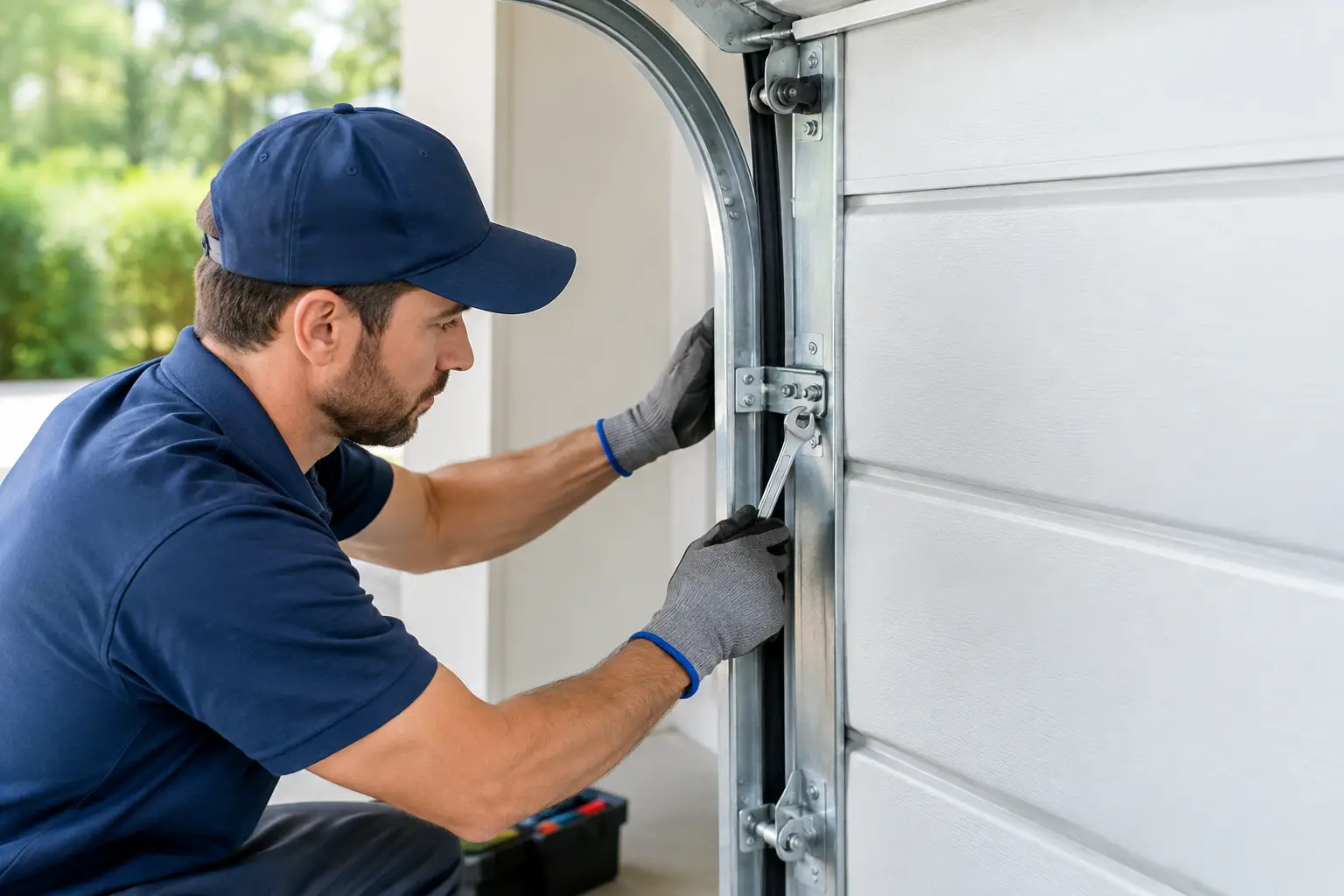
A garage door can look only slightly crooked and still be a serious problem. It may hesitate halfway up, scrape the track, leave a gap at the floor, or make a loud bang that gets everyone’s attention. This garage door alignment repair example shows how a small track issue can turn into a door that will not open safely - and why a proper diagnosis matters before anyone starts loosening hardware.
For Longmont homeowners, alignment trouble is not just an annoyance. A door that is off track or pulling unevenly can damage rollers, bend the track further, strain the opener, and leave the garage less secure. The faster the cause is identified, the better the chance of avoiding a larger repair.
A Common Garage Door Alignment Repair Example
Picture a standard two-car steel garage door that begins rubbing against the left track every time it closes. The homeowner first notices a squeal, then sees that the bottom of the door is sitting about an inch higher on one side. The opener still moves the door, but it shudders on the way down and reverses before it reaches the floor.
At first glance, the track seems to be the problem. It is not sitting perfectly straight, and one roller near the middle of the door is riding hard against the edge. But the track is usually not the whole story. Tracks often get bent or shifted because another part has already failed.
In this example, the inspection finds three connected issues: a loose track bracket, a worn roller that no longer turns freely, and a frayed lift cable on the same side. As the roller dragged, it put pressure on the track. As the cable weakened, the door began lifting unevenly. The loose bracket let the track move farther out of position.
The repair starts by securing the door in the closed position and disconnecting the opener. The damaged roller is replaced, the cable is addressed by a trained technician, and the track bracket is reset and tightened. The technician then checks the track spacing, confirms the door is level, and runs the door by hand before reconnecting and testing the opener.
The result is not simply a straighter-looking track. The door moves evenly, seals against the floor, and no longer forces the opener to work against binding hardware.
Why Garage Door Alignment Problems Happen
Garage doors are heavy, and their parts have to work together. A slight change in one area can show up somewhere else. A vehicle bumping a vertical track is an obvious cause, but not every alignment problem starts that way.
Normal wear can make rollers stiff or cracked. Loose bolts can allow a track to shift over time. A broken or slipping cable can pull one side of the door higher than the other. Damaged hinges, worn bearings, and an unbalanced door can also make the panels travel unevenly.
Colorado temperature swings can add to the problem. Metal expands and contracts, lubricant dries out, and repeated use exposes weak hardware. That does not mean every noisy door needs major work, but it does mean a new sound or change in movement is worth checking before the door comes off the track.
The Track May Be the Symptom, Not the Cause
It is tempting to look at a crooked track and try to push it back into place. That can make matters worse if a cable is loose, a roller is jammed, or the door has lost spring tension. Forcing a track into alignment without correcting the cause may create a short-term improvement, then lead to another failure days later.
A good repair checks the entire door system: tracks, rollers, hinges, brackets, cables, drums, springs, bearings, and opener settings. The goal is to find out why the door moved out of alignment in the first place.
Signs Your Garage Door Needs Alignment Repair
A garage door does not have to be completely off its tracks to need service. Pay attention if the door starts moving differently than it used to. The most common warning signs include:
- The door looks crooked when open or closed.
- One side rises or lowers ahead of the other.
- Rollers rub, pop, or jump in the track.
- The door shakes, binds, or makes grinding sounds.
- The opener reverses, strains, or stops before the door is fully closed.
- There is daylight under one corner of the closed door.
If a roller has come out of the track, stop using the opener right away. Continuing to run it can bend sections, damage the opener rail, or cause the door to fall farther out of position. Keep people and vehicles clear until the door has been inspected.
What You Can Check Safely Before Calling
Homeowners can do a quick visual check from a safe distance. Look for obvious bends in the tracks, loose-looking brackets, rollers sitting outside the track, or gaps beneath the door. Listen for where a scrape or grinding sound begins. If the photo-eye sensors are blocked or dirty, clean the lenses and remove anything in the doorway, since those issues can also make a door reverse.
Do not loosen the bottom brackets, touch the lift cables, or adjust torsion or extension springs. Those components carry high tension and can cause severe injury when handled incorrectly. The same applies to a door that is hanging crooked or partly open. It needs to be secured before repairs begin.
You can also avoid making the problem worse by not repeatedly pressing the wall button or remote. One extra attempt may be enough to pull a cable off a drum or twist a track that was only slightly misaligned.
Repair or Replacement: It Depends on the Damage
Many alignment repairs are straightforward when caught early. Repositioning a track, replacing rollers, tightening brackets, or replacing worn hinges can restore normal movement without replacing the door.
Replacement may make more sense when multiple sections are bent, the door has severe impact damage, or the track and supporting hardware are badly twisted. An older door with repeated cable, roller, and panel issues may also be costing more in repairs than it is worth. A technician should explain the condition of the door clearly and give you options instead of treating replacement as the automatic answer.
For rental properties and busy households, the practical question is often how quickly the door can be made safe and reliable. A repair may be the right choice if the structure of the door is sound. If the door cannot close securely or has extensive damage, replacement can be the safer long-term call.
Get the Door Checked Before It Gets Worse
A door that is rubbing today can be off track tomorrow. If your garage door is uneven, noisy, stuck, or leaving a gap when closed, get it inspected before the opener and door panels take more damage. Repair Bro's provides garage door repair in Longmont with free estimates, so you can understand the issue and expected repair before moving forward.
Do not wait for a crooked door to become a door that will not close at all. A prompt inspection can protect your vehicle, your garage, and the people using the door every day.