
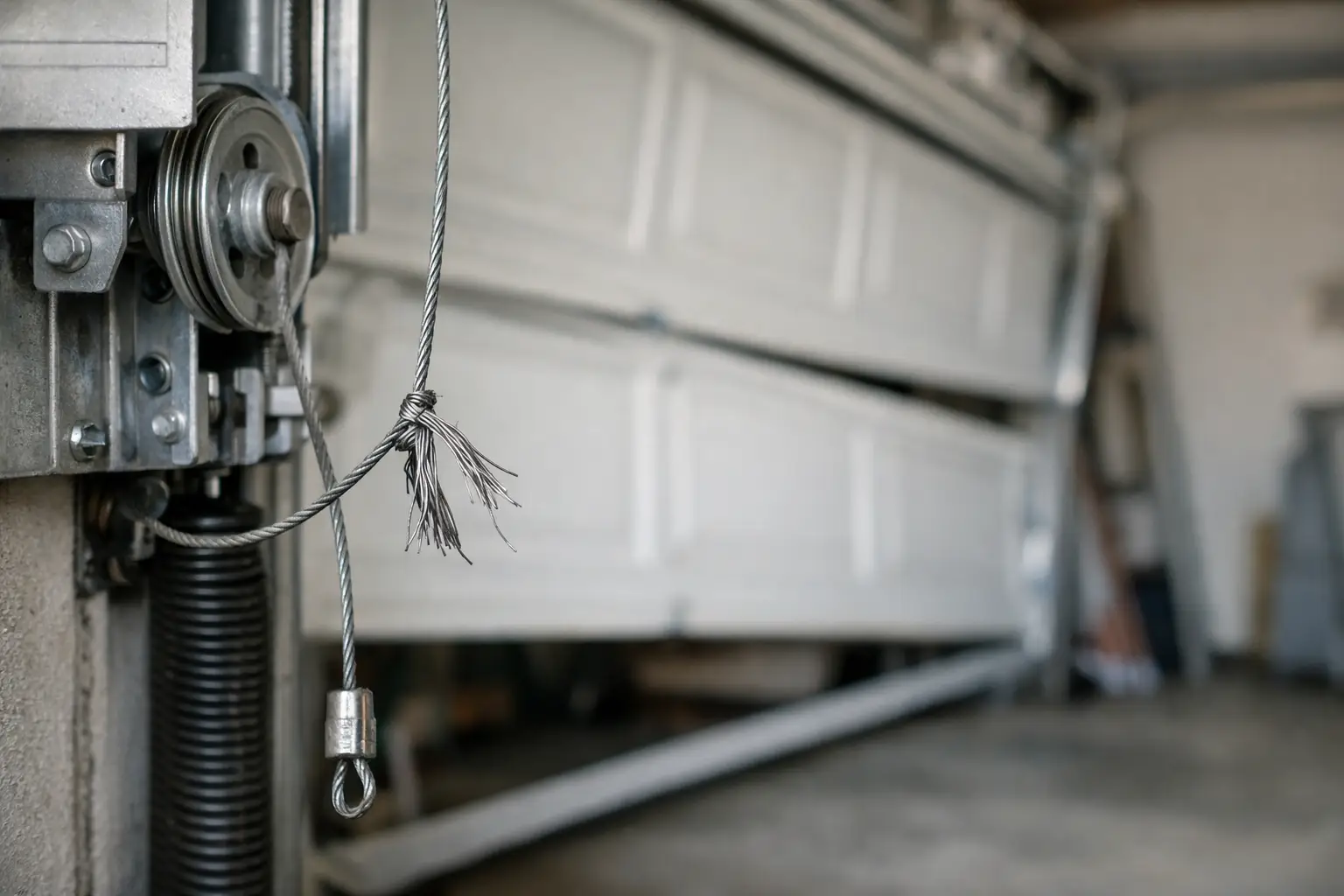
A garage door cable snapped example usually looks more dramatic than homeowners expect. You press the opener, one side of the door rises while the other side stays low, and the door twists in the opening. Sometimes the cable is visibly hanging beside the track. Other times, the door is stuck crooked, the opener hums, and nothing moves safely.
This is not a problem to force through. A snapped or off-track cable can leave a heavy garage door unstable, damage the tracks and rollers, or cause the door to fall suddenly. For Longmont homeowners, the right move is simple: stop using the door and have a garage door specialist inspect the full system.
A Garage Door Cable Snapped Example at Home
Picture a typical two-car garage door. It has been opening normally, though it has made a little more noise lately. One morning, the door starts up a few inches and suddenly jerks. The left side climbs, but the right side drops or stays near the floor. The opener may pull for a moment before reversing, or the door may bind hard in the tracks.
When you look closer, the cable on the lower right side may be loose, wrapped around the drum above the door, or lying near the track. That cable has either snapped, slipped off the drum, or lost tension because another part of the system failed.
The cable is part of the counterbalance system. It works with the torsion springs above the door or extension springs along the sides to help lift and lower hundreds of pounds of door weight. When one cable fails, the system no longer pulls evenly. That is why the door goes crooked instead of simply refusing to open.
A cable does not always break because it is old. Wear is common, but a broken spring, worn drum, bent track, seized roller, loose bracket, or door that hit an obstruction can also make a cable come off. The visible cable is often the symptom, not the whole repair.
Signs the Cable Is Broken or Off the Drum
A hanging cable is the clearest sign, but it is not the only one. If your door is uneven, stopped halfway, rubbing hard against a track, or hanging at an angle, treat it as a cable or counterbalance issue until a technician says otherwise.
You may also hear a sharp bang from the garage. That sound can be a torsion spring breaking, which often causes the cable to loosen or come off the drum. Another clue is a garage door that feels extremely heavy when disconnected from the opener. A properly balanced door should not feel like dead weight.
Do not assume the opener is the problem just because the remote no longer opens the door. The opener is designed to move a balanced door, not lift one after a spring or cable failure. Continuing to run it can strip gears, bend the top section, or pull the door farther out of alignment.
What to Do When a Garage Door Cable Snaps
First, keep people, pets, and vehicles away from the door. A door hanging crookedly has uneven tension and can shift without warning. Do not stand beneath it, try to straighten it by hand, or park a vehicle under the opening.
Next, stop using the wall button and remote. If the door is open or partially open, leave it where it is unless it can be safely secured by a qualified technician. Pulling the emergency release is not automatically a good idea. With a failed cable or spring, releasing the opener can allow the full weight of the door to drop.
If the door is closed and you need to leave, use another exit if possible. If a vehicle is trapped inside, explain that when you schedule service. A garage door repair technician can assess whether the door can be safely moved and get access restored without creating more damage.
You can take a few photos from a safe distance. Capture the cable, both sides of the door, the tracks, and the springs above the opening. Photos can help describe the issue, but they do not replace an on-site inspection. The repair still depends on whether the cable broke, slipped, or was pulled off by another mechanical failure.
Why This Is Not a Good DIY Repair
Replacing a garage door cable sounds straightforward until you consider the spring tension involved. Cables run around drums that are tied directly to the counterbalance system. Reinstalling one correctly requires the door to be secured, the springs to be handled properly, and both sides to be tensioned evenly.
A cable installed with the wrong tension can make the door lift crookedly again, slip off the drum, or slam shut. If the real issue is a broken spring or damaged drum, replacing only the cable will not solve it. That is how a quick-looking repair turns into bent tracks, damaged panels, or a door that will not close.
There are a few small checks homeowners can do safely, such as looking for an obvious obstruction in the track or confirming that nothing is pressing against the door. Beyond that, leave cable, spring, drum, and bottom-bracket work to a trained garage door repair professional. The bottom brackets are especially dangerous because they are connected to cables under tension.
What a Proper Cable Repair Includes
A dependable repair is more than putting the cable back on the drum. The technician should inspect the cable condition, drums, torsion or extension springs, tracks, rollers, hinges, bearings, and opener operation. The door needs to be balanced after the work is done so it travels evenly and does not overload the opener.
If the cable is frayed or broken, replacement is usually the right answer. If it came off because of a loose drum, worn bearing, broken spring, or misaligned track, that underlying problem needs repair too. It depends on the condition of the full system and whether other parts are close to failing.
After repairs, the door should open and close smoothly, sit level on the floor, and stay reasonably balanced when tested by a technician. The opener limits may need adjustment if the door was previously binding or reversing. This final check matters because it helps prevent a repeat failure soon after the service call.
Can You Prevent Another Cable Problem?
Some cable failures happen without much warning, especially when a spring breaks. Still, regular attention can catch the conditions that lead to trouble. Watch for frayed cable strands, a door that starts closing unevenly, scraping sounds, slow travel, or rollers that shake in the track.
Do not ignore a door that is getting louder or heavier. Those changes often point to worn rollers, poor balance, failing springs, or track problems. A little noise may not mean an emergency, but a crooked door or loose cable does.
Keep the tracks clear of dirt and stored items, but avoid coating them with heavy grease. Garage door tracks need to guide the rollers, not become sticky. Also avoid adjusting spring hardware, cable drums, or bottom brackets yourself. Those are the parts where a wrong move can create a real injury risk.
Fast Help for a Stuck Garage Door in Longmont
A snapped cable can block your car in, leave your garage unsecured, or stop your day before it starts. Repair Bro's provides garage door repair in Longmont with free estimates, so you can get a clear diagnosis before moving forward with the work.
Tell the technician whether the door is open, closed, or stuck halfway, and mention if you heard a loud bang or see a loose cable. That helps prepare for the likely repair, but the final recommendation should come after the door, springs, and tracks are inspected in person.
If your garage door is crooked, the cable is loose, or the opener is straining, leave the system alone for now. A prompt professional repair is the safest way to get the door moving evenly again and keep a small cable issue from becoming a larger garage door problem.