
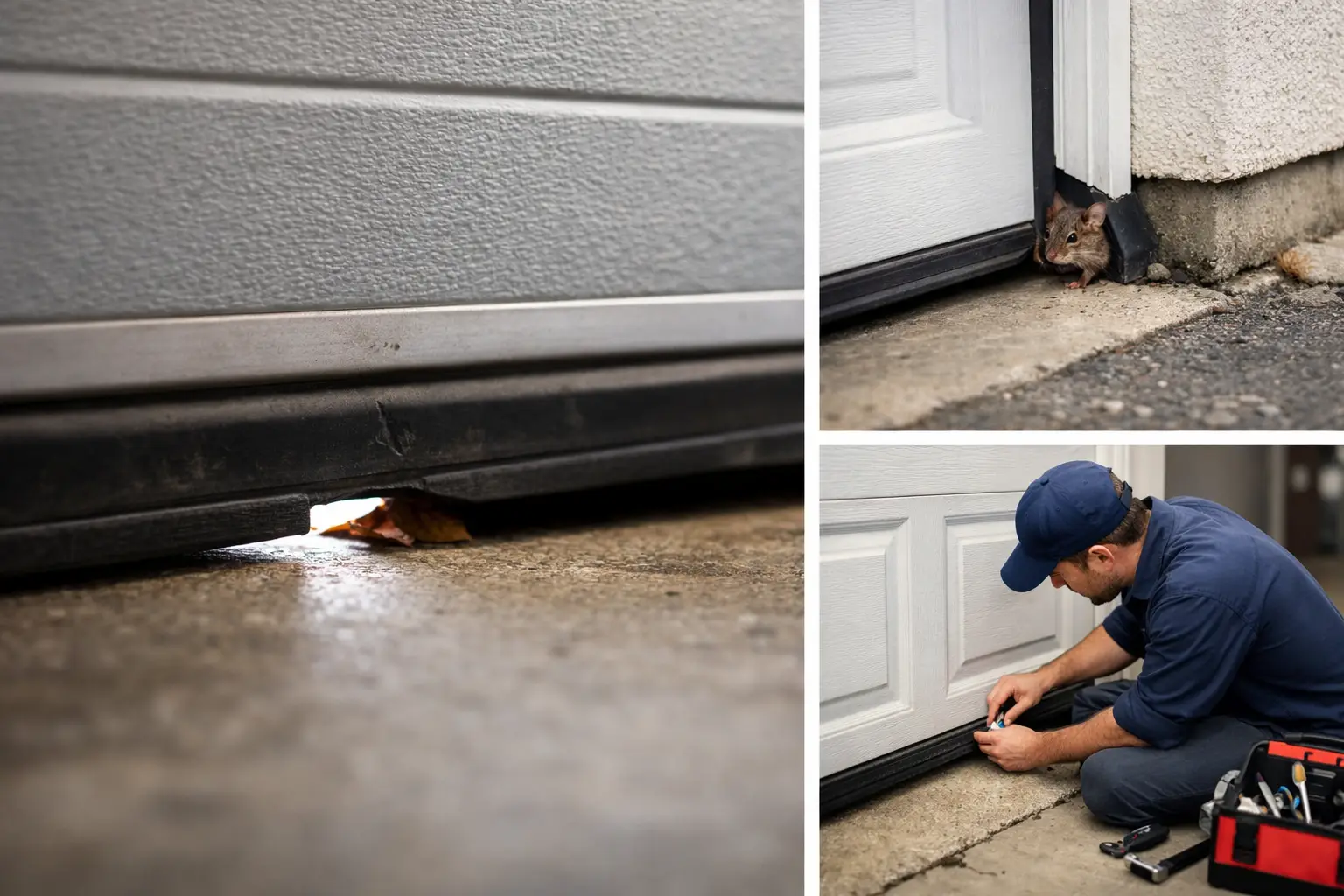
A small gap around a closed garage door can turn into a big nuisance fast. Garage door gaps let in cold air, blowing snow, rainwater, dust, insects, and rodents. They can also make your garage easier to access from the outside and put extra strain on a door that is already out of adjustment.
For Longmont homeowners, gaps often become obvious during windy weather or after a temperature swing. You may see daylight along one side, feel a cold draft at the bottom, or find leaves and dirt collecting inside the garage. The fix might be as simple as replacing worn weather seal, but an uneven gap can also point to a track, cable, spring, or door alignment problem that needs professional attention.
Where Garage Door Gaps Usually Show Up
The location of the gap gives a good first clue about the cause. A gap along the bottom of the door is commonly related to worn or flattened bottom seal. Rubber and vinyl weather stripping eventually hardens, cracks, or loses its shape. If your driveway slopes or is uneven, the seal may not sit tightly across the full width of the opening even when the door is working correctly.
Gaps along the sides or top are different. These often involve damaged side weather stripping, a door that is not sitting square in the opening, or a door that is traveling unevenly on its tracks. A door can look mostly normal while still closing a little higher on one side than the other.
If there is daylight between two door sections, inspect the hinges and section alignment. A bent hinge, loose hardware, worn rollers, or a damaged panel can keep the sections from meeting properly. This kind of issue can get worse each time the opener runs the door.
Why a Small Gap Should Not Be Ignored
A garage does not have to be a finished living space for a gap to matter. The garage often shares walls, ceilings, plumbing, or entry doors with the house. Cold air entering through an opening can make nearby rooms less comfortable and raise heating costs during Colorado winters.
Water is another concern. Wind-driven rain and melting snow can come under a bottom gap, leaving moisture on the garage floor. Over time, repeated moisture can damage stored belongings, encourage mildew, and create a slick surface near the door.
Pests do not need much room to get inside. Mice, insects, and spiders can use a narrow opening as an easy entry point, especially when the garage offers warmth and storage. A gap also makes it easier for leaves, gravel, and dust to build up where the door needs a clean path to close.
There is a security angle as well. A weather seal gap by itself does not mean someone can open the door, but a door that does not close evenly may have a larger mechanical problem. If the door can be pushed, lifted, or forced out of position, it is worth having it checked promptly.
What Causes Uneven Garage Door Gaps?
Weather seal wear is the most common and least complicated cause. Bottom seals and perimeter trim are exposed to sun, ice, dirt, moisture, and daily movement. They are maintenance items, not permanent parts.
But uneven garage door gaps are not always a sealing issue. A door that leaves a larger gap on one side may have loose or bent track hardware. Tracks can shift after an impact, settling, or repeated vibration. Worn rollers can also keep the door from moving smoothly into its proper closed position.
Cable and spring issues are more serious. Extension or torsion springs help counterbalance the weight of the door. If a spring breaks, a cable slips, or the lift system loses balance, the door can hang crooked and leave a side gap. The opener may struggle, the door may slam shut, or it may stop before reaching the floor.
Damaged panels can create gaps too. A vehicle bump, heavy object, or strong wind can bend a section just enough to affect how the door seals. In some cases, a repair is practical. In others, especially when the door is older or multiple sections are damaged, replacement may be the better value.
A Safe Check You Can Do Before Calling
Start with the door fully closed and look from inside the garage during daylight. Check the bottom corners, the side edges, and the space between each door section. Do not stand under the door or try to hold it in place.
Next, look at the bottom seal. If it is cracked, flattened, missing in spots, or visibly pulled away from the door, it is likely part of the problem. Check the side weather stripping for tears or areas where it no longer touches the door.
Then operate the door from a safe distance and watch for warning signs. A door that shakes, jerks, rubs, makes grinding noises, or closes unevenly needs more than new weather stripping. If the door is crooked, stop using the opener when possible and arrange service. Continuing to run a misaligned door can damage rollers, tracks, cables, and the opener.
Do not loosen bottom brackets, adjust lift cables, or attempt to repair torsion springs yourself. Those components are under high tension and can cause serious injury if handled incorrectly.
When a New Seal Is Enough - and When It Is Not
Replacing a bottom seal or perimeter weather stripping makes sense when the door is level, moves smoothly, and closes evenly. It is a straightforward way to improve comfort and keep out dirt and pests. The right seal style matters, though. Door designs, retainer channels, and driveway conditions vary, so a generic replacement may not fit or seal well.
A new seal will not fix a door that is out of level. If the gap is noticeably larger on one side, if the door does not sit square in the opening, or if it reverses before closing, the mechanical issue should be diagnosed first. Installing new weather stripping on a crooked door can hide the symptom temporarily without solving the cause.
The same applies to garage door opener settings. Limit settings may need adjustment when the door stops short of the floor, but limits are not the answer when the door binds, sags, or travels unevenly. An opener is designed to move a balanced door. It should not be used to force a damaged door into place.
Practical Steps to Prevent Future Gaps
Keep the area where the door closes clear of rocks, packed snow, leaves, and debris. Even a small obstruction can affect the seal and make the door reverse. Clean the bottom seal occasionally and inspect it after winter weather.
It also helps to watch the door while it operates once in a while. You are looking for smooth, even movement and a consistent close at both corners. Catching a loose roller, noisy hinge, or worn seal early is usually easier than waiting for the door to get stuck open on a cold morning.
For rental properties and busy households, a seasonal visual check is a practical habit. Pay extra attention after a vehicle impact, severe wind, or a sudden change in how the opener sounds. Those are common times for small alignment issues to show up.
Get the Right Repair for the Gap
The best repair depends on what is causing the opening. A technician can check the seal, door sections, tracks, rollers, cables, springs, balance, and opener travel to separate a simple weatherproofing job from a safety-related repair. That saves homeowners from replacing parts that were never the real problem.
If you are seeing daylight around your garage door, water on the floor after storms, or a door that closes crooked, do not wait for the next cold snap to make it worse. Repair Bro's provides garage door repair in Longmont and free estimates, so you can get a clear recommendation before committing to the work. A properly sealed, properly aligned door keeps the garage more usable and gives you one less home repair problem to worry about.