
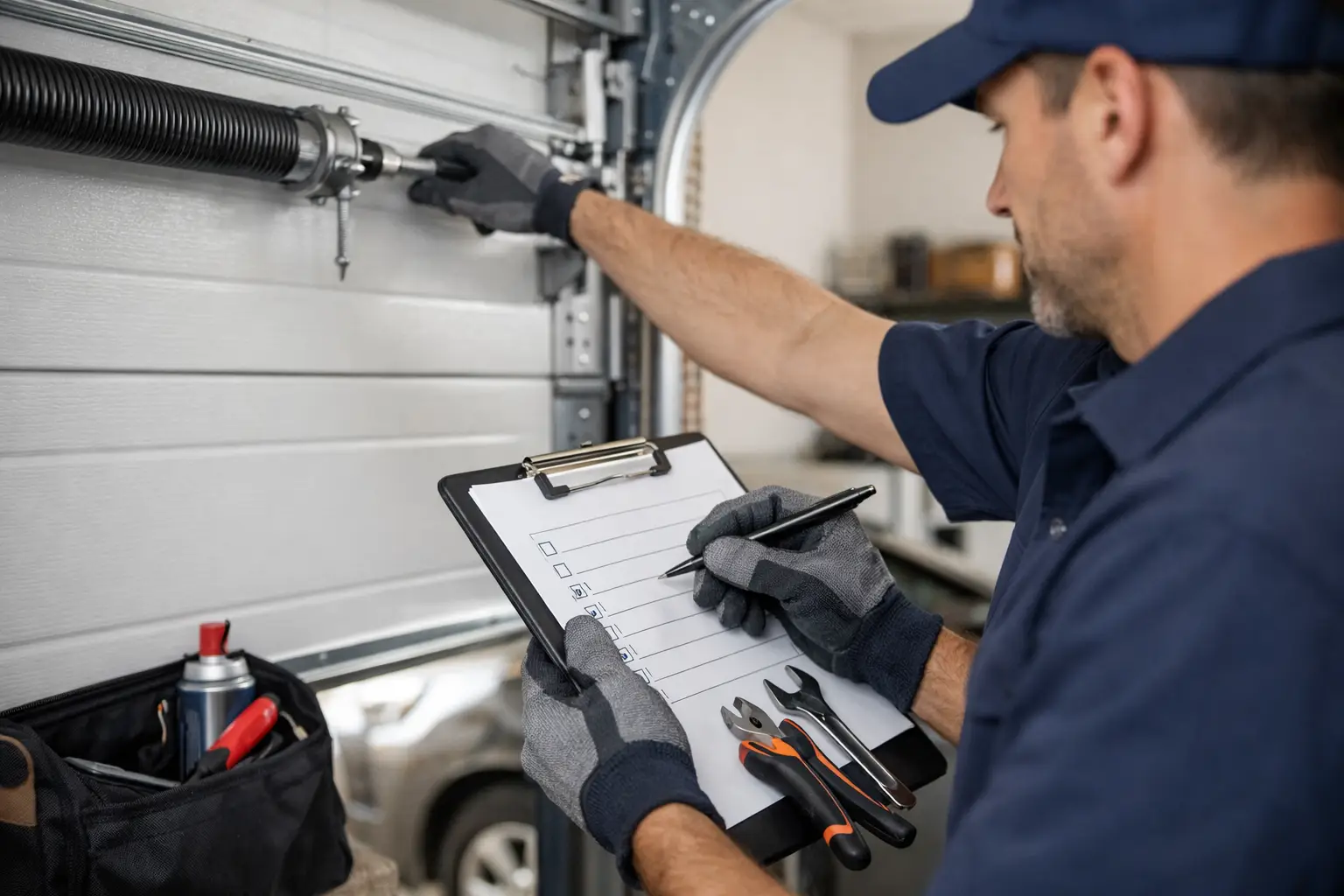
Your garage door usually gives you a warning before it quits. It gets louder, moves slower, shakes on the way up, or stops closing like it used to. That is why a good garage door maintenance checklist guide matters for homeowners in Longmont. A few simple checks can help you catch small problems early, avoid surprise breakdowns, and know when it is time to call for professional repair.
Most homeowners are not looking to become garage door experts. You just want the door to open, close, and stay safe. That is the right mindset. Some maintenance is basic and worth doing. Some issues need a trained garage door technician, especially when springs, cables, or door balance are involved.
What a garage door maintenance checklist guide should help you catch
A garage door is a heavy moving system with a lot of parts working together. Rollers, tracks, hinges, springs, cables, sensors, and the opener all have a job to do. When one part starts wearing out, the rest of the system often has to work harder.
That is why maintenance is not just about making the door quieter. It is about safety, reliability, and avoiding bigger repair bills. A noisy roller might be minor today. If it causes rough movement and added strain, it can lead to opener issues or track problems later.
Colorado weather also plays a role. Dry conditions, temperature swings, dust, and winter cold can all affect metal parts, lubrication, weather seals, and door alignment. A garage door that seemed fine in summer can start acting up fast when the temperature drops.
Start with a basic visual inspection
Before touching anything, stand inside the garage with the door closed and take a slow look at the whole system. You are not trying to diagnose every detail. You are looking for obvious signs that something is off.
Check the springs, cables, rollers, hinges, and tracks. If you see frayed cables, loose hardware, bent track sections, cracked rollers, or worn hinges, that is worth attention. Rust on metal components can also be a sign that parts are aging out or not being maintained properly.
Look at the door panels too. Dents, cracks, and warping do not always mean immediate failure, but they can affect how evenly the door moves. On insulated or older doors, panel damage can eventually turn into bigger structural issues.
Listen to how the door sounds
Open and close the door a few times and pay attention to the noise. Every garage door makes some sound, but sudden changes matter. Grinding, squealing, popping, scraping, or banging usually means something needs service.
A squeak might be as simple as dry hinges or rollers. A scraping noise may point to track alignment or worn rollers. A loud bang from the spring area is more serious and can mean a broken spring. If that happens, stop using the door and call a pro.
The key here is trend, not perfection. If the door has always sounded a certain way and now sounds worse, that is your sign to investigate.
Test door balance carefully
Balance is one of the most important checks in any garage door maintenance checklist guide, but it is also one of the most misunderstood. A properly balanced door should stay in place when lifted halfway by hand. If it drops fast, feels very heavy, or shoots upward, the spring system may be out of adjustment.
To test it, pull the opener release cord with the door closed so the opener is disconnected. Then lift the door by hand to about halfway and let go carefully. If it does not stay fairly steady, do not try to adjust the springs yourself.
This is where DIY should stop. Garage door springs are under high tension. Trying to tighten, loosen, or replace them without the right tools and training can cause serious injury.
Check rollers, hinges, and tracks
Rollers and hinges take constant movement, so they wear out over time. If rollers wobble, crack, or make excessive noise, they may need replacement. Metal rollers can last a long time, but they still need inspection. Plastic rollers usually wear faster.
Tracks should be clean and reasonably straight. You do not want heavy buildup, debris, or visible bends. Minor dirt can be wiped away, but bent tracks or loose track mounting brackets should be handled professionally. Track alignment affects the entire path of the door, and small errors can turn into bigger operating problems.
Hardware matters too. Vibration from daily use can loosen bolts and brackets over time. Tightening visible hardware can help, but avoid adjusting anything attached to the spring system or bottom brackets.
Lubricate the right parts
Lubrication helps reduce wear and noise, but only when done correctly. Homeowners often either skip it completely or spray everything in sight. Neither approach is ideal.
Use a garage-door-specific lubricant on hinges, rollers, bearings, and springs if the manufacturer allows it. A light, targeted application works better than overdoing it. Wipe away excess so it does not collect dust and grime.
Do not grease the tracks. That can make things messier and attract debris. Tracks generally need to stay clean, not slick. If the door is still noisy after proper lubrication, there may be a worn part or alignment issue behind it.
Test the auto-reverse and photo-eye sensors
Garage door safety features deserve regular attention, especially if you have kids, pets, or frequent foot traffic through the garage. The auto-reverse system should stop and reverse the door if it contacts an object while closing.
A simple test is to place a solid object like a piece of wood in the door's path and close the door. It should reverse when it touches the object. If it does not, stop using the opener until the system is checked.
Photo-eye sensors should also be tested. These are the small sensors near the bottom of the door tracks. If they are dirty, blocked, or misaligned, the door may refuse to close or reverse unexpectedly. Wipe the lenses clean and make sure both sensors face each other.
If the lights blink or the door behaves inconsistently, the problem may be wiring, sensor alignment, or opener logic. That is usually a service call, not a guessing game.
Inspect the weather seal and bottom rubber
A garage door does more than secure the opening. It also helps keep out water, dust, cold air, and pests. That is why the bottom seal and perimeter weather stripping should be part of your maintenance routine.
If the bottom rubber is cracked, brittle, or missing sections, replace it. The same goes for side and top seals that no longer sit tight against the frame. In Longmont, weather exposure can wear these materials out faster than many homeowners expect.
This may seem like a small detail, but damaged seals can lead to water intrusion, dirt buildup, and energy loss in attached garages.
Watch the opener for signs of strain
Your opener should not sound like it is fighting for its life every time the door moves. If the motor is unusually loud, the chain or belt looks loose, or the opener hesitates, there may be an underlying issue.
Sometimes the opener is not the real problem. A heavy, unbalanced, or sticking door can overwork the opener until it starts failing too. Replacing an opener without fixing the door itself often leads to more trouble later.
Check the wall control, remote response, and opener light behavior. If controls are inconsistent, it could be electrical, battery-related, or mechanical. It depends on the symptoms, which is why a full inspection often saves time.
When to stop and call a garage door pro
Some maintenance is homeowner-friendly. Some is not. If you notice a broken spring, frayed cable, crooked door, door off track, severe shaking, or a door that will not stay open, stop using it. Those are not wait-and-see problems.
The same goes for doors that slam shut, open unevenly, or leave gaps when closed. These issues affect both safety and security. What starts as a minor inconvenience can become a bigger repair if the system keeps being forced to operate.
For many homeowners, the smart move is simple: handle light cleaning, basic observation, and sensor checks yourself, then call for service when the door shows signs of real wear. That approach lowers risk and keeps the system in better shape over time.
How often should garage door maintenance be done?
For most homes, a visual check every month or two is enough. A more complete maintenance review once or twice a year is a good standard. If the door gets heavy daily use, has older parts, or has already needed repairs before, more frequent checks make sense.
Season changes are a practical time to do it. Before winter and again in spring, look over the system and pay attention to new noise or movement changes. Catching a worn roller or weak spring early is a lot easier than dealing with a door that will not open when you are already late.
If you want the short version, this garage door maintenance checklist guide comes down to paying attention. Watch the door, listen to it, test the safety features, and do not ignore changes. A garage door rarely fixes itself, but it often gives you a chance to fix the problem before it turns into a bigger one.