
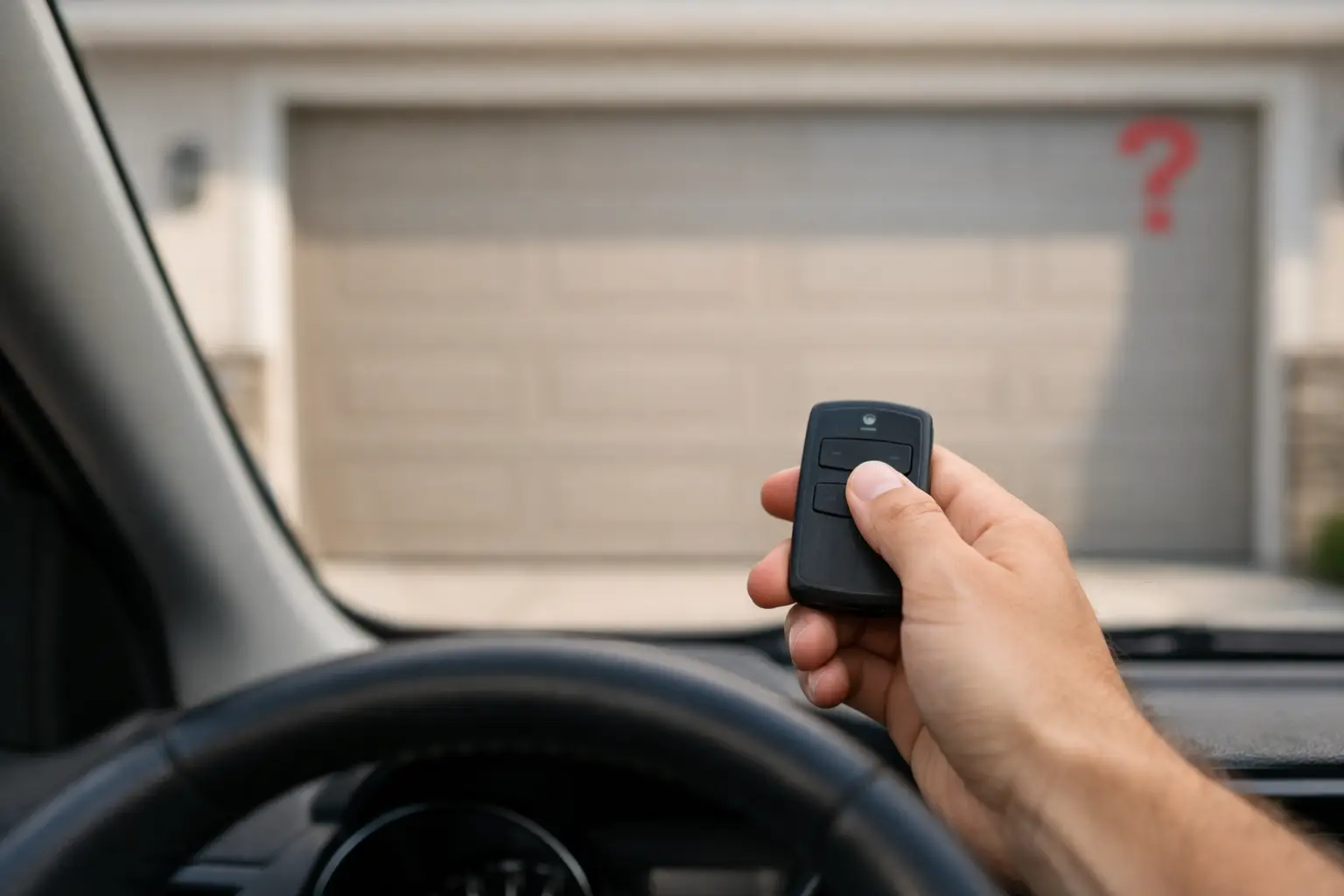
You press the button, the light on the remote may or may not blink, and nothing happens. If your garage door remote stopped working, that usually means one of two things - either the remote lost its signal, or something in the opener system is no longer responding the way it should. For homeowners in Longmont, this kind of problem goes from annoying to urgent fast, especially when your car is stuck inside or the garage will not close securely.
The good news is that a dead remote does not always mean a major repair. Sometimes it is a simple battery issue. Sometimes the remote itself is fine, but the wall button, opener, safety sensors, or logic board is where the real problem starts. The trick is not guessing wrong and wasting time on the part that is not actually failing.
When a garage door remote stopped working, start with the simple checks
The first thing to look at is the battery. This sounds obvious, but it is the most common reason a remote quits. Even if the small LED still lights up, the battery may not have enough strength to send a clean signal to the opener. If the remote has been working inconsistently, only works up close, or stopped after getting weak for a few days, a fresh battery is the first move.
Next, check the lock feature on the wall control. Many homeowners do not realize the wall panel can disable remote operation entirely. If someone hit the lock button by accident, the wall station may still open the door while every remote in the house appears dead. This is especially common in homes with kids, guests, or newer control panels with multiple buttons.
Then try the remote from different distances and angles. If it only works when you are right under the opener, signal interference or a weakening remote may be part of the problem. LED bulbs in or near the opener can sometimes interfere with remote frequency. So can certain electronics in the garage. It does not happen in every home, but it is common enough to be worth checking.
The problem may not be the remote at all
A lot of homeowners assume the remote failed because that is the part in their hand. But if the opener does not respond to the wall button either, the issue is somewhere else. That could mean a power problem, a tripped GFCI outlet, a bad circuit board, or an opener that is starting to fail.
If the wall button works but the remote does not, the remote or receiver is a more likely suspect. If neither one works consistently, it points more toward the opener system. That difference matters because replacing remotes will not fix a motor unit that is losing power or a board that no longer reads commands correctly.
There is also the possibility of sensor trouble. Safety sensors usually affect closing more than opening, but they can create confusing symptoms. If your garage door opens with the remote but will not close, or starts down and reverses, the remote is probably not the issue. Misaligned sensors, dirty lenses, or damaged sensor wiring are much more likely.
Reprogramming can fix a remote that lost connection
Sometimes the remote simply loses its programming. This can happen after a power outage, electrical surge, opener reset, battery change, or circuit board issue. In that case, the remote is not broken - it just is not paired to the opener anymore.
Most opener systems have a learn button on the motor unit. Reprogramming usually involves pressing that button and then pressing the remote button within a short time window. The exact steps depend on the opener brand and model. LiftMaster, Chamberlain, Genie, Craftsman, and other brands all have slightly different procedures.
This is one of those jobs that can be simple if everything else is working normally. But if the opener will not enter learn mode, forgets programming repeatedly, or only pairs temporarily, that points to a deeper issue with the receiver or control board.
Signs the remote is damaged and not worth fighting with
Remotes take abuse. They get dropped on driveways, left in hot cars, stepped on, and soaked by weather. If the case is cracked, the buttons are sticking, or the battery contacts are corroded, the remote itself may be done.
A damaged remote often gives inconsistent behavior. You may have to press the button several times, hold it at a certain angle, or squeeze the case to get a response. In some cases, the button membrane wears out internally, so it looks fine from the outside but no longer sends a proper signal.
If you have a second remote that works normally, that is a strong clue. If every remote in the home stopped at the same time, that is less likely to be a remote failure and more likely to be an opener-side problem.
Why your garage door remote stopped working after a battery change
This situation throws people off because the battery was supposed to fix it. If your garage door remote stopped working after a battery replacement, there are a few possibilities. The new battery may be installed backward, may be the wrong type, or may not be making solid contact with the terminals.
There is also the chance the battery change was not the cause at all - it only happened around the same time the remote lost programming or the opener developed another issue. That is why it helps to test the wall control and any spare remotes before assuming the battery swap caused the failure.
If you changed the battery and the remote still shows no light, inspect the contacts inside the compartment. Bent terminals or corrosion can stop power from reaching the board. If the light comes on but the opener does not react, try reprogramming next.
When the opener receiver or logic board is the real issue
Older garage door openers can develop receiver problems over time. The receiver is the part that reads the remote signal. If it starts failing, the remote may work one day and not the next, or only respond at very short range.
A bad logic board can create even more random symptoms. The opener may forget remotes, fail to complete commands, click without moving, or work from the wall button but not from wireless controls. Electrical surges, age, moisture, and worn components can all play a role.
At that point, replacing the remote is usually money wasted. A proper diagnosis matters because the fix could be a receiver, a board, or a full opener replacement depending on age, condition, and parts availability. On an older unit, repair is not always the better value. If the opener is already noisy, unreliable, or lacking current safety features, replacement can make more sense than patching one electronic issue after another.
When to stop troubleshooting and call for repair
If the battery is new, the lock feature is off, and reprogramming does not solve it, the problem is probably beyond a quick DIY fix. The same goes if the remote works only sometimes, all remotes stopped at once, or the opener behaves strangely even from the wall control.
This is where service saves time. A technician can tell whether the issue is the remote, receiver, sensor wiring, wall control, circuit board, or opener itself without trial and error. For homeowners in Longmont, that matters because a garage door that will not open or close properly is not just an inconvenience. It affects security, daily schedules, and access to the home.
Repair Bro's handles this kind of garage door problem the practical way - inspect the system, identify the failed part, and give a clear estimate before repair. That is usually better than buying extra remotes, guessing at parts, and still ending up with the same problem.
A quick word on safety
If the remote issue is happening along with a door that jerks, slams, reverses, or makes sharp grinding noises, do not focus only on the transmitter. Remote trouble can show up at the same time as opener or door hardware trouble, but those are very different repair situations.
A failing spring, damaged roller, loose cable, or misaligned track is not a remote issue, and it should not be ignored. If the door looks uneven or feels heavy in manual mode, stop using it until it is checked. Electronics are one thing. A door under spring tension is another.
A remote that stops working can be a five-minute fix, or it can be the first sign that the opener system is wearing out. The fastest way forward is to rule out the easy stuff, pay attention to how the opener responds, and get it checked before a small problem turns into being stuck outside the garage at the worst possible time.