
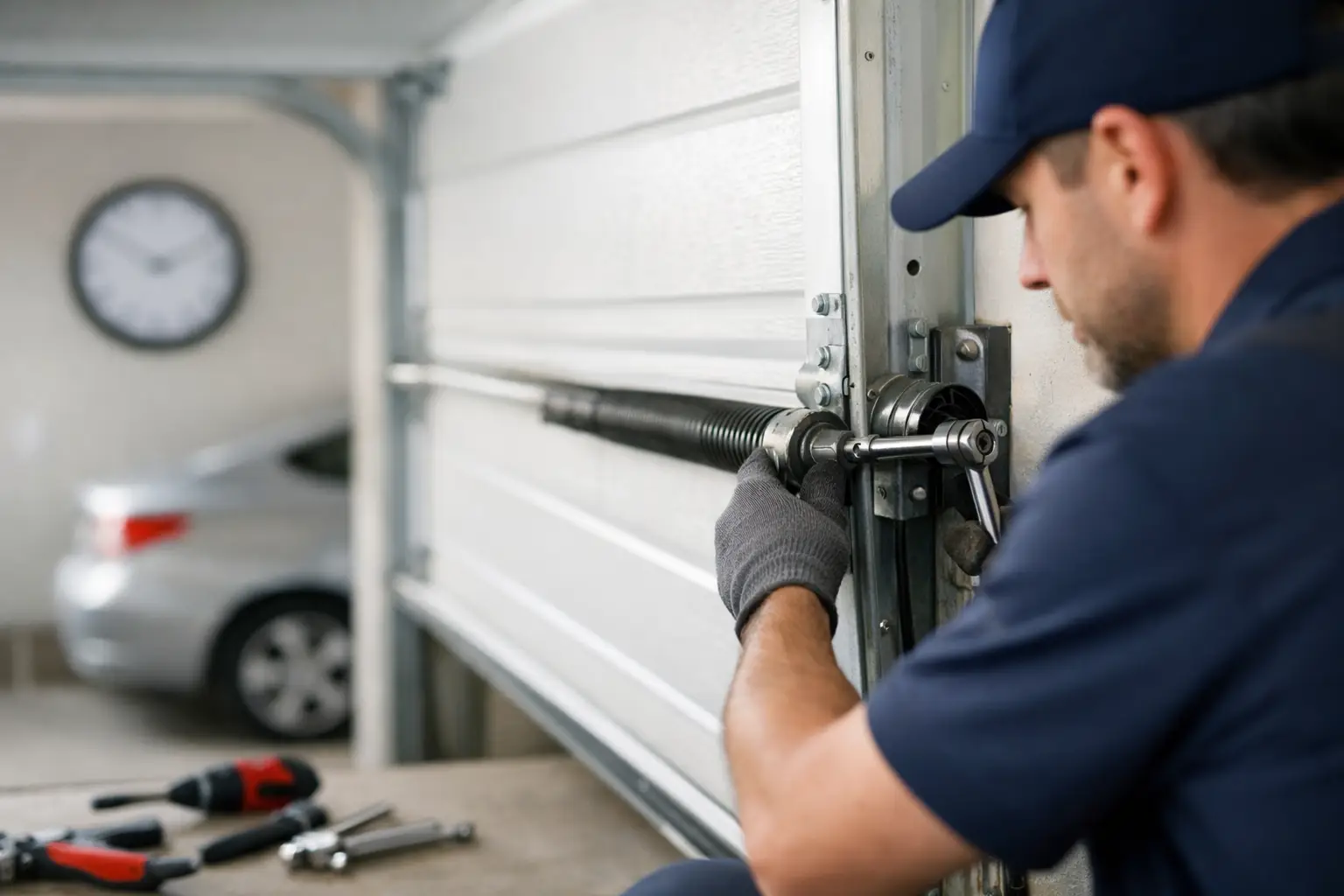
A garage door that will not open at 7:30 a.m. changes the whole day fast. Whether your car is trapped inside, the door will not close securely, or it is making a noise that was not there yesterday, you need a clear garage door repair timeline - not vague promises. Most common repairs can be diagnosed and completed the same day. Larger issues, specialty parts, or a full door replacement may take longer.
For Longmont homeowners, the real answer depends on what failed, whether the door is safe to operate, and whether the needed part is available. Here is what to expect from the first call through a working garage door.
What Happens First: Diagnosis and Safety Check
The first step is finding the actual source of the problem. A garage door may refuse to move because of a broken spring, damaged cable, worn rollers, a blocked photo eye, a failed opener component, or a door that has come off its track. These problems can look similar from the driveway, but they do not have the same repair time or safety risk.
A technician should inspect the springs, cables, tracks, rollers, hinges, opener, sensors, and door balance before giving a repair recommendation. This is why a proper diagnosis matters. Replacing one noisy roller will not solve a door that is binding because the track is bent or the spring tension is wrong.
For many service calls, the inspection and estimate take about 20 to 45 minutes. If the problem is straightforward and the part is on the truck, work can often begin right away. A free estimate gives you the price and repair plan before you commit.
Do not keep running a door that is crooked, hanging from a cable, or moving unevenly. A garage door is heavy, and a small failure can turn into damage to the panels, track, opener, or vehicle. If it will not close, secure the area and arrange service as soon as possible.
Garage Door Repair Timeline by Common Problem
Sensor, remote, and opener setting issues
Some of the quickest calls involve photo-eye sensors, remote controls, wall buttons, or opener settings. If the door starts down and immediately reverses, dirty or misaligned safety sensors are often the cause. A loose wire, dead remote battery, or locked wall control can also stop normal operation.
These repairs commonly take 30 minutes to an hour once the issue is identified. However, an opener that hums but will not lift the door may have a stripped internal gear, bad capacitor, failed logic board, or a door balance issue. That can take one to two hours, depending on the model and part needed.
Broken garage door springs
A broken spring is one of the most common reasons a garage door suddenly feels too heavy to lift. You may hear a loud bang from the garage, see a gap in the spring above the door, or notice that the opener strains without raising the door.
Spring replacement usually takes about one to two hours for a standard residential setup. The exact time depends on whether the door uses torsion springs above the opening or extension springs along the tracks, plus the condition of the cables and bearings. The technician also needs to set the correct tension and balance the door afterward. That final adjustment is not optional - a poorly balanced door wears out the opener and creates a safety problem.
Spring work is not a homeowner DIY job. Springs are under high tension and can cause serious injury when handled incorrectly.
Broken cables or a door off track
A snapped cable or off-track door often needs urgent attention, especially if the door is stuck open or leaning to one side. The repair may involve resetting the door, replacing damaged cables, correcting the track alignment, and checking rollers, drums, and brackets for damage.
Plan on one to three hours for many cable and track repairs. If the door has bent sections, cracked hinges, or badly damaged track, the repair can take longer or require a return visit with replacement parts. Do not pull on cables or force the opener when the door is off track. That usually makes the repair more expensive.
Rollers, hinges, and noisy operation
Squeaking, grinding, rattling, and jerky movement do not always mean an emergency, but they are worth addressing before a component fails. Worn rollers, loose hinges, dry bearings, and track issues can often be repaired during a routine visit.
Expect about one to two hours for roller replacement, hinge repairs, tightening hardware, lubrication, and a general tune-up. Nylon rollers are often a practical option for homeowners who want quieter operation. The best choice depends on the weight and use of the door, not just the desire for less noise.
Damaged panels and full door replacement
A dented panel does not always require a new garage door. If the damage is limited and the panel is still structurally sound, panel replacement may be possible. But matching an older door can be difficult, and a damaged section can affect how the door moves.
A replacement panel may take several days or longer if it must be ordered. A complete garage door replacement usually involves an estimate, selecting the door style and insulation level, ordering materials, and scheduling installation. The installation itself often takes four to eight hours, but the full process can take one to three weeks depending on availability and customization.
What Can Extend the Repair Timeline?
Same-day repairs are common, but not guaranteed. The biggest delay is usually a part that is not stocked locally or a door component made for a specific brand or older model. Specialty springs, custom panels, commercial-grade hardware, and certain opener boards may need to be ordered.
Weather can matter, too. Longmont's cold winters can make an already weak spring fail, while wind, hail, and accidental vehicle impact can damage panels or tracks. During busy weather periods, more homeowners may be calling for urgent service at the same time.
Access also affects the job. A garage packed tightly around the door, a vehicle trapped directly beneath a failed door, or a door with prior incorrect repairs can add time. Clearing enough workspace before the technician arrives helps the visit move faster and keeps everyone safer.
How to Keep Your Repair Moving
When you call, describe what the door is doing as clearly as possible. Mention whether it is stuck open or closed, whether you heard a bang, whether the opener runs, and whether the door is crooked or off track. If you know the opener brand, have that ready as well.
Before service arrives, stop using the opener if the door is visibly damaged or unusually heavy. Keep children and pets away from the door. If the door is closed and secure, leave it closed rather than repeatedly testing it. Repeated operation can damage the opener or cause a cable to come loose.
If a part must be ordered, ask what temporary steps are safe. In some cases, the door can be left manually secured until the repair is finished. In other cases, especially when the door cannot close or is off track, it needs immediate attention to protect your home and prevent further damage.
When the Fastest Repair Is Not the Best Choice
Homeowners understandably want the door fixed quickly. Still, the fastest option is not always the one that saves money over time. Replacing only one worn spring when the matching spring is near the end of its life may lead to another service call soon. Installing a new opener without correcting an unbalanced door can shorten the life of the new unit.
A good repair recommendation should explain the immediate fix, the condition of related parts, and whether a replacement is worth considering. You should not be pushed into replacing a door that can be safely repaired. At the same time, repeated breakdowns, major panel damage, or outdated hardware can make replacement the more practical call.
Repair Bro's provides Longmont garage door repair with clear diagnostics and free estimates, so you can make that decision with the facts in front of you. If your door is stuck, noisy, uneven, or no longer closing safely, getting it checked early is usually the quickest way to get your daily routine back on track.