
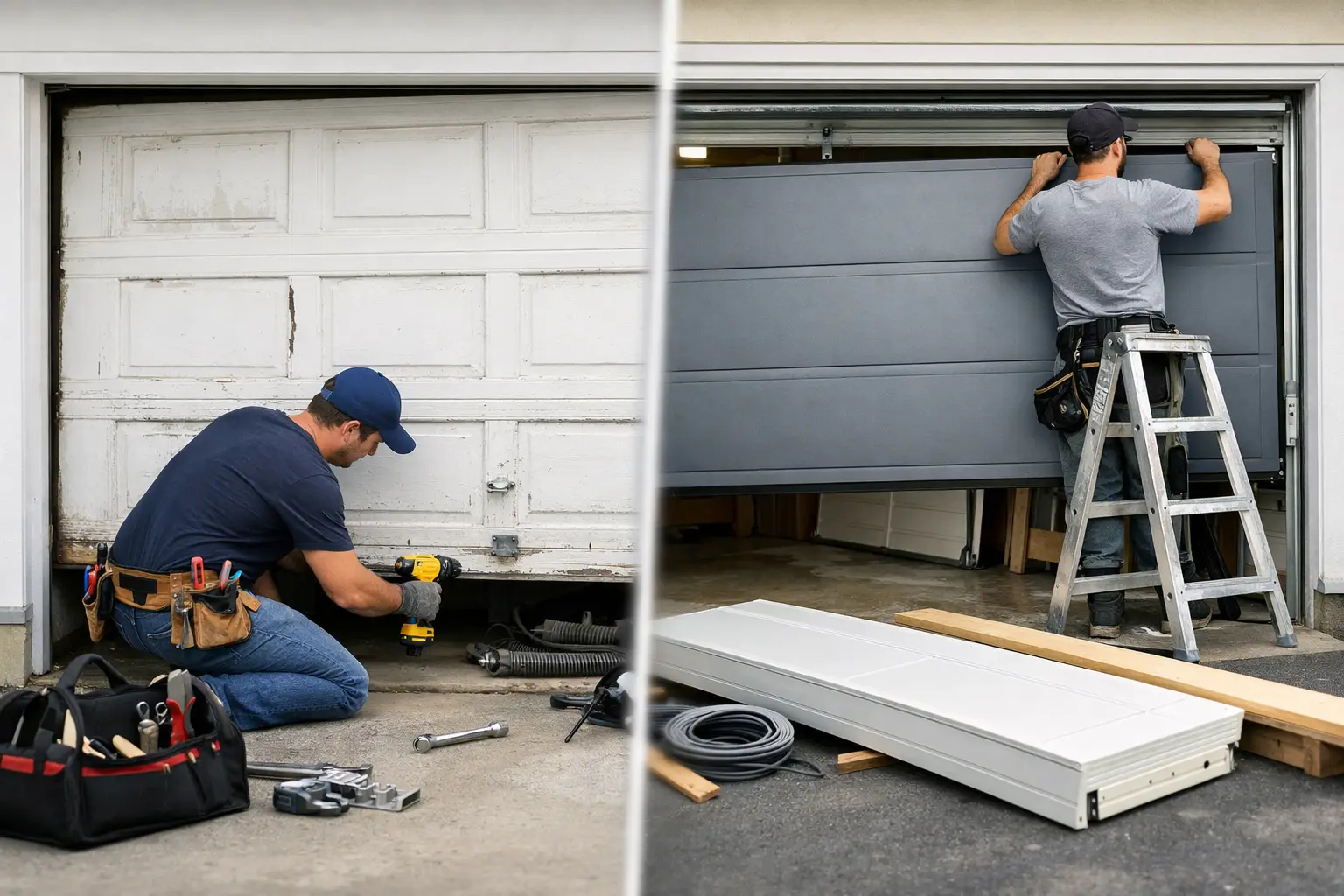
A garage door that will not open at 7 a.m. creates a problem fast. Your car may be trapped, the house may be less secure, and a door that is hanging crooked or making grinding noises can become unsafe to use. When homeowners call about garage door repair vs replacement, they usually want a clear answer: Can this be fixed without wasting money, or is it time for a new door?
The right choice depends on the failed part, the age and condition of the door, and whether the door is still safe to operate. A broken spring is very different from a cracked, rusted door with damaged sections. A professional inspection gives you the facts before you spend money, and a free estimate helps you compare the options without pressure.
When Garage Door Repair Is Usually the Better Choice
Most garage door problems come from moving parts, not from the door itself. Springs, cables, rollers, hinges, tracks, sensors, and openers all take daily wear. When one of these parts fails, a targeted repair can often restore normal operation for far less than replacing the full door.
A repair is commonly the practical answer when the door panels are in good shape and the problem is isolated. For example, a snapped torsion spring can leave a perfectly good door stuck shut. Replacing the spring and checking the balance may be all that is needed. The same is true for worn rollers that make the door loud, a loose cable, a bent track, or photo-eye sensors that prevent the opener from closing the door.
Repairs that often make sense
If your door has one damaged roller, hinge, cable, spring, or sensor, repair is normally the first option. An opener that hums but does not lift the door may also be repairable, especially if the motor, gear, remote, or safety system is the issue.
Minor panel damage can sometimes be repaired as well. A small dent does not always affect performance, particularly on a steel door. If the panel still fits correctly, the tracks are straight, and the door opens smoothly, there may be no reason to replace the whole system for cosmetic damage alone.
Repair is also a good choice for newer doors that have been maintained and have no widespread rust, rot, or warping. A quality garage door can last for years, but its springs and rollers are wear items. Replacing those components as needed is normal home maintenance, not a sign that the door itself has failed.
Signs Replacement May Save You Money
Replacement becomes the smarter investment when the door has structural damage, repeated failures, or safety problems that cannot be solved with one reasonable repair. The lowest immediate price is not always the lowest cost over the next few years.
A door with several cracked or bent sections may not move safely through the tracks. Wood doors with rot or major moisture damage can lose strength. Older steel doors can rust through at the bottom edge, especially where snow, road grit, and moisture collect. In these cases, replacing parts may only delay another service call.
Repeated breakdowns are another warning sign. If you have repaired the springs, rollers, cables, and opener in a short period, the system may be nearing the end of its useful life. The issue is not that every old door must be replaced. It is that worn components can add up, and an aging door may continue to put strain on the opener and hardware.
Damage that changes the decision
A garage door should be replaced when it cannot reliably protect the opening, move safely, or close securely. Severe storm damage, a vehicle impact, extensive rust, sagging sections, and multiple broken panels are common examples.
Replacement can also be worth considering if an older door lacks insulation and your garage shares walls with living space. In Longmont, temperature swings can make an uninsulated garage uncomfortable and can affect rooms beside or above it. A newer insulated door may improve comfort, reduce outside noise, and give your home a more finished appearance. Energy savings vary by home, so this should be viewed as one factor, not a guaranteed payoff.
Garage Door Repair vs Replacement: Questions to Ask
Before deciding, focus on the condition of the entire system rather than the one part that stopped working. A technician should inspect the door sections, springs, cables, rollers, tracks, hinges, opener, and safety sensors. This matters because a snapped cable may be the visible problem, while a worn spring or damaged drum is the reason it happened.
Ask whether the repair addresses the root cause or only gets the door moving for now. A temporary adjustment may be appropriate if you need to secure the garage immediately, but you should know what future work is likely.
It also helps to compare the repair estimate with the cost of replacement. There is no single percentage that works for every door. A repair that is reasonable on a newer insulated door may not make sense on a 25-year-old door with rust and recurring problems. Consider the door's age, appearance, expected remaining life, and the condition of the opener along with the estimate.
If replacement is recommended, ask whether only the door needs replacement or whether the tracks, springs, and opener should be updated too. Sometimes an existing opener can work with a new door. In other cases, an older opener may not be properly matched to the new door's weight or safety requirements.
Safety Comes Before Cost
A garage door can weigh hundreds of pounds, and the spring system carries significant tension. Do not try to remove, wind, or replace torsion springs yourself. Do not disconnect cables or force a door open if it is crooked in the tracks. These are jobs for a trained garage door technician with the right tools.
If the door is partially open, off track, or hanging unevenly, stop using it. Keep children and pets away from the opening, and do not park under the door. If the door will close safely and the opener is working, secure the garage until service arrives. If it will not close, avoid leaving the home unsecured when possible and arrange prompt service.
Safety sensors deserve attention too. If the door reverses unexpectedly or will not close, clean the sensor lenses and make sure nothing is blocking them. If the sensors are aligned and the problem continues, schedule a diagnosis. Bypassing safety features is not a safe fix.
What a Good Inspection Should Give You
You should not have to guess whether a repair recommendation is fair. A solid garage door inspection should explain what failed, why it failed, what parts are worn, and what the repair will cost. If replacement is the better option, you should be told why in plain language.
At Repair Bro's, the goal is to give Longmont homeowners a direct answer and a free estimate before work begins. Sometimes that answer is a straightforward spring, cable, roller, or opener repair. Other times, replacement is the more reliable path. The right recommendation should match the actual condition of your door, not a one-size-fits-all sales pitch.
Keep a Repairable Door Working Longer
Basic maintenance can prevent many avoidable failures. Watch and listen to the door as it moves. It should lift evenly, stay reasonably quiet, and reverse when the safety system is triggered. Squeaking, grinding, shaking, or slow movement are signs to address before a small issue becomes a stuck door.
Keep the tracks clear of debris, but do not grease them heavily. Check weatherstripping for cracks and look over the door for loose hardware or damaged rollers. A professional tune-up can identify worn parts, test door balance, and help reduce strain on the opener.
If your garage door is unsafe, unreliable, or hard to operate, do not wait for it to fail completely. Get a clear diagnosis, compare the real repair and replacement costs, and choose the option that gives your Longmont home safe, dependable access again.