
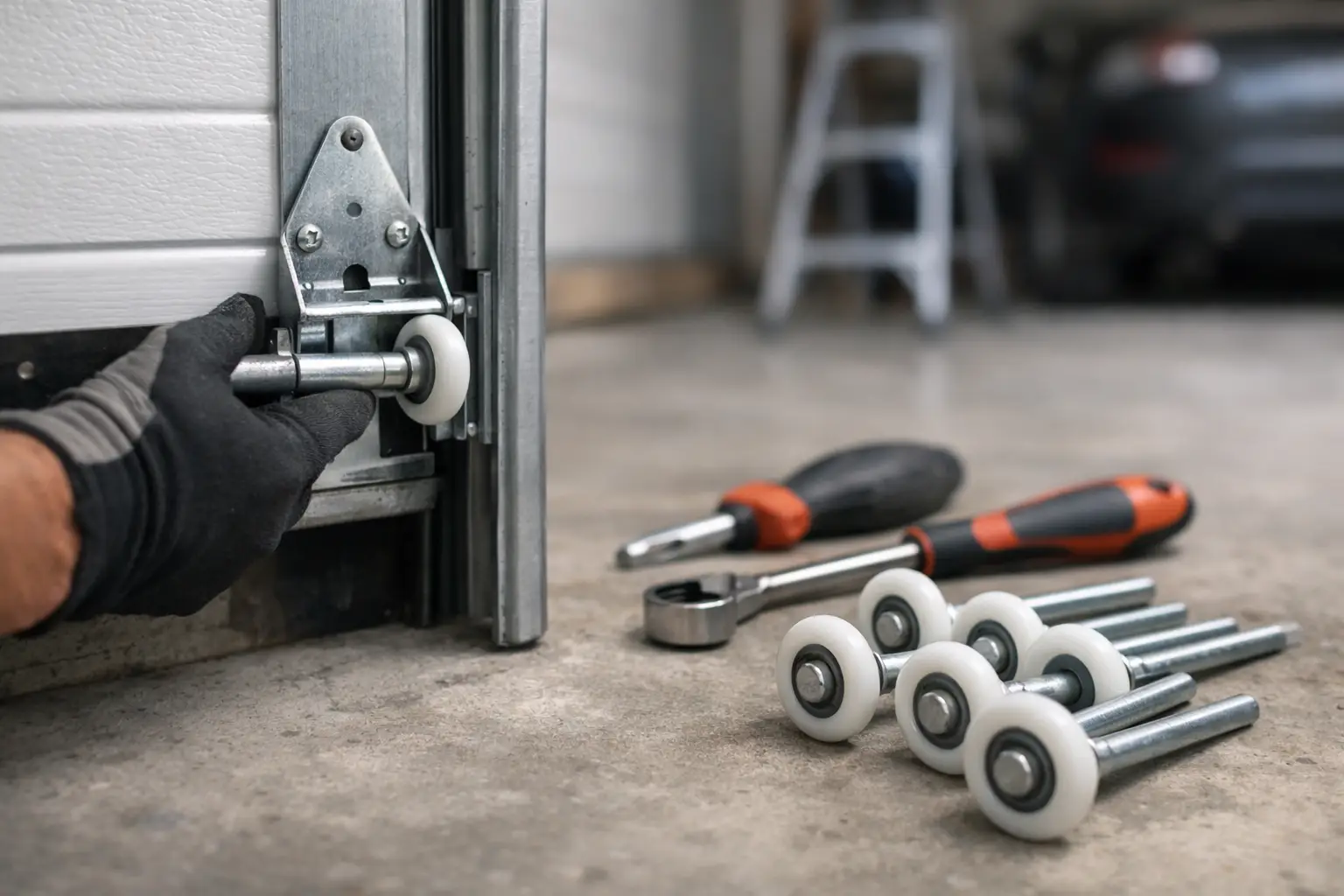
A garage door that shudders, squeals, or jerks halfway up is often telling you the problem is in the rollers. Garage door roller replacement is one of the most common fixes for noisy, uneven, or unreliable door movement, and it is not something homeowners should ignore for long. Bad rollers put extra strain on the track, hinges, opener, and door sections, which can turn a smaller repair into a bigger one fast.
In Longmont, that matters more than people think. A garage door is not just a convenience. It is a daily entry point, a security barrier, and for many homes, the main way people get in and out. When the rollers start wearing out, the whole system pays for it.
When garage door roller replacement makes sense
Rollers do a simple job, but they take a lot of abuse. Every open and close cycle puts pressure on the wheel, stem, bearings, and track contact points. Over time, they wear down, crack, flatten, loosen, or stop rolling smoothly.
If your garage door has started making grinding sounds, squeaking more than usual, or moving in a shaky line instead of a smooth one, worn rollers are a likely cause. You may also notice the door hesitating in one section of travel, leaning slightly as it moves, or banging louder when opening and closing.
Sometimes homeowners assume the opener is the issue because the door sounds rough or struggles to move. In plenty of cases, the opener is only reacting to drag caused by failing rollers. Replacing the opener without fixing the rollers does not solve the real problem.
Another sign is visible damage. If the rollers look chipped, worn, bent, or loose in the track, that is a clear signal the system needs attention. Nylon rollers can crack. Metal rollers can rust, seize up, or wear their bearings out. Either way, the door stops moving the way it should.
Why bad rollers should not be left alone
A lot of garage door problems start small. A single worn roller may only cause a little extra noise at first. But garage doors are connected systems. One failing part creates more strain elsewhere.
When rollers stop moving smoothly, the track sees more friction. Hinges can loosen. The opener may work harder than it should. The door can start pulling unevenly, which affects balance and travel. That means what starts as a roller issue can lead to bent track sections, damaged hinges, opener wear, and in some cases, doors that come off track.
There is also the safety side. A garage door is heavy. If it binds, jerks, or drops unevenly because the rollers are worn out, that is not something to gamble with. Families with kids, pets, or frequent garage traffic should take roller issues seriously.
Garage door roller replacement is not always a DIY job
Some homeowners look up roller replacement and assume it is a quick weekend repair. The truth is, it depends on where the bad rollers are located and what condition the rest of the door is in.
Lower rollers and rollers near high-tension components can be risky to handle without the right tools and experience. Garage doors use springs under heavy tension, and the wrong move around those parts can cause injury or damage. Even if a person manages to swap one roller out, they can miss related issues like hinge wear, track alignment problems, or incorrect door balance.
That is why a professional inspection matters. A service tech is not just changing wheels. They are checking whether the rollers are the main problem, whether all rollers should be replaced at once, and whether the track, hinges, and opener have already been affected.
What type of rollers are used matters
Not all garage door rollers perform the same way. The material and quality make a difference in noise, longevity, and overall door movement.
Basic plastic rollers are usually the shortest-lived option. They are found on some builder-grade doors and tend to wear out faster. Metal rollers are durable, but they are often noisier and can become rough over time if bearings wear down or rust sets in. Nylon rollers are a popular upgrade because they run quieter and usually provide smoother operation, especially on doors used several times a day.
That said, there is no one-size-fits-all answer. The best choice depends on the weight of the door, how often it cycles, and the condition of the rest of the hardware. For a homeowner who wants a quieter garage, upgraded nylon rollers often make sense. For another property, the priority may be durability and matching the existing setup.
Should you replace one roller or all of them?
If one roller is broken, people naturally ask whether they can replace only that one. Technically, sometimes yes. Practically, it depends.
If the rollers are all roughly the same age and one has already failed, the others may not be far behind. Replacing only one roller can be a short-term fix, but it often means another service call soon after. For older doors or systems with visible wear across multiple rollers, full garage door roller replacement is usually the smarter move.
A full replacement also helps the door move more evenly. Mixing old worn rollers with one or two new ones can still leave the system noisy or unstable. When the goal is smoother, safer operation, replacing the full set often gives better results.
What happens during professional garage door roller replacement
A proper service call starts with inspection, not guesswork. The tech checks the rollers, hinges, tracks, springs, and opener behavior to confirm the source of the problem. That matters because a noisy garage door can have more than one cause.
Once the issue is confirmed, the damaged or worn rollers are removed using the right process for that specific door type. The replacement rollers are installed, hardware is checked, and the system is tested for smooth movement. If needed, the tech may also point out related problems such as bent track, loose brackets, worn hinges, or balance issues.
This is where working with a local garage door specialist helps. You are not paying for a generic handyman approach. You are getting someone who works on these systems every day and knows what causes repeat failures.
Cost depends on the condition of the whole door
Homeowners usually want a simple price answer, and that is fair. But garage door roller replacement can vary based on the number of rollers, the roller type, the door size, and whether other hardware is worn out too.
A door with a few worn rollers and otherwise solid hardware is different from a door that has roller damage, bent track spots, and hinge wear. The lowest upfront price is not always the best value if the job skips obvious related issues.
That is one reason free estimates matter. You should be able to find out what is wrong, what needs immediate repair, and what can wait without feeling pressured into a guess. For Longmont homeowners, that kind of pricing clarity helps when the garage door problem shows up at the worst possible time.
Why local service matters for Longmont homeowners
Garage door problems are rarely convenient. People notice them when they are trying to leave for work, get kids to school, or secure the house for the night. Waiting around for broad scheduling windows or dealing with companies that treat garage doors like a side service gets old fast.
A local company focused on garage doors can usually diagnose the problem faster and recommend the right repair without overcomplicating it. That is the real value. Straight answers, practical repair options, and work that gets the door back to normal.
For homeowners in Longmont, Repair Bro's is built around that kind of service. If your door is getting louder, sticking in the track, or moving unevenly, getting it checked early can save you from a much bigger repair later.
When to make the call
If your garage door is suddenly louder, shakes while moving, or looks uneven in the track, do not wait for it to fail completely. Roller issues usually get worse, not better. And once extra strain starts affecting the rest of the system, repair costs can climb.
The smart move is to get the door inspected while the problem is still manageable. Sometimes the fix is straightforward. Sometimes the rollers are only part of the story. Either way, a clear diagnosis beats guessing.
A garage door should open smoothly, close securely, and stay out of your way. If it is fighting you every day, that is your sign to get it fixed before a noisy nuisance turns into a stuck door or a safety issue.