
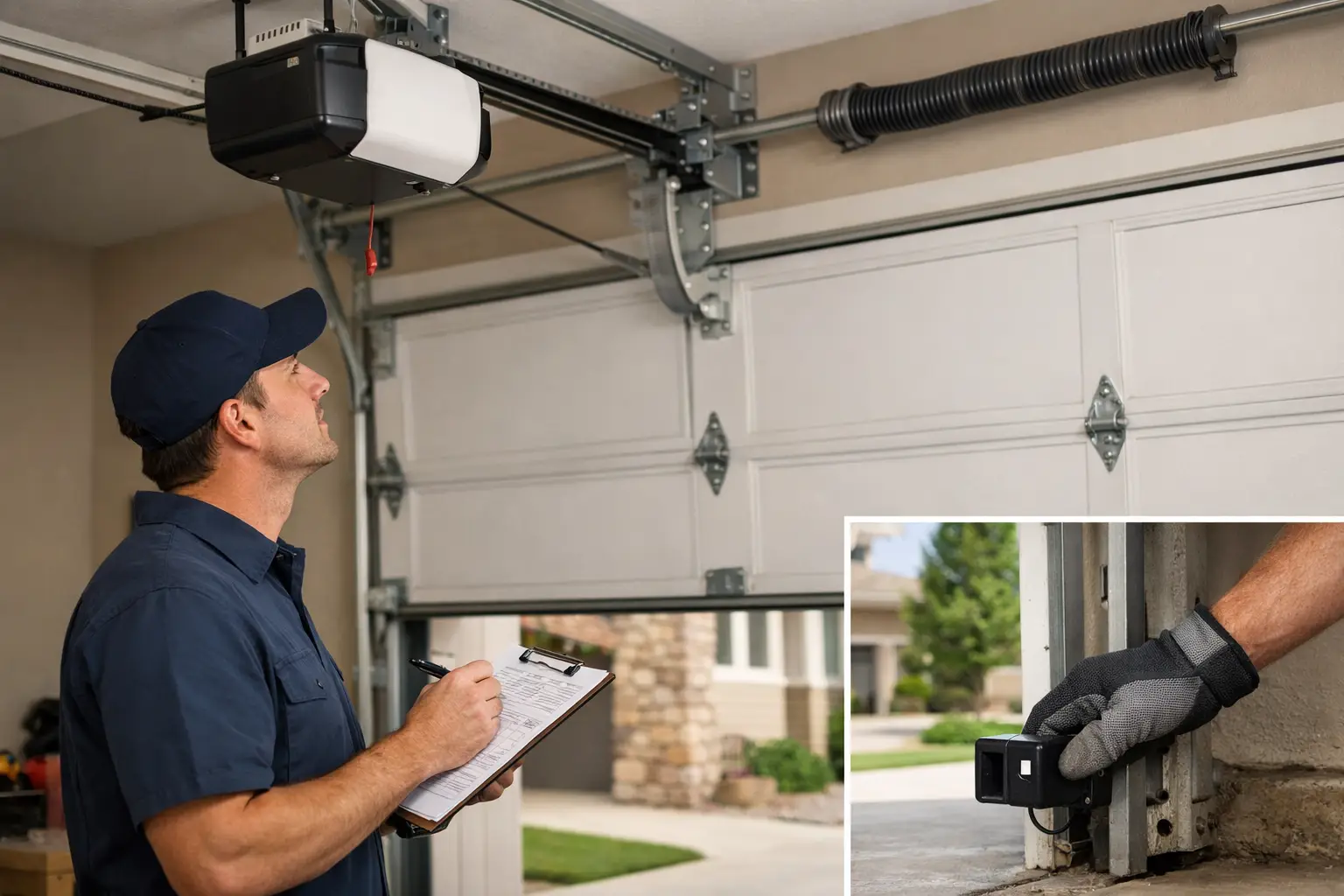
A garage door can weigh a few hundred pounds, move several times a day, and sit directly over one of the busiest entrances to your home. When a spring, cable, roller, or safety sensor starts failing, the problem is not just an inconvenience. A garage door safety inspection helps catch issues before the door sticks open, drops unexpectedly, damages a vehicle, or puts someone at risk.
For Longmont homeowners, regular checks make sense. Cold snaps, wind, dust, and normal daily use all take a toll on moving parts. You do not need to wait until the door quits working to have it looked at.
What a Garage Door Safety Inspection Covers
A proper inspection looks beyond whether the opener remote still works. The door, opener, tracks, hardware, and safety systems all need to work together. One worn part can put added strain on the rest of the system.
A technician starts by watching the door operate. Is it moving smoothly? Does it shake, scrape, slam, or stop halfway? Unusual movement often points to worn rollers, loose hardware, track trouble, an out-of-balance door, or a spring issue.
The inspection should also include the door panels and hinges. Cracked panels, bent hinges, damaged bottom brackets, and loose bolts can affect how the door travels. A small issue may be repairable now, while continued use can turn it into a larger repair or a replacement decision later.
Springs, Cables, and Bottom Brackets
Springs carry most of the door's weight. When a spring is properly sized and in good condition, the opener does not have to work excessively hard to raise the door. When a spring wears out or breaks, the door can become very heavy and difficult to control.
Cables run under high tension and help lift the door evenly. Frayed cables, loose cables, or cables that have come off the drum need professional attention. The same goes for bottom brackets. These parts are not safe for a homeowner to adjust because they are connected to the spring system under tension.
If you hear a loud bang from the garage and the door will not open more than a few inches, a broken spring is a likely cause. Do not keep pressing the opener button. Stop using the door and have it inspected.
Tracks, Rollers, and Hardware
Tracks guide the door, but they are not meant to support its full weight. Bent tracks, loose mounting brackets, or a roller that has popped out can cause binding and uneven travel. A door that is forced through that condition can damage the opener, panels, and track system.
Rollers should move freely without excessive wobbling or grinding. Steel rollers can become noisy as they wear, while nylon rollers usually run more quietly but still need to be checked for cracking or worn bearings. During an inspection, loose nuts, bolts, and hinge hardware should be identified and tightened where appropriate.
Lubrication matters, but it is not a fix for every noise. A garage door that suddenly gets loud may need more than spray lubricant. Grinding, popping, or scraping sounds deserve a closer look, especially if the door has started moving unevenly.
Safety Sensors and Opener Testing
Modern garage door openers use photo-eye sensors near the bottom of the tracks. These sensors send an invisible beam across the opening. If a person, pet, bike, or other object breaks that beam while the door is closing, the door should reverse.
During a garage door safety inspection, the sensors should be checked for alignment, secure mounting, clean lenses, and proper response. A blinking sensor light, a door that reverses for no clear reason, or a door that will only close when you hold the wall button are common signs of sensor trouble.
The opener's auto-reverse function should be tested as well. When the closing door contacts an object, it should reverse rather than continue pressing down. This setting can be affected by door balance, worn parts, opener force settings, and installation issues. It should not be ignored just because the door eventually opens again.
The emergency release also deserves attention. Homeowners should know where it is and how it works, but it should only be used when the door is fully closed unless a professional has advised otherwise. Pulling the release on an open, poorly balanced door can allow the door to fall quickly.
Signs You Should Schedule an Inspection Soon
Some garage door problems are obvious. Others develop slowly enough that homeowners get used to them. If any of these conditions sound familiar, it is time to schedule service rather than wait for a complete breakdown:
- The door shakes, jerks, or moves unevenly while opening or closing.
- You hear grinding, squealing, popping, or a loud bang.
- The door reverses unexpectedly or will not close with the remote.
- The opener strains, hums, or lifts the door only partway.
- Cables look frayed, loose, or out of place.
- The door feels unusually heavy when operated manually.
- The door has been hit by a vehicle, bike, ball, or other object.
A door that is stuck open also creates a home security problem. Even if the issue seems minor, an open garage can give access to tools, vehicles, and sometimes an entry door into the house. Fast diagnosis is usually the better move.
What Homeowners Can Check Safely
There are a few basic checks you can make without touching high-tension components. Keep children and pets clear of the doorway, and never stand or walk under a moving garage door.
First, watch the door from inside the garage during one full open-and-close cycle. Look for crooked movement, rubbing, or gaps between rollers and tracks. Check that photo-eye sensors are clear of leaves, spiderwebs, boxes, and dirt. Make sure nothing is blocking the door's path.
You can also inspect the visible hardware for obvious damage. Look for cracked hinges, loose track brackets, damaged weatherstripping, or dents that interfere with movement. If the door is closed, look at springs and cables from a safe distance. Do not touch them, try to reattach a cable, or attempt to replace a spring yourself.
If your door has a manual lock, confirm it is not accidentally engaged before operating the opener. A locked door and a running opener can cause unnecessary damage. For any issue involving springs, cables, brackets, tracks, or opener safety reversal, call a garage door specialist.
How Often Should a Garage Door Be Inspected?
For most homes, a professional inspection once a year is a practical baseline. Homes with several drivers, frequent garage use, rental turnover, or an older door may benefit from more frequent service. Property managers should also consider inspections between tenants if the garage is part of the lease.
There is no need to replace every part simply because a technician finds normal wear. A good inspection separates immediate safety concerns from maintenance items that can be planned for later. For example, a noisy but functional roller may be a maintenance recommendation, while a frayed cable or failed safety sensor needs prompt repair.
Longmont weather can also influence timing. After a hard winter, a windstorm, or an impact to the door, it is worth checking operation. Seasonal temperature changes can expose problems with lubrication, weather seals, opener settings, and aging hardware.
When Repair Is Enough and When Replacement Makes Sense
Many safety issues can be repaired without replacing the whole door. Sensors can be realigned, rollers can be replaced, tracks can sometimes be adjusted, and worn springs or cables can be installed correctly. If the door itself is in good condition, repair is often the sensible choice.
Replacement may make more sense when panels are badly damaged, the door has repeated structural problems, the insulation no longer meets your needs, or replacement parts are no longer practical. An older opener without modern safety features may also be worth replacing instead of repeatedly repairing.
The right answer depends on the condition of the full system, not just the part that failed that day. A clear estimate gives you room to make that call without guessing.
If your garage door is noisy, uneven, slow, or acting unpredictable, do not treat it like a problem for another weekend. Repair Bro's provides local garage door service in Longmont with free estimates, so you can get the issue checked and know what it will take to get the door operating safely again.