
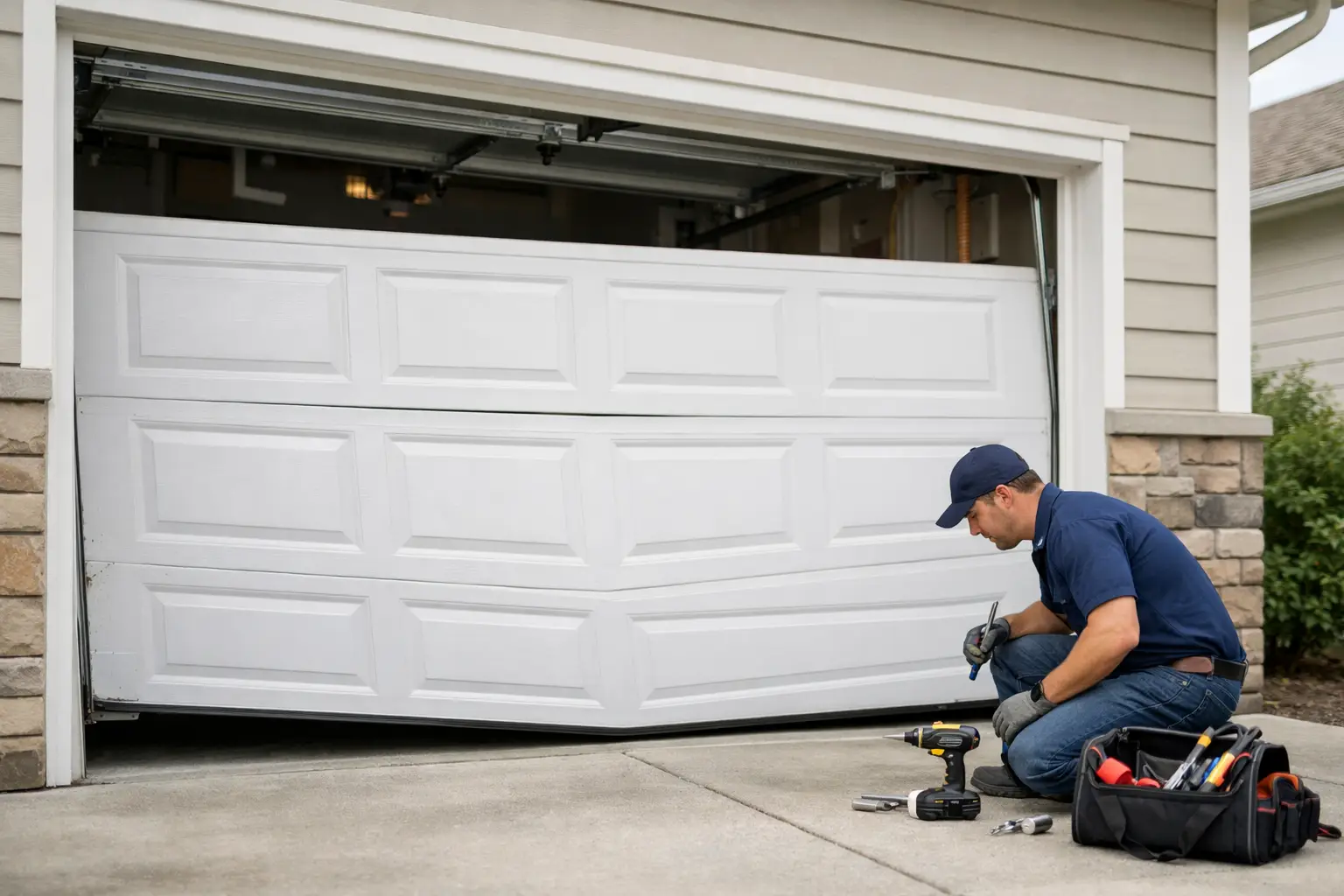
A garage door is supposed to sit level, move straight, and seal evenly against the floor. When garage door sagging starts, it can turn a normal daily routine into a noisy, unreliable, and sometimes unsafe problem. A door that droops on one side may still open for a while, but the added strain can wear out rollers, tracks, cables, and the opener much faster.
For Longmont homeowners, catching the issue early usually means a simpler repair and less chance of being stuck with a door that will not close securely. Here is what sagging can mean, what causes it, and when it is time to have a garage door specialist take a look.
What Garage Door Sagging Looks Like
Sagging does not always mean the whole door is visibly bent. In many cases, the first sign is a bottom gap at one corner when the door is closed. You may notice daylight below one side, a loose weather seal, or a door that looks lower on the left or right.
Other times, the door may appear level when closed but bind as it travels. It can rub against one track, shake heavily, make scraping noises, or stop before reaching the fully open position. If the opener strains, reverses unexpectedly, or sounds louder than usual, an uneven door may be part of the problem.
Wood garage doors are especially prone to visible sagging over time because moisture, sun exposure, and age can warp individual sections. Steel doors can sag too, particularly when a bent section, loose hinge, damaged reinforcement strut, or cable issue throws the door out of alignment.
Why a Sagging Door Should Not Be Ignored
A sagging garage door is more than a cosmetic issue. Garage doors are heavy, and their parts are designed to work together in a specific alignment. When one side carries more weight or travels differently than the other, every open-and-close cycle adds stress.
That stress can damage rollers and hinges, bend tracks, fray lift cables, and put extra load on the opener. An opener is meant to guide a balanced door, not force a crooked or overly heavy one through the tracks. Continuing to use it can turn a repairable alignment issue into an opener repair or door replacement decision.
Security is another concern. A door with an uneven bottom gap may leave room for wind-driven rain, pests, and cold air. More seriously, a door that will not close flat may not provide the protection homeowners expect from the largest entry point to the house.
Common Causes of Garage Door Sagging
The exact repair depends on why the door is uneven. A quick visual check may reveal an obvious problem, but the moving and tensioned parts should be evaluated carefully.
Worn or Frayed Lift Cables
Lift cables run along both sides of the door and help carry its weight. If one cable begins to fray, stretches, slips off a drum, or breaks, the door can drop unevenly. One corner may hang lower, and the door can become jammed in the tracks.
Do not attempt to reset a cable yourself. Cables work with high-tension springs, and a slipped cable can make the door unstable. Keep people clear of the area and arrange a professional inspection.
Spring Problems and Poor Door Balance
Torsion springs above the door or extension springs along the sides counterbalance the door's weight. When a spring weakens or breaks, the door may feel heavy, move unevenly, or place excessive force on the opener. A broken spring may also create a loud bang in the garage.
A door can look like it is sagging when the real issue is poor balance. The difference matters because adjusting or replacing springs requires the correct tools, parts, and training. Spring work is not a safe DIY repair.
Bent Tracks, Worn Rollers, or Loose Hardware
A vehicle bump, an impact from stored equipment, or years of normal vibration can bend a vertical track. Even a small bend can cause a roller to bind and make one side of the door lag behind the other. Worn rollers can have a similar effect, especially if they wobble, crack, or no longer roll smoothly.
Loose hinges, brackets, and track fasteners can also let door sections shift. Sometimes tightening the right hardware solves a minor issue. Other times, a loose bracket is a sign that the door is pulling out of alignment because of a larger cable, spring, or track problem.
Damaged or Warped Door Sections
A sagging section is common with older wood doors, doors with water damage, and doors that have been hit. Cracks around hinges, bowed panels, rusted metal, or a weak top section can affect how the entire system moves.
Repair may be possible if the damage is limited to one section and a matching replacement is available. If several sections are weak or the door is severely warped, replacement can be the more dependable and cost-effective option. The right choice depends on the door's age, condition, insulation level, and remaining hardware life.
Missing Reinforcement on a Wide Door
Wide double garage doors have more weight and span than single doors. Without proper reinforcement struts, the top section and other panels can flex over time. This is particularly noticeable when the door is open, but it can eventually affect the way the door closes and seals.
A technician can determine whether reinforcement can be added or whether damaged sections need a different repair. Adding parts without addressing the underlying alignment issue may only mask the problem.
What You Can Safely Check Before Calling
Homeowners should not work on springs, cables, or track brackets under tension. Still, a few safe observations can help explain the problem clearly when scheduling service.
With the door fully closed, look for a gap below either bottom corner and check whether the weather seal is compressed evenly. Look for obvious dents in the tracks, loose rollers, cracked door sections, or a cable that appears loose or off its drum. Listen for scraping, popping, or grinding during operation, but do not stand beneath the door or try to hold it level by hand.
If the door is stuck halfway, hanging crookedly, or has a visible broken cable, stop using the opener. Pulling the wall button repeatedly can make the damage worse. Avoid disconnecting the opener's emergency release unless you are certain the door is fully closed and stable.
When to Schedule Professional Garage Door Repair
A garage door that is slightly uneven but still moving normally should be inspected soon. A door that is crooked in the opening, noisy, visibly damaged, or difficult to close needs faster attention. If it will not close and secure the garage, treat it as a priority repair.
A professional diagnosis should include more than a quick look at the panel. The technician should check spring balance, cable condition, drums, rollers, tracks, hinges, brackets, and opener operation. That full-system approach helps prevent a repeat problem after a single worn part is replaced.
Repair Bro's provides garage door repair in Longmont with free estimates, so homeowners can get a clear assessment before deciding on repair or replacement. For a sagging door, that is useful because the least expensive immediate fix is not always the best long-term answer.
Preventing Future Sagging
Most garage doors benefit from a routine inspection once or twice a year. Keep the tracks clear of dirt and stored items, listen for new noises, and watch the door as it opens and closes. A door that starts moving rough, leaning, or leaving a new gap deserves attention before it becomes stuck.
Avoid hitting tracks with vehicles, bikes, lawn equipment, or trash bins. If you have a wood door, watch for peeling paint, swelling, and soft spots that allow moisture into the panels. For all door types, replace worn weather seals when needed so water and debris do not collect around the bottom edge.
A garage door does a lot of heavy work every day. If yours is starting to droop, scrape, or close unevenly, do not wait for a complete failure. A timely inspection can restore smooth operation, protect the opener, and help keep your garage secure.