
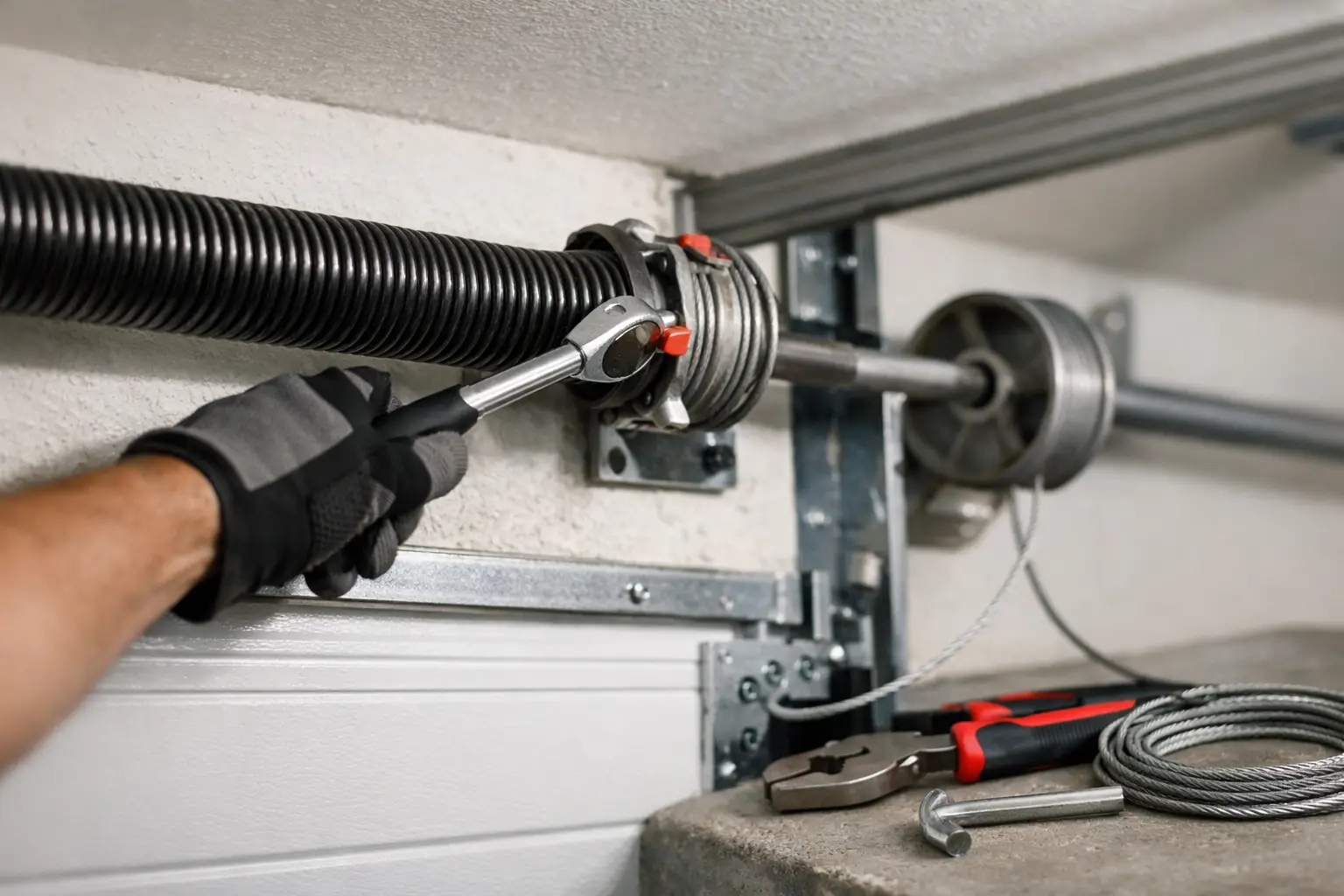
A garage door that suddenly feels too heavy, slams shut, or stops opening more than a few inches usually points to one problem - the spring system. This garage door spring repair guide is here to help you understand what is happening, what is safe to check on your own, and when it makes more sense to call for professional repair in Longmont.
For most homeowners, a broken spring is not a weekend project. It is a safety issue. Springs carry a huge amount of tension, and when one fails, the door can become unstable fast. If your garage door is stuck, crooked, or making a sharp bang before quitting, the safest move is usually to stop using it until it has been inspected.
What garage door springs actually do
Your garage door springs do the hard work of lifting and lowering the weight of the door. Even a standard residential door can weigh a few hundred pounds. The opener is not designed to carry that full load by itself. The springs balance the door so it can move smoothly and stay under control.
Most homes have one of two spring types. Torsion springs are mounted above the garage door opening on a shaft. Extension springs run along the sides of the upper tracks. Both types wear out over time, but torsion systems are more common on newer doors and are generally more controlled when working properly.
When a spring weakens or breaks, the opener may strain, the door may move unevenly, or it may not open at all. That is why spring issues can quickly turn into bigger repair problems if they are ignored.
Signs you may need spring repair
A broken spring is not always subtle. Sometimes homeowners hear a loud snap from the garage and find the door will not open afterward. Other times the warning signs build slowly.
If your garage door feels unusually heavy when disconnected from the opener, that is a red flag. If it rises a few inches and stops, closes too fast, or sits crooked, spring trouble is likely. Gaps in a torsion spring are another common visual sign. With extension springs, you may notice one side hanging looser than the other.
Noise matters too. Grinding, popping, or sudden banging does not always mean the spring itself is broken, but it often means the system is under stress. At that point, using the door repeatedly can damage cables, rollers, hinges, or the opener.
A practical garage door spring repair guide for safety first
If you suspect a spring problem, the first step is simple - do not force the door. Homeowners sometimes keep hitting the wall button, thinking the opener just needs another try. That can burn out the opener or pull the door out of alignment.
Unplug the opener if the door is acting unpredictably. Keep kids and pets away from the area. If the door is open and unstable, avoid standing under it or trying to pull it down yourself. If the spring has failed while the door is closed, leave it closed until a technician can inspect it.
You can do a basic visual check from a safe distance. Look for a visible break in the torsion spring, a stretched extension spring, loose cables, or bent hardware. What you should not do is loosen set screws, remove brackets, or try winding a spring with household tools. That is where injuries happen.
Why spring repair is not a typical DIY job
There are plenty of home repairs that reward a careful do-it-yourself approach. Garage door spring repair is usually not one of them. The issue is not just complexity. It is stored energy.
A wound torsion spring can release force instantly if handled wrong. Extension springs can also whip or shift under tension. Even experienced technicians use specific bars, clamps, and procedures to control the system during repair.
There is also the matter of sizing. Springs are not one-size-fits-all. The right replacement depends on door weight, height, track setup, and cycle rating. Installing the wrong spring may let the door move, but it can wear out your opener, cause uneven travel, or create another failure not long after the repair.
That is the trade-off. A DIY attempt may look cheaper upfront, but if the spring is wrong or the door balance is off, you can end up paying for additional parts and another service call anyway.
What a professional spring repair usually includes
When a garage door technician handles spring repair, the job is about more than swapping one part. A proper repair starts with confirming the spring type, door weight, and condition of the full lifting system.
The technician will usually inspect the cables, drums, bearing plates, center bracket, rollers, and opener strain. If one spring has broken on a two-spring system, both may be near the end of their cycle life. In many cases, replacing both springs at the same time makes sense because it helps keep the door balanced and reduces the chance of a second failure soon after.
After installation, the door should be tested for balance. It should lift smoothly, stay near mid-height when manually positioned, and close without slamming. The opener settings may also need adjustment if the old spring had been causing strain.
That kind of full check matters, especially for busy households that rely on the garage as the main entry point.
When replacement is better than repair
Some homeowners search for spring repair when the better answer is a larger fix. If the garage door is older, heavily worn, or has multiple failing parts, it may be smarter to look at a broader repair or replacement plan.
For example, if springs are worn out but the cables are frayed, rollers are shot, and the opener is struggling, a piecemeal approach may not save much in the long run. On the other hand, if the rest of the system is in good shape, replacing the springs can restore years of reliable service.
It depends on the condition of the whole setup, not just the spring itself. That is why an estimate and inspection are useful before making a decision. You want to know whether you are fixing one isolated issue or putting money into a door system that is already near the end.
What Longmont homeowners should expect from service
In Longmont, weather and daily use both put wear on garage door systems. Cold snaps can make older metal parts more brittle, and temperature swings do not help already tired springs. If your garage door is your main way in and out, even one broken spring can throw off your whole day.
That is why fast response matters. Homeowners usually do not need a long lesson in spring mechanics. They need someone to show up, figure out the problem, explain the repair clearly, and give a straightforward estimate before work begins.
That local, practical approach is what many people are after. Repair Bro's focuses on exactly that kind of service - garage door repair in Longmont with free estimates and a direct explanation of what needs to be fixed.
How to reduce the chance of another spring problem
You cannot stop springs from wearing out forever, but you can catch problems earlier. Pay attention to changes in how the door sounds and moves. If it starts jerking, gets louder, or feels heavier than usual, have it checked before it fails completely.
Regular maintenance helps too. That does not mean taking apart the spring system yourself. It means keeping tracks clear, watching for loose hardware, and scheduling inspection when the door starts showing signs of strain. A balanced door puts less stress on the opener and other moving parts.
If your springs are older and the door gets used several times a day, replacement before total failure may be worth discussing. For some households, that is the difference between planned service and being stuck with a car trapped in the garage on a workday morning.
The bottom line on a garage door spring repair guide
The most useful garage door spring repair guide is a realistic one. Yes, it helps to know the warning signs. Yes, it helps to understand what the springs do. But the key point is simple - when a garage door spring fails, safety comes first, and professional diagnosis is usually the right call.
If your door is heavy, uneven, stuck, or making sudden loud noises, do not force it. Get it checked, get a clear estimate, and fix the issue before it turns into damage to the opener, tracks, or door panels. A garage door should make your day easier, not add risk to your home.