
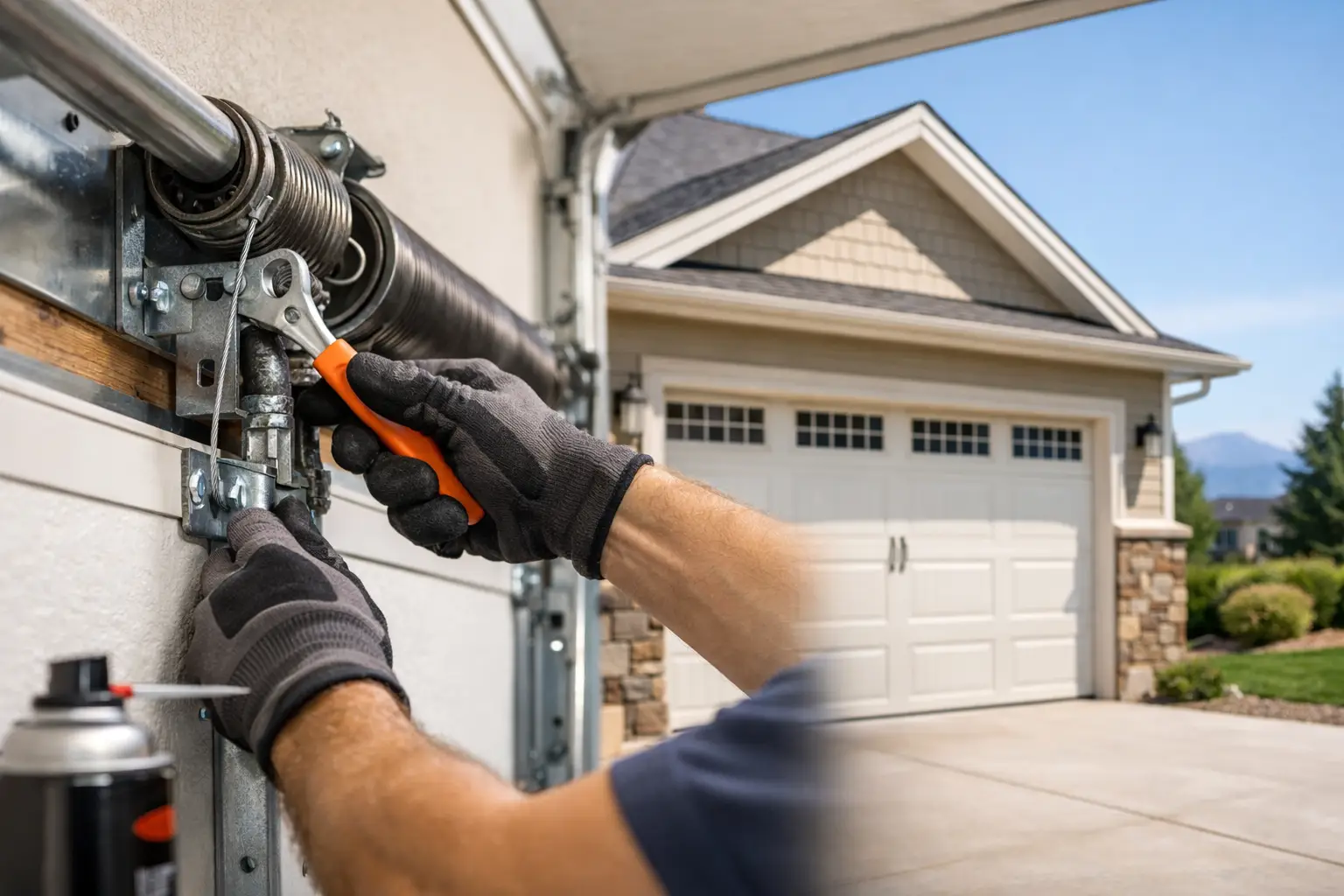
A garage door that still opens can look like a problem that can wait. Then one morning, it sticks halfway up, the opener hums without moving it, or a spring breaks when you need to leave for work. A basic service visit can help prevent that kind of disruption. The biggest garage door tune up benefits are safer operation, fewer unexpected breakdowns, and a door that works more quietly and reliably when you need it.
For Longmont homeowners, a tune up is practical maintenance, not an unnecessary add-on. Your garage door is a heavy moving system used several times a day. Cold weather, windblown dust, changing temperatures, and normal wear all affect the parts that lift and guide it.
Garage Door Tune Up Benefits That Matter at Home
A tune up gives a garage door technician the chance to inspect the full system before a worn part becomes a larger repair. The goal is simple: find small issues early, correct what can be adjusted, and let you know if a part is nearing the end of its useful life.
This matters because garage door problems rarely stay small forever. A loose roller can make the door shake. That extra vibration can strain hinges, tracks, and the opener. A door that is out of balance can force the opener to work harder than it should. What began as a noisy door may eventually become a door that will not open at all.
A professional tune up usually focuses on the moving and safety-related parts of the system, including springs, cables, rollers, hinges, tracks, brackets, sensors, and the opener. The technician checks how the door moves, listens for unusual noise, makes needed adjustments, and lubricates appropriate components. Not every door needs the same work, which is why an inspection comes before recommendations.
Safer Daily Operation
Garage doors are heavy, and the springs and cables that support them are under significant tension. A door can become a safety concern when parts are worn, loose, damaged, or incorrectly adjusted. That is especially true for households with kids, pets, or frequent garage use.
During a tune up, the technician can check the door balance and test the opener's reversing function. A properly balanced door should be manageable for the spring system, rather than placing the lifting load on the opener. The photo-eye safety sensors should also be aligned and working correctly so the door reverses when something crosses its path.
Safety checks do not guarantee that a part will never fail. Springs, rollers, and cables wear out eventually. But they can reveal visible wear and poor operation before it catches you by surprise. If a safety-related repair is needed, it is better to know while the door is still operating than after it becomes stuck open or closed.
Fewer Emergency Repairs and Less Downtime
Most homeowners do not think about their garage door until it stops working. Unfortunately, a failure can leave your car trapped inside, leave the garage exposed, or force you to rearrange a busy day around a repair appointment.
Routine service can reduce the chance of sudden failure by catching common warning signs: frayed cables, cracked rollers, loose hardware, dry hinges, a door that is drifting out of alignment, or an opener that is struggling to lift the door. Addressing these issues early is often simpler than dealing with a full breakdown.
There is a trade-off. A tune up cannot predict every failure, and it will not make an old spring or aging opener last forever. If a major component is already near the end of its life, replacement may be the more sensible choice. The value of a tune up is clarity. You get a straightforward picture of what is working, what needs attention now, and what you should plan for later.
A Quieter, Smoother Garage Door
Grinding, squealing, popping, and rattling are not just annoying sounds. They can be signs that hardware is loose, rollers are worn, or metal parts are moving without proper lubrication.
A tune up can make a noticeable difference in how the door sounds and feels. Tightening hardware, lubricating the right moving parts, and correcting minor alignment issues can reduce unnecessary noise and vibration. This is especially helpful when bedrooms are above or near the garage, or when someone leaves early in the morning.
Keep expectations realistic. A tune up can quiet a door with normal wear, but it cannot make every older system silent. Steel rollers, a noisy chain-drive opener, or a damaged section may continue to make noise until the underlying part is replaced. A technician can explain which sounds are normal and which ones point to a repair need.
Longer Life for the Door and Opener
Your garage door opener is designed to guide a properly functioning door, not overpower a heavy or unbalanced one. When springs lose tension or rollers drag in the tracks, the opener has to work harder on every cycle. Over time, that strain can wear down gears, motors, and other internal components.
Keeping the door balanced and its hardware in good condition helps protect the opener. It can also reduce wear on the door sections, hinges, and track system. For homeowners who want to delay a costly replacement, regular maintenance is one of the most practical ways to get more use from the equipment they already own.
That said, there comes a point when repairs no longer make financial sense. A door with severe damage, outdated safety features, repeated failures, or extensive rust may be better replaced than repeatedly patched. A good service visit should give you an honest recommendation based on the condition of your system, not pressure you into work you do not need.
Better Security and Weather Protection
A garage door that does not close fully is more than an inconvenience. It can create a security problem and allow cold air, moisture, leaves, and pests into the garage. If your garage is attached to the home, that can also affect comfort and energy use inside nearby rooms.
A tune up can identify issues that prevent proper closing, such as sensor problems, track obstructions, worn rollers, weak hardware, or a door that is not traveling correctly. The technician may also inspect the bottom seal and perimeter weatherstripping for obvious damage or gaps.
Weather seals are not permanent. Colorado temperature swings can dry, crack, or flatten rubber over time. Replacing worn seals is a relatively simple repair that can help keep out drafts and debris, especially before colder weather arrives.
When Should You Schedule a Tune Up?
For many residential doors, annual service is a sensible baseline. A door that gets heavy use, such as one used as the primary entrance to the home, may benefit from more frequent checks. Landlords and property managers may also want regular maintenance between tenants or before seasonal weather changes.
Do not wait for the annual visit if you notice a change in operation. Schedule service sooner if the door shakes, moves unevenly, reverses unexpectedly, makes a new loud noise, has a loose cable, or will not close all the way. Never try to adjust or remove garage door springs or cables yourself. Those parts can cause serious injury when handled without the right tools and training.
What a Local Service Visit Should Provide
A useful tune up is not just a quick spray of lubricant. You should receive a clear inspection of the door's condition, practical recommendations, and an explanation of any repair that is needed. If the door is operating safely and only needs basic maintenance, that should be said plainly. If a worn spring, cable, roller, or opener part needs attention, you should know why and what the options are.
Repair Bro's provides garage door service for Longmont homeowners who want a straightforward diagnosis and a free estimate before moving ahead with recommended repairs. Whether the issue is minor maintenance or a door that has already stopped working, getting a specialist to inspect the system can save time and prevent guesswork.
If your garage door has become louder, slower, or less reliable than it used to be, treat that change as an early warning instead of background noise. A timely tune up can keep a small service call from turning into the morning your garage door decides not to move.