
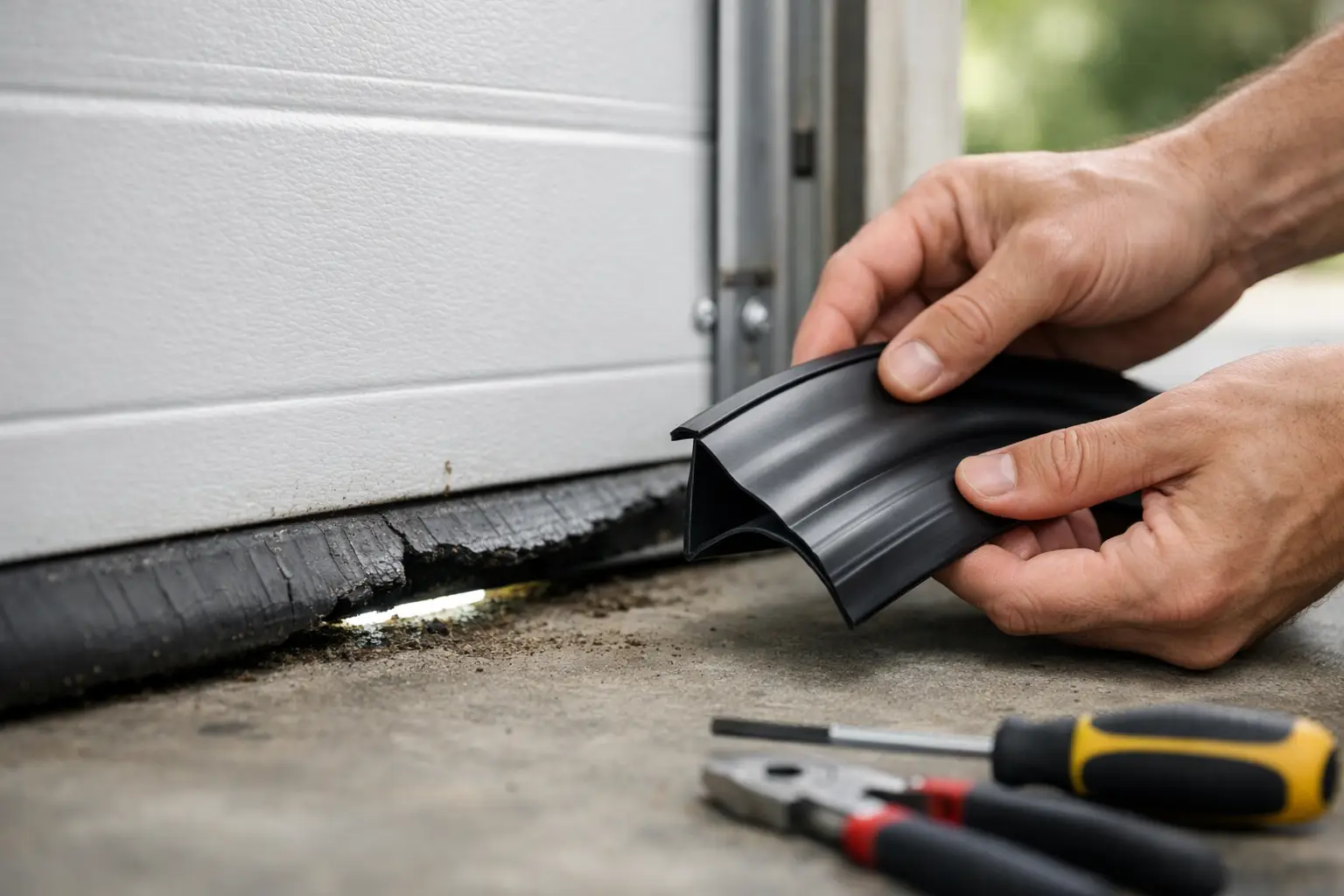
A thin strip of rubber at the bottom of your garage door can make a big difference during a Longmont winter storm or a summer downpour. When it cracks, flattens out, or pulls away from the door, garage door weather seal replacement can stop cold air, water, leaves, and pests from getting into the garage. It can also reveal a bigger issue: a door that is not sitting level on the floor.
The seal itself is usually inexpensive. The trouble is that the wrong size, wrong track style, or a door that is out of adjustment can turn a simple job into a frustrating one. Here is how to tell what needs attention and when it makes sense to call a garage door specialist.
Signs You Need Garage Door Weather Seal Replacement
Start with the door closed in daylight. Look along the bottom edge from inside the garage. If you can see sunlight coming through, the bottom seal is no longer making a consistent connection with the floor. A small gap may not seem urgent, but it gives wind-driven rain, dust, and cold air a direct route inside.
A worn seal often looks brittle, torn, flattened, or permanently bent. Rubber and vinyl lose flexibility over time, especially after repeated exposure to Colorado temperature swings. You may also notice that the garage feels unusually cold, that snowmelt blows under the door, or that you are sweeping out more dirt and leaves than usual.
Watch for these common warning signs:
- Water enters under the garage door after rain or snow.
- The bottom rubber has cracks, tears, missing sections, or hard flat spots.
- Rodents, insects, or leaves are getting into the garage.
- There is a visible uneven gap under one side of the closed door.
- The door makes a scraping sound because loose seal material is dragging on the floor.
The last two signs deserve a closer look. A new seal can improve a minor floor gap, but it will not correct a bent track, damaged roller, worn cable, or door that closes crooked. Forcing a thick seal onto an improperly operating door can make the opener work harder and may leave the real problem untouched.
Bottom Seal, Threshold Seal, or Side Weatherstripping?
Homeowners often call all of it weatherstripping, but garage doors use a few different seals. Knowing which one has failed helps avoid buying material that does not fit.
The bottom seal attaches to the lower edge of the door and compresses against the driveway or garage floor when the door closes. It is the most common source of drafts and water intrusion. Many doors use a retainer or track that holds a T-style, bead-style, or U-shaped seal. The shape must match the retainer. Measuring only the width of the door is not enough.
A threshold seal is a raised strip installed on the floor just inside or outside the door opening. It can help where the concrete is uneven or slopes toward the garage. It works with the bottom seal, not as a substitute for a badly damaged bottom seal. Thresholds are useful in some situations, but they can collect dirt and may not be a good fit where a vehicle frequently drags snow, gravel, or mud inside.
Side and top weatherstripping mounts around the garage door frame. This vinyl flap presses against the door when it is closed. If you see daylight along the sides or top, the jamb weatherstripping may be loose, warped, or worn out. Replacing only the bottom seal will not stop those gaps.
Check the Door Before Replacing the Seal
Before buying replacement material, run the door through a full open and close cycle. It should move smoothly, sit evenly on the floor, and reverse properly if it meets an obstruction. Do not place hands near rollers, cables, springs, or hinges while the door is moving.
With the door closed, inspect whether one corner sits higher than the other. Check the concrete for cracks, low spots, or a noticeable slope. A garage floor is rarely perfectly level, so a slight uneven gap does not automatically mean the door is broken. But a sudden gap, a gap that keeps growing, or a door that looks visibly crooked points to a mechanical issue that should be diagnosed first.
Also inspect the bottom retainer. This is the metal or plastic channel that holds the seal. Rust, dents, sharp edges, and loose fasteners can make the new seal difficult to install and shorten its life. If the retainer is damaged, replacing the seal alone may be a temporary fix.
How a Basic Bottom Seal Replacement Works
For a standard door with an accessible retainer, replacement is usually straightforward. The door should be fully open and secured so it cannot move while you work. If the door is connected to an automatic opener, unplugging the opener adds another layer of protection. Never rely on the opener alone to hold the door in place.
First, remove the old seal by sliding it out of the retainer channel. Years of dirt and oxidation can make this harder than expected. Clean the channel thoroughly, remove debris, and check for bent sections before installing anything new.
Measure the old seal and the door width, then buy the correct seal profile. A replacement should be cut slightly longer than the door, then trimmed carefully after it is installed. A little soapy water or an approved lubricant can help a rubber seal slide through a tight channel. Avoid petroleum-based products that can damage rubber or vinyl.
Once the seal is in place, lower the door slowly and check the contact along the floor. The seal should compress enough to close gaps without folding excessively or bunching under the door. Test the door several times. If it catches, binds, or the opener struggles, stop using it until the cause is identified.
Why DIY Replacement Does Not Always Solve the Problem
Garage door weather seal replacement is a reasonable weekend project when the door works normally, the retainer is in good shape, and the gap is consistent. It becomes less simple when the door is heavy, the seal track is damaged, or the door does not close evenly.
A thick replacement seal may hide a floor gap for a while, but it can cause extra resistance at the bottom of the door. On an automatic door, that extra resistance can affect the opener's safety reversal setting. The door may reverse before closing, or it may press down too hard against the floor. Those are not issues to ignore.
The bigger concern is a misaligned door. Garage door springs, cables, and tracks are under significant tension or support substantial weight. They are not the place for trial-and-error repairs. If the door is noisy, off track, uneven, or hard to operate, have the full system inspected rather than treating the seal as the only problem.
When to Call for Garage Door Service in Longmont
Call for professional help if water is coming in even after a new seal, if the door leaves a large gap on one side, or if the bottom retainer is bent or rusted through. Service is also the practical choice if the door will not stay open safely while you work, the opener reverses unexpectedly, or you see loose cables near the drums.
For Longmont homeowners, snow, wind, and quick temperature changes put extra strain on both weather seals and moving garage door parts. Repair Bro's can inspect the seal, door alignment, tracks, rollers, and opener operation together, then provide a free estimate before work begins. That matters when the visible gap is only the symptom of a larger repair need.
A properly fitted seal should keep out ordinary wind, debris, and moisture without making the door harder to run. If your garage floor is uneven, the best answer may be a combination of a correctly sized bottom seal, adjusted door alignment, and a threshold designed for the space. The right fix is the one that keeps the door safe, dry, and easy to use every day.