
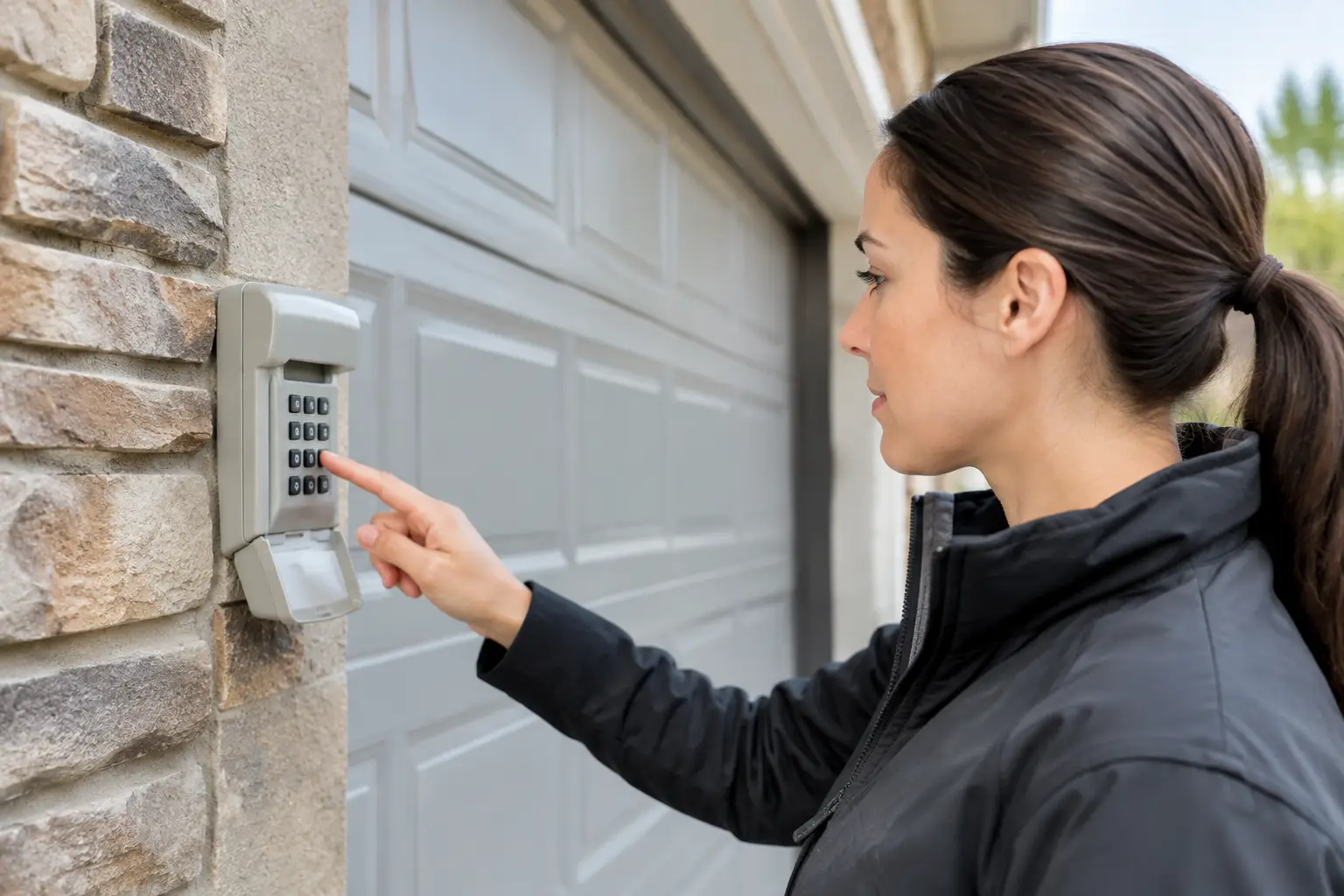
A garage keypad failure usually shows up at the worst possible time: when you are pulling into the driveway with groceries, heading to work, or trying to secure the house at night. The good news is that a dead keypad does not always mean the garage door opener is bad. In many Longmont homes, the problem comes down to batteries, programming, worn buttons, or a signal issue that can be identified quickly.
Before assuming the keypad is the only problem, check whether the garage door works with the wall button inside the garage and the handheld remote in your vehicle. Those quick tests help narrow down whether you have a keypad issue, an opener issue, or a door that needs repair.
What Garage Keypad Failure Usually Looks Like
A wireless garage keypad should light up, accept your code, and send a signal to the opener. When one of those steps fails, the symptoms can look different. The keypad may not light up at all, it may light up but reject the code, or it may appear to accept the code while the garage door does nothing.
If the wall button opens the door but the keypad does not, the door itself is probably not the immediate issue. If neither the keypad nor the remote works, look at the opener, its power supply, or a possible lock setting on the wall control. If the opener hums, the door moves only partway, or the door will not move even from the wall button, stop focusing on the keypad. That is a garage door repair problem that needs a closer inspection.
A keypad that works only sometimes is worth taking seriously. Intermittent operation can be caused by weak batteries, moisture inside the unit, fading buttons, or a receiver that is starting to fail. Waiting until it quits completely can leave you without convenient access when you need it.
Safe Checks to Make Before Calling for Service
Homeowners can safely rule out a few simple causes without taking apart the opener or touching any door hardware. Start with the keypad batteries. Even if the display or backlight still turns on, low batteries may not provide enough power to send a strong signal to the opener. Replace them with new batteries of the correct type, then test the keypad again.
Next, make sure the keypad is clean and dry. Longmont weather can bring sharp temperature swings, wind-driven moisture, and dust that works its way into outdoor equipment. If buttons are sticky, cracked, or unresponsive, do not spray the keypad with household cleaner or lubricants. A dry, soft cloth is enough for the outside. Moisture or corrosion inside the keypad often means replacement is the practical fix.
Check the Code and Programming
An incorrect or erased code is common after a battery change, a power outage, or an accidental reset. Try the code carefully, pressing each button firmly. If someone recently changed the code, confirm that everyone in the household is using the new one.
Most keypads can be reprogrammed using the opener's learn button and the instructions for that specific opener model. This is reasonable to try if the keypad lights up and is otherwise in good shape. The trade-off is that programming steps vary by brand and model, and repeated incorrect attempts can create more confusion. If you are not sure which button to use or the opener is in a hard-to-reach location, it is better to have a technician handle it.
Make Sure the Opener Is Not Locked
Many modern wall controls have a lock or vacation feature that disables wireless remotes and keypads while still allowing the interior wall button to work. This feature is useful when you are away, but it is easy to turn on by accident.
Look at the wall control for a lock symbol, blinking light, or button labeled lock. Turn the feature off according to the control's instructions, then test the keypad and remote. If they start working again, the door and opener were never the problem.
Common Causes of a Garage Keypad Problem
Battery failure is the simplest cause, but it is not the only one. Older keypads have a limited service life. Their rubber buttons wear out, internal contacts weaken, and plastic housings can crack from years of sun and cold. A keypad that needs hard presses or works only after several tries is usually nearing the end of its useful life.
Programming loss is another frequent issue. Garage door openers can lose learned codes after electrical interruptions, surge events, or certain repairs. A newly installed keypad also needs to be compatible with the opener. Universal keypads work with many systems, but not every model or feature works the same way. Buying the cheapest replacement without checking compatibility can turn a simple job into an ongoing nuisance.
Signal interference can also cause trouble. LED bulbs installed near the opener are a known source of radio interference with some garage door systems. Nearby electronics, damaged opener antennas, or a keypad mounted too far from the garage can reduce signal strength. If the keypad works only when you stand very close to the garage, the problem may be signal-related rather than the code.
Finally, the keypad may be reporting a bigger opener issue. A failing receiver, damaged wiring at the wall control, or a problem with the opener's circuit board can prevent wireless controls from working. If the garage door is also noisy, jerky, off track, or difficult to open manually, the system needs a complete check rather than a keypad-only fix.
When Not to Keep Resetting the Keypad
Resetting and reprogramming can solve a simple code issue. It will not fix worn-out buttons, water damage, a failing opener receiver, or a door with mechanical trouble. If you have replaced batteries, checked the lock feature, and followed the programming steps once without success, avoid spending the afternoon repeating the same process.
Do not remove the opener cover, adjust springs, loosen cables, or force a heavy garage door open to troubleshoot a keypad. Garage door springs and cables are under extreme tension. A keypad issue may be minor, but an unsafe repair attempt can quickly become expensive and dangerous.
The same goes for a door that will not close. If the keypad opens the door but will not close it, check for obvious items blocking the safety sensors near the floor. Wipe the sensor lenses gently and make sure both sensors are pointed at each other. If the sensors appear clear but the door still reverses or will not close, schedule service instead of bypassing the safety system.
Repair or Replace the Garage Keypad?
A keypad is usually worth reprogramming when it is newer, lights up clearly, and has responsive buttons. Replacing batteries is always the first low-cost step. If the keypad is old, weathered, cracked, or unreliable after programming, replacement is often the better value.
A professional can confirm compatibility, program the new keypad correctly, and test the door's full operation at the same visit. That matters because a working keypad is only useful if the opener, sensors, tracks, rollers, and door are operating safely too. For landlords and property managers, replacing an unreliable keypad can also be a smart security move when tenants change or when access codes need to be updated.
Get a Clear Answer for Your Longmont Garage Door
A keypad should make getting into your garage easier, not leave you standing outside trying the same code over and over. Repair Bro's provides garage door repair in Longmont with free estimates, so you can get the keypad, opener, and door checked before agreeing to the work.
If the wall button works but the keypad does not, a quick diagnosis can often identify whether you need a battery, reprogramming, a replacement keypad, or opener repair. If the door itself is acting up, address that promptly. A dependable garage door starts with safe operation, then gives you the convenient access you expect every day.