
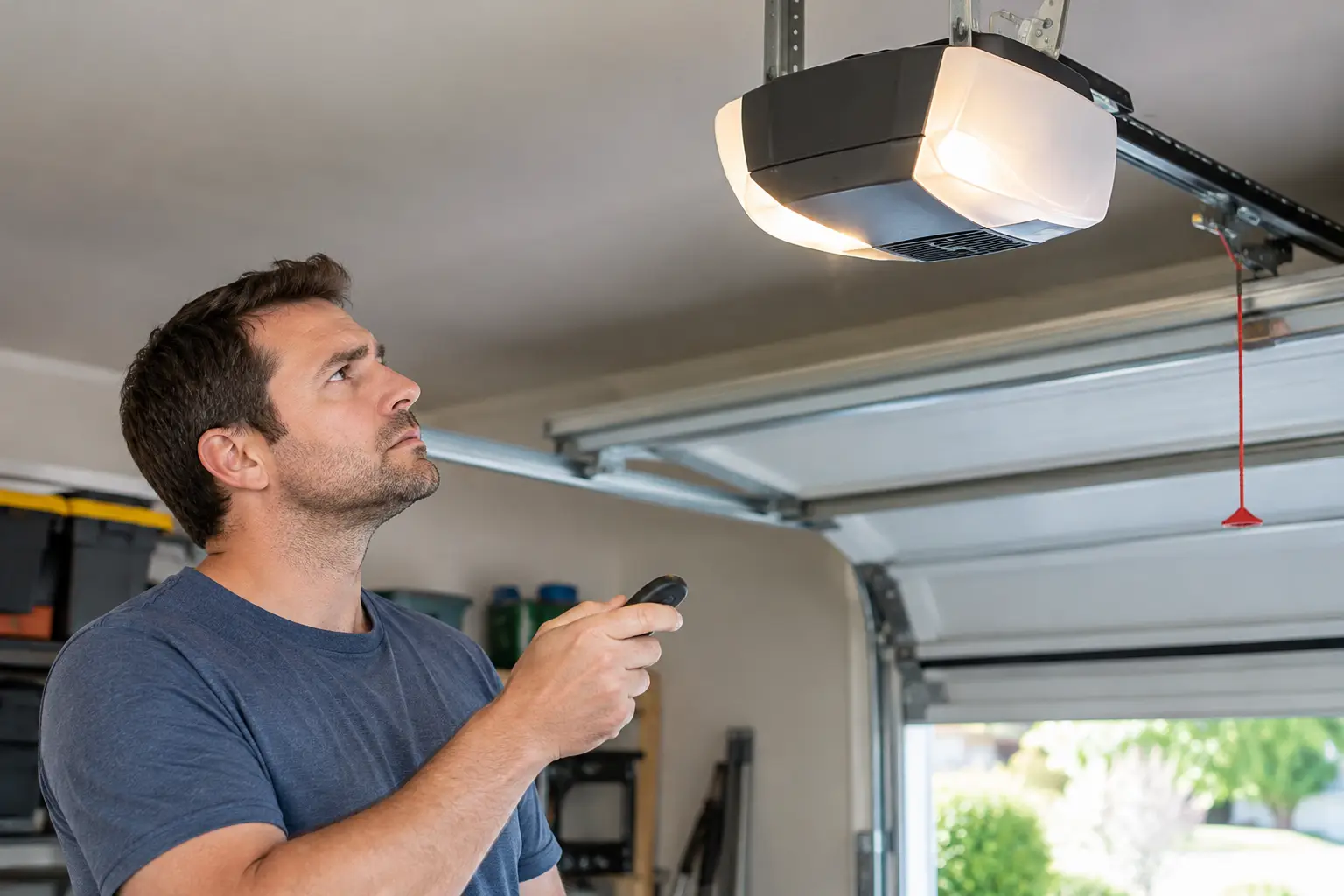
A garage opener flashing when the door will not close is usually not a random electrical problem. In many cases, your opener is trying to tell you that it sees an obstruction, has lost a safety signal, or cannot move the door safely. That is good news in one sense: the flashing light is a clue. The faster you identify the clue, the faster you can get your garage secure again.
For Longmont homeowners, this problem often shows up at the worst time - when you are leaving for work, getting kids inside during bad weather, or trying to lock up for the night. Some causes are simple enough to check yourself. Others point to a door, opener, or safety issue that needs a garage door technician.
What Garage Opener Flashing Usually Means
Most modern garage door openers use flashing lights as an error signal. The exact pattern and meaning depend on the opener brand and model, but flashing commonly happens when the safety sensors near the bottom of the door opening are blocked, dirty, misaligned, or disconnected.
Those small sensors, often called photo eyes, send an invisible beam across the garage opening. If the opener does not receive that beam, it assumes something may be in the way. The door may start down, then reverse, or it may refuse to close at all.
A flashing opener can also point to a travel-limit problem, a jammed door, a bad remote-control signal, a failed wall button, or an internal opener fault. The key is paying attention to what the door does along with the lights. Does it open normally but refuse to close? Does it move a few inches and reverse? Does it not move at all? Those details help narrow down the repair.
Start With the Safety Sensors
If the garage door opens but will not close from the remote, check the photo eyes first. You will usually find one sensor on each side of the door opening, mounted a few inches above the floor. Each sensor should have a small indicator light.
Look for anything blocking the path between them. A trash can, bike tire, shovel, leaf pile, or even a box placed near the track can interrupt the beam. Colorado dust, cobwebs, moisture, and road salt carried in during winter can also cloud the sensor lenses. Wipe each lens gently with a soft, dry cloth.
Next, check their alignment. Both sensors need to face each other directly. If one has been bumped, its light may blink or go out. Carefully adjust the sensor bracket until the indicator lights are steady. Do not force a bent bracket or pull on the wiring. A loose wire or cracked sensor housing is a repair issue, not a cleaning issue.
Try closing the door again after clearing and aligning the sensors. If it closes normally, keep the sensor area clear and make a quick check part of your regular garage cleanup.
Why Holding the Wall Button Can Close the Door
Some openers will close if you press and hold the interior wall button, even when the sensors are not working. This can help confirm that the safety-eye circuit is the problem. It is not a long-term fix.
Holding the button may override the normal photo-eye protection. Stand where you can see the entire door and opening, keep people and pets away, and use this only to secure the door temporarily. Never use an override as a routine workaround. A door that closes without its safety sensors working can cause serious injury or property damage.
Check Whether the Door Is Actually Stuck
A flashing garage opener is sometimes reacting to a door problem rather than an opener problem. Garage doors are heavy. When a roller comes out of the track, a cable slips, a hinge breaks, or a spring fails, the opener may sense too much resistance and stop or reverse.
With the door closed, look for obvious issues from a safe distance. Check for bent tracks, loose rollers, broken hinges, a cable hanging loose, or damage to a door panel. You may also notice that the door is crooked or has a gap on one side.
Do not try to operate a visibly damaged door. Do not pull, cut, adjust, or replace garage door springs or cables. Those parts are under extreme tension and can cause serious injuries. If the door is off track, uneven, unusually heavy, or making grinding sounds, it needs professional garage door repair.
Read the Opener’s Flashing Pattern
Many openers flash a specific number of times, pause, and repeat. That pattern is effectively a diagnostic code. The motor unit may have a small chart on its cover, or the information may be in the owner’s manual.
Common codes often relate to sensor alignment, sensor wiring, travel limits, RPM or motor feedback, and wall-control communication. A single flash pattern does not always mean the same thing across brands, so avoid guessing based on a code you found for a different opener model.
If you know the brand and model, note the number of flashes and whether the main opener light, a diagnostic LED, or the wall panel is flashing. This gives a technician a better starting point and can speed up the diagnosis.
Other Reasons Your Opener May Flash
Safety sensors are the usual suspect, but they are not the only cause. If the sensors look good and the door still will not work, consider these common issues:
- The opener may have lost power or have a tripped outlet, damaged power cord, or weak backup battery.
- A remote battery may be dead, or the remote may need to be reprogrammed after a power surge or outage.
- The opener’s travel limits may be set incorrectly, causing the door to reverse before it reaches the floor.
- The door may be binding because of worn rollers, dry moving parts, track damage, or a failing spring.
- The opener itself may have a worn gear, logic board problem, or motor issue.
You can check that the opener is plugged in and test the outlet with another small device. You can also replace a remote battery and make sure the lock or vacation mode is not turned on at the wall control. Beyond that, repairs depend on the symptom. Reprogramming a remote is different from correcting door balance, and replacing an opener board will not solve a broken spring.
When to Call for Garage Door Repair in Longmont
Call a professional if cleaning and aligning the sensors does not fix the issue, especially if the door is stuck open, off track, crooked, or reversing unexpectedly. You should also call when you see damaged cables, hear loud popping or grinding, or suspect a broken spring.
A garage door that will not close is more than an inconvenience. It can leave your vehicles, tools, and home entry exposed. For landlords and property managers, it can also become a tenant safety and access problem quickly.
Repair Bro's provides garage door diagnostics and repair for Longmont homeowners who need a clear answer before committing to work. A technician can determine whether the flashing is caused by sensors, wiring, door hardware, travel settings, or the opener itself, then provide a free estimate for the needed repair or replacement.
Avoid the Quick Fixes That Create Bigger Problems
It is tempting to tape sensors in place, bypass a wall control, or keep pressing the remote until the door moves. Those shortcuts can hide a real problem and put extra strain on the opener. Repeatedly running an opener against a binding or unbalanced door can turn a smaller repair into a damaged motor, stripped gear, or worse.
Skip lubricating the sensor lenses, too. They need to be clean and dry. If your door needs lubrication, use a garage-door-rated lubricant on appropriate moving metal parts, not grease on the tracks and not household oil everywhere. Excess grease collects dirt and can make the system run poorly.
If the door is secure and the opener is flashing, take a moment to observe the pattern, clear the sensor path, and check for obvious damage. If the problem does not resolve, getting the right diagnosis early is the practical way to protect your door, your opener, and your home.