
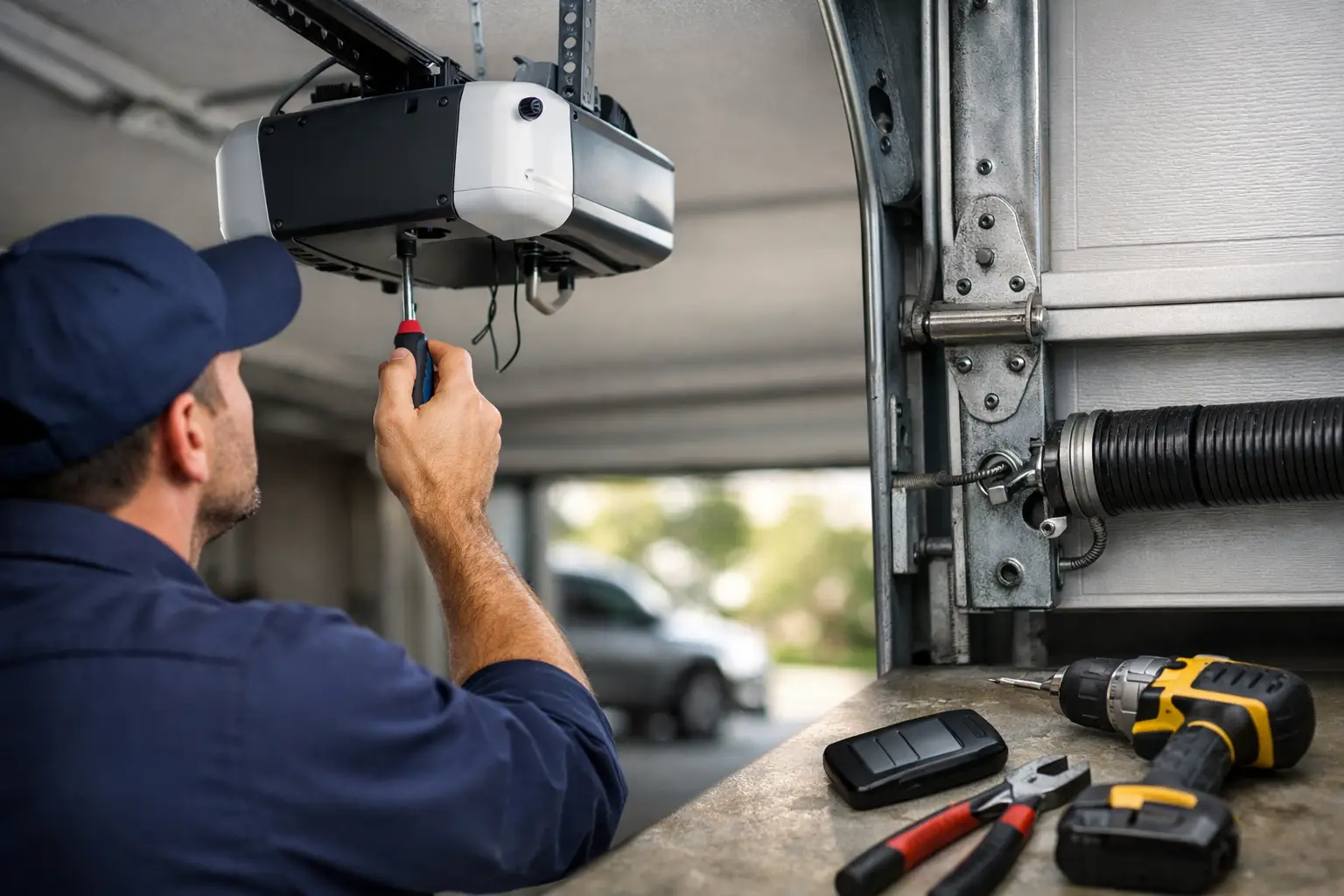
A garage door that will not move can stop your whole day before it starts. Garage openers are easy to take for granted until the remote does nothing, the door reverses halfway down, or the motor makes noise without lifting the door. For Longmont homeowners, a working opener is not just convenient. It helps protect vehicles, tools, and direct access to the home.
The good news is that many opener problems can be repaired without replacing the whole unit. The key is finding out whether the trouble is in the opener itself, the garage door, or a safety component connected to the system. A professional inspection can narrow it down quickly and give you a clear estimate before work begins.
What Garage Openers Actually Do
The opener is the motorized unit that moves the garage door through a rail, chain, belt, or screw drive. It receives a signal from a remote, wall button, keypad, or smart device and tells the door when to open or close. Modern openers also rely on safety sensors near the bottom of the door tracks to prevent the door from closing on a person, pet, or object.
That does not mean the opener carries all the weight. Your garage door springs, cables, rollers, hinges, and tracks do much of the physical work. When those parts are worn, broken, or out of balance, the opener has to strain harder than it should. This is why a problem that looks like a bad motor can sometimes be a door repair issue instead.
If the door feels unusually heavy when operated manually, hangs crooked, or will not stay halfway open after being disconnected from the opener, stop using the system. The door may have a broken spring or another mechanical issue that can damage the opener if it keeps running.
Common Signs Your Opener Needs Attention
A completely dead opener is obvious, but many systems give warning signs first. Paying attention to those signs can prevent a small repair from turning into a bigger replacement job.
A remote that works only from very close range may have a weak battery, interference, or a receiver problem. A wall button that works while the remote does not points in a different direction than an opener that will not respond to either control. If the motor hums but the door does not move, the drive gear, trolley, rail connection, or door hardware may need service.
A door that opens normally but reverses when closing is often dealing with misaligned or blocked safety sensors. Check that nothing is sitting in the doorway and look for dirt, cobwebs, or loose sensor wires. The small sensor lights should generally be on and steady. Do not bypass or disable these sensors. They are a required safety feature and need to work correctly.
Grinding, screeching, popping, or repeated clicking should also be checked. Some noise comes from dry rollers or a loose chain, but loud grinding from the opener can signal worn internal gears. A door that shakes heavily can point to worn rollers, bent track, or a door that is out of balance. Continuing to run it puts extra stress on the opener.
Repair or Replace? It Depends on the Problem
Not every malfunction calls for a new opener. A loose wire, worn gear, damaged photo eye, failed remote, or misadjusted travel limit can often be repaired. These are common service issues, and fixing them may restore dependable operation at a lower cost than replacement.
Replacement makes more sense when an opener is old, unreliable, missing required safety features, or facing a major motor or circuit board failure. It can also be the better choice if the unit has struggled for years with a heavy or oversized garage door. An opener should match the door's size, weight, and how often the door is used.
Age matters, but it is not the only factor. A well-maintained older unit with a simple repair may be worth fixing. On the other hand, a newer opener that has been repeatedly forced to lift an unbalanced door can have damage beyond one small part. A technician can inspect the full system, explain the cause, and lay out practical options without guessing.
For many homeowners, a new opener is about more than a quieter motor. Current models can offer battery backup, keypad entry, motion-sensitive lighting, smartphone control, and better security. Battery backup is especially useful when a power outage hits and you still need to get your vehicle in or out of the garage.
Choosing the Right Type of Garage Opener
The best opener is not always the most expensive one. The right fit depends on the door, garage layout, household routine, and budget.
Chain-drive openers are common, durable, and usually cost-effective. They are a solid choice for detached garages or homeowners who do not mind some operating noise. Belt-drive models run more quietly, which can make a real difference when there is a bedroom, office, or living space above or beside the garage.
Screw-drive openers use a threaded steel rod to move the trolley. They have fewer moving parts than some other designs, but performance can be affected by changing temperatures if the unit is not properly maintained. Jackshaft openers mount on the wall beside the garage door rather than on the ceiling. They can free up overhead space, but they require the right garage setup and are not the answer for every door.
Horsepower should be matched to the door, not chosen as a shortcut around mechanical trouble. More power will not safely solve a broken spring, bent track, or poorly balanced door. Before installing a replacement, the door should be checked to make sure it moves smoothly by hand and is properly balanced.
Safe Checks You Can Make Before Calling
There are a few basic things a homeowner can check without taking apart the opener or working near the springs. Start with the simple stuff:
- Make sure the opener is plugged in and the outlet has power.
- Replace the remote battery and test the wall button separately.
- Clear anything blocking the safety sensors and wipe their lenses clean.
- Look for flashing opener lights or error codes shown on the unit.
- Check whether the manual lock on the garage door is engaged.
If these checks do not solve the problem, avoid forcing the door open or closed. Do not pull on cables, adjust torsion springs, or remove the opener cover to work on internal parts unless you are trained to do so. Garage door springs and cables are under heavy tension and can cause serious injury.
A door that is stuck open also creates a security problem. If you cannot close it safely, keep the area clear and get professional help as soon as possible. Property managers and landlords should treat this as a priority repair, especially when the garage provides access into an occupied home.
Why Professional Diagnosis Saves Time
Garage door systems have several parts that can create nearly identical symptoms. A door that will not close could be a sensor issue, a travel-limit setting, damaged wiring, an obstruction, or a door that is binding in the track. Replacing an opener before identifying the actual cause can leave you with a new unit and the same problem.
A proper service visit looks at the opener, the door balance, springs, cables, rollers, tracks, sensors, controls, and mounting hardware. That full check matters because the opener and the door work as one system. Repair Bro's provides Longmont garage door service with free estimates, so homeowners can understand what needs attention and what the repair or replacement will involve before making a decision.
Keep Your Opener Working Longer
Most opener failures are easier to avoid when the door gets occasional attention. Keep the sensor area clean, replace remote batteries when range drops, and listen for new sounds rather than waiting for the door to stop completely. Have loose hardware, worn rollers, and balance problems addressed before they make the motor work overtime.
If your garage door is slow, loud, stuck, or unreliable, do not wait until you are late for work or locked out of your own garage. A quick inspection can often turn an inconvenient problem into a straightforward repair and help your door get back to doing its job every day.