
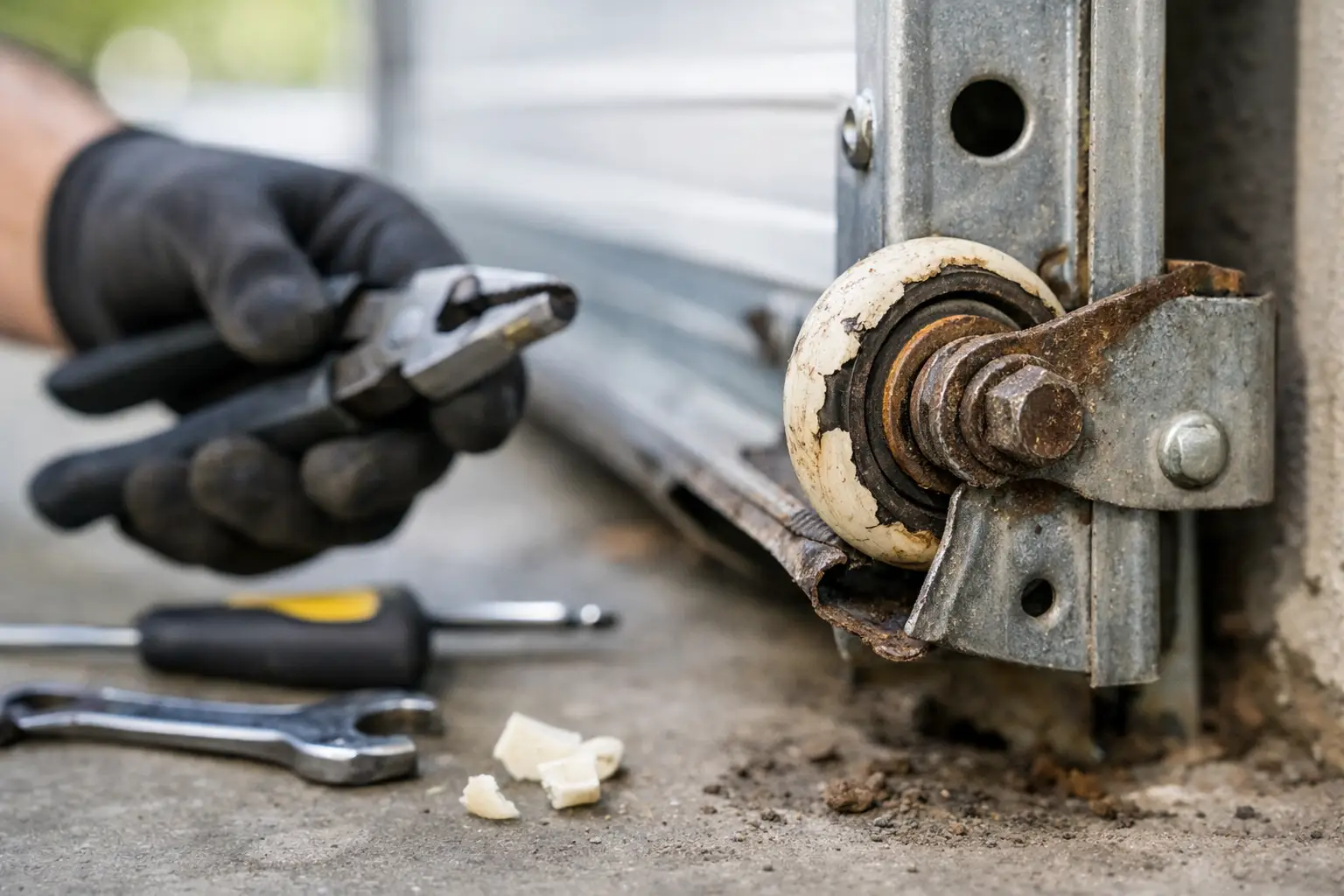
A garage door that suddenly sounds like grinding metal, rattles through every opening, or jerks on its tracks often has a roller problem. Garage rollers are small parts, but they carry a big share of the work every time your door opens or closes. When they wear out, the whole system can become louder, less reliable, and harder on the opener.
For Longmont homeowners, this is not a problem to ignore until the door will not move at all. A failing roller can lead to a door coming off track, added strain on cables and hinges, or an opener that quits before its time. Knowing what to watch for helps you call for repair before a minor fix turns into a larger garage door problem.
What Garage Rollers Do
Garage door rollers are the wheels that sit inside the vertical and horizontal tracks on both sides of the door. As the door travels up and down, the rollers guide each section along the correct path. They work with the tracks, hinges, springs, cables, and opener to keep the door moving smoothly.
Most residential doors have rollers at each hinge point, plus rollers at the top corners. Because there are several of them, one worn roller may not stop the door immediately. It can, however, make the door shake, scrape, or move unevenly. That is why a noisy door deserves a closer look even when it still opens.
Rollers come in several materials. Steel rollers are common and durable, but older versions without ball bearings can become loud as they age. Nylon rollers usually run quieter and may be a good choice for attached garages where noise carries into the home. The right option depends on the door’s weight, condition, hardware setup, and how often the door is used.
Signs Your Garage Rollers Need Attention
Noise is usually the first warning sign. A healthy garage door makes some sound, but it should not shriek, grind, bang, or rumble heavily as it moves. If the door has become noticeably louder over a few weeks or months, worn rollers are one possible cause.
Watch the door itself, too. A door that shakes, hesitates, or looks like it is fighting its way around the curve of the track may have rollers that are worn, damaged, or no longer seated correctly. You may also see cracked nylon wheels, rusted steel wheels, bent roller stems, or rollers that wobble in their hinges.
Other common signs include:
- A roller that slips partly out of the track
- Uneven movement on one side of the door
- Black dust or metal shavings near the tracks
- A door that stops and reverses without an obvious obstruction
- New strain noises from the garage door opener
These symptoms can overlap with track damage, worn hinges, spring issues, or an opener problem. That is one reason a proper inspection matters. Replacing a roller without addressing a bent track or loose hinge may only provide a short-term improvement.
Why Rollers Wear Out
Normal use is the main reason. A garage door used several times a day puts thousands of cycles on its rollers over the years. Bearings wear down, nylon can crack, steel can rust, and the roller stem can loosen where it meets the hinge.
Colorado conditions can speed things up. Temperature swings, windblown dust, moisture, and road grit tracked into the garage can affect moving hardware. Cold weather may also make old, dry rollers sound worse, especially first thing in the morning. Lubrication can reduce friction in some cases, but it will not repair a cracked wheel, worn bearing, or bent stem.
Poor track alignment is another contributor. Tracks need to be secure, straight, and spaced correctly. If a track is bumped by a vehicle, loosened from the wall, or bent over time, rollers may bind against it instead of moving freely. A door that is out of balance can also put extra force on the rollers and hinges.
Can You Replace Garage Rollers Yourself?
Some homeowners are comfortable handling basic maintenance, such as wiping debris from accessible tracks or applying the correct garage door lubricant to moving parts. Roller replacement is different. It can be a risky job, particularly at the bottom brackets of the door.
The bottom roller brackets connect to the lift cables, which are under high tension from the spring system. Removing the wrong fastener can release tension suddenly and cause serious injury. The top rollers can also require adjustment, and incorrect placement may make the door bind or leave gaps at the top seal.
If a roller is visibly broken or off track, avoid forcing the door with the opener. Disconnecting or moving the door without understanding the condition of the springs, cables, and tracks can make the problem worse. Keep people and vehicles clear of the opening, especially if the door is hanging unevenly.
A trained garage door technician can inspect the full system, replace damaged rollers safely, check the hinges and tracks, and verify that the door is balanced after the work is done. That last step is important. A door that moves smoothly by hand places less stress on the opener and is less likely to develop another issue soon after repair.
When Roller Replacement Is the Right Fix
Replacing rollers makes sense when the tracks are in good condition and the main issue is age, damaged wheels, worn bearings, or loose roller stems. A full set replacement is often more practical than replacing a single bad roller. If one roller has worn out from years of use, the others may not be far behind.
That said, not every noisy door needs new rollers. Dry hinges, loose track brackets, worn end bearings, a poorly balanced door, or opener vibration can create similar sounds. The goal should be to fix the actual cause, not just replace parts until the noise changes.
During a service visit, a technician should look for more than the loudest roller. They should check the track alignment, hinge condition, cable wear, spring balance, rollers, and opener operation. This gives you a clearer picture of what needs repair now and what can reasonably wait.
Keep Rollers and Tracks in Better Shape
Routine attention can help garage rollers last longer. Keep the tracks clear of leaves, dirt, and buildup, but do not coat the inside of the tracks with heavy grease. Rollers need to roll through clean tracks, not slide through sticky residue that collects dust.
Use a garage-door-specific lubricant on the appropriate moving parts as recommended for your system. Avoid soaking the rollers, especially if they are worn or damaged. Too much product can hide a problem, attract dirt, and leave a mess on the floor.
It also helps to pay attention to changes. A garage door rarely fails without warning. New noise, slower travel, shaking, or a door that no longer closes evenly is worth scheduling before it becomes an urgent call. For doors used as the main entrance to the home, preventive service is often less disruptive than being stuck with a door that will not open when you need to leave.
Get a Clear Answer Before the Door Gets Worse
If your garage door is loud, rough, or coming off track, garage rollers may be part of the problem. Repair Bro’s provides garage door repair in Longmont with free estimates, so you can get the system inspected and understand the recommended repair before moving forward.
A garage door should open without sounding like it is tearing itself apart. If yours has started to complain every time it moves, let a local garage door specialist check it while the repair is still straightforward.