
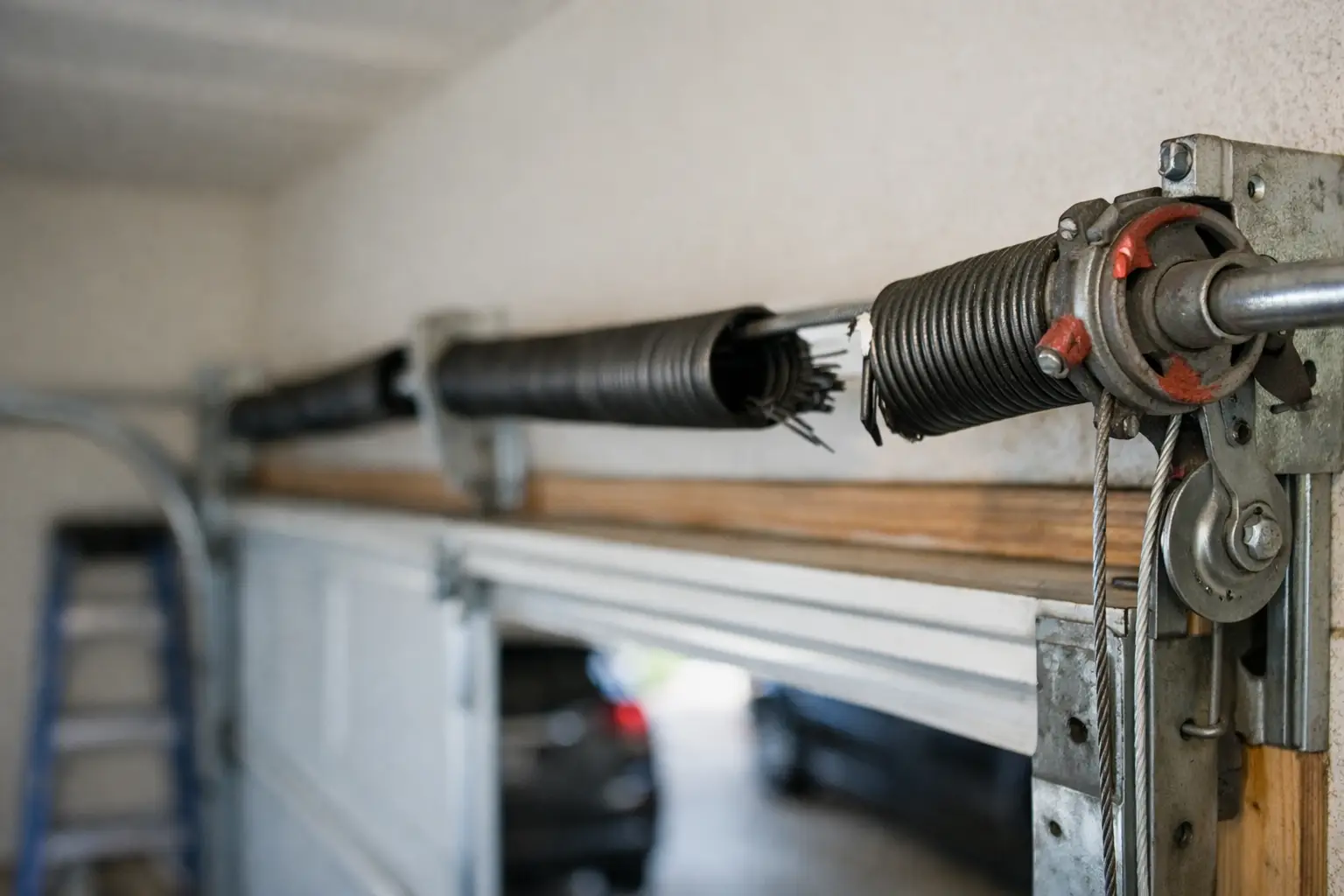
A garage door that suddenly will not open is rarely just an inconvenience. Your car may be trapped inside, the door may be stuck partly open, and your home’s security is suddenly a concern. In many cases, garage springs are the reason. These tightly wound parts do the heavy lifting every time the door moves, and when one breaks or loses tension, the entire system can stop working as it should.
For Longmont homeowners, the safest move is simple: stop using the door if it feels unusually heavy, makes a loud bang, or will not open more than a few inches. A fast inspection can identify the problem, explain the repair options, and prevent additional damage to the opener, cables, or door panels.
What Garage Springs Actually Do
A garage door may look like one large panel, but it is a balanced mechanical system. The springs counterbalance most of the door’s weight. That is why an electric opener can raise a heavy door with a relatively small motor. The opener guides the motion. The springs provide the lifting force.
When the springs are working correctly, you should be able to lift a disconnected garage door manually without fighting its full weight. It may still be heavy, but it should feel balanced. When a spring fails, the door can weigh well over 100 pounds in your hands. Trying to force it open can cause an injury or bend parts that were not originally damaged.
Most residential doors use one of two spring systems. Torsion springs sit on a metal shaft above the door opening. Extension springs run along the horizontal tracks on either side of the door. Both types are under significant tension, but torsion systems are especially common on modern doors because they provide smooth, controlled lifting.
Garage Springs Warning Signs You Should Not Ignore
Springs do not always fail without warning. A few changes in how the door sounds or moves can tell you that a problem is developing. Catching it early may keep a small repair from turning into a damaged opener or a door that is stuck at the worst possible time.
The clearest sign is a loud popping or banging sound from the garage, followed by a door that will not lift. A broken torsion spring often leaves a visible gap in the coil. With extension springs, you may see a loose or stretched spring hanging near the track. Do not touch either one.
Other common signs include a door that opens only a few inches and stops, a door that feels extremely heavy when you pull the emergency release, or an opener that strains, hums, or reverses. You might also notice the door closing too quickly, opening unevenly, or sitting crooked in the opening. Those issues can involve springs, cables, rollers, tracks, or more than one component, which is why a full diagnosis matters.
A noisy door alone does not automatically mean a broken spring. Dry rollers, loose hardware, and worn hinges can all make noise. But a sharp bang, sudden loss of lifting power, or a dramatic change in door balance deserves prompt professional attention.
Why Spring Repair Is Not a DIY Job
Many garage door repairs are manageable for a homeowner, such as replacing remote batteries or keeping the photo-eye sensors clean. Spring replacement is different. Garage springs store enough force to lift a large moving door. Releasing or winding that force without the right tools, training, and procedure can cause serious injuries.
The risk is not limited to the spring itself. A loose cable can whip under tension. A door can fall if it is not secured properly. An opener can be damaged if it keeps trying to lift a door with failed springs. Installing the wrong spring size can leave the door unbalanced, which shortens the life of the opener and creates ongoing reliability problems.
There is also no one-size-fits-all replacement. Spring selection depends on the door’s weight, height, track setup, drum size, and other details. Two doors that look similar from the driveway may require different springs. A qualified technician measures and matches the system so the door operates safely and evenly.
If you suspect a broken spring, avoid pulling the emergency release while the door is open. The springs may be the only parts holding the door up. Keep people, pets, and vehicles clear of the opening, and use another entrance to the home until the door can be inspected.
What Happens During a Professional Spring Repair
A proper service visit starts with more than spotting a broken coil. The technician checks the door’s balance, spring system, cables, drums, bearings, rollers, tracks, hinges, and opener operation. Springs often wear out from normal use, but related parts may also be worn or damaged.
The old spring is removed with the door secured in place. The replacement spring or springs are matched to the door, installed, and set to the correct tension. The technician then tests the door by hand and with the opener to make sure it moves smoothly, stays balanced, and stops where it should.
This is also the right time to address worn cables, damaged rollers, or an opener that has been working too hard. Not every additional part needs replacement. A good repair recommendation should be based on the condition of the system, not a sales pitch. Homeowners should know what failed, what needs immediate attention, and what can reasonably wait.
At Repair Bro's, the goal is to identify the issue clearly and provide a free estimate before you decide on the repair. That matters when your garage door is stuck and you need a practical answer, not guesswork.
How Long Do Springs Last?
Garage door springs wear based on cycles, not calendar years. One cycle is one full opening and closing of the door. Standard springs are often designed for roughly 10,000 cycles, though actual life varies with the quality of the spring, the door’s weight, weather exposure, maintenance, and daily use.
For a household that uses the garage door twice a day, a spring may last many years. For a busy family using the garage as the main entrance, the same spring can wear out much sooner. Property managers should also expect different timelines for doors used frequently by tenants.
Colorado temperature swings can make garage door issues more noticeable. Cold weather does not usually cause a healthy spring to fail by itself, but it can expose a spring that is already near the end of its service life. Lubricants thicken, metal contracts, and an aging system may struggle more on a cold morning.
Replacing both torsion springs at the same time is often worth considering when they were installed together. They have handled the same number of cycles, so if one has broken, the other may not be far behind. It depends on the condition and age of the remaining spring, but replacing a matched pair can reduce the chance of another service call soon after.
Protecting Your Door After Spring Service
You cannot prevent every garage spring failure, but basic maintenance helps your door run with less strain. Keep the tracks clear, watch for frayed cables or loose hardware, and listen for new grinding, squealing, or popping sounds. A garage door should move smoothly rather than shake, jerk, or slam.
Do not use the opener to force a door that is frozen to the ground or blocked by snow, tools, or debris. The opener is not designed to overcome that kind of resistance. If the door will not move normally, stop and inspect the obvious causes before pressing the button repeatedly.
An annual professional tune-up is a practical way to check spring tension, door balance, safety sensors, and moving hardware before a breakdown leaves your vehicle trapped. It is especially useful for older doors or doors that see frequent daily use.
A broken spring does not have to turn into a bigger garage door problem. If your door is heavy, crooked, loud, or stuck, leave it alone and have the system checked. A clear diagnosis and a free estimate can get your Longmont garage door moving safely again without unnecessary surprises.