
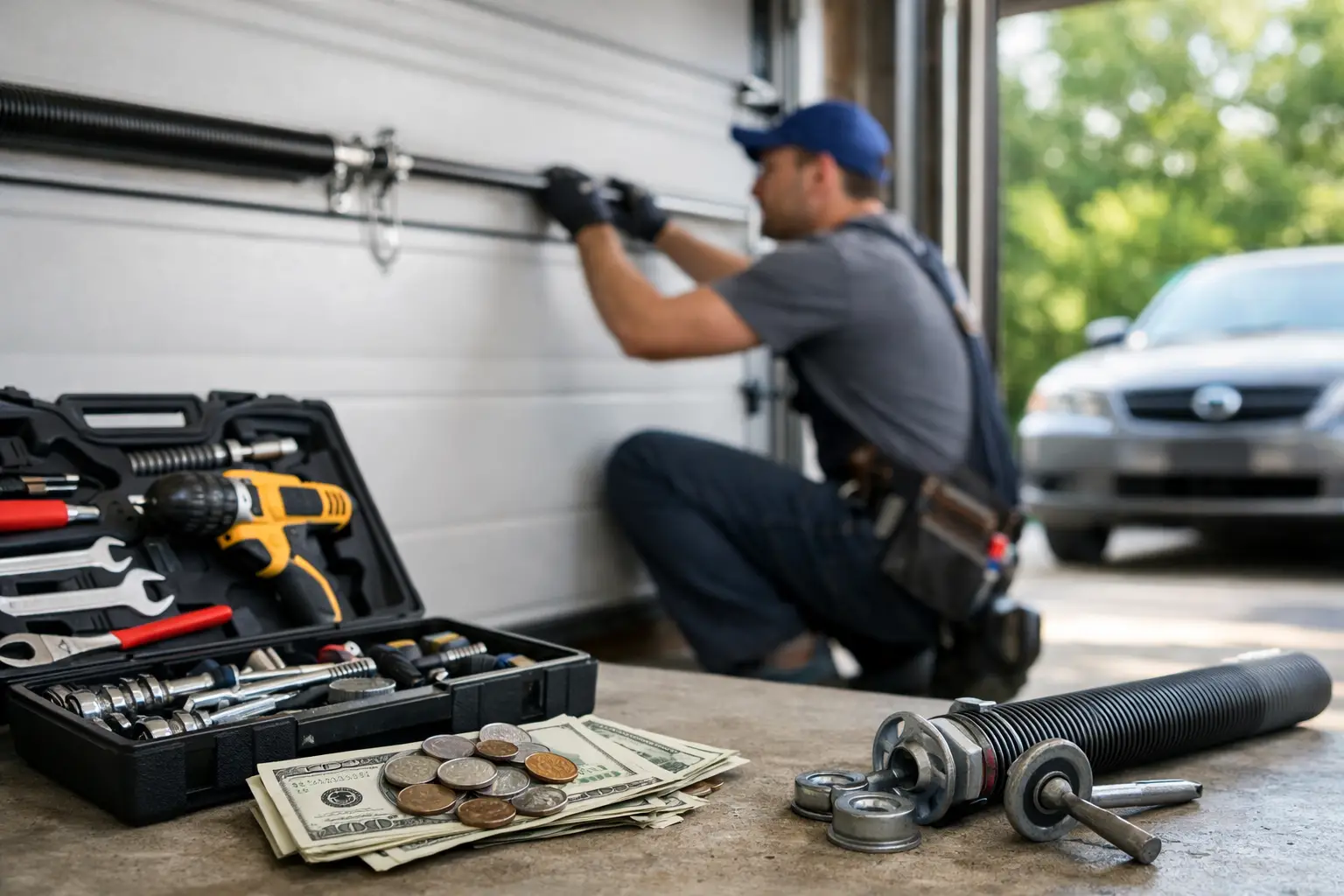
A garage door usually picks the worst possible time to act up - right before work, during a storm, or when your car is stuck inside. If you're asking how much does fixing a garage door cost, the honest answer is that most repairs depend on the part that failed, how severe the damage is, and whether the door is still safe to operate.
For most homeowners, garage door repair falls somewhere between a smaller service call for an adjustment and a more expensive repair involving springs, cables, rollers, tracks, or opener parts. Minor fixes can be fairly affordable. Bigger repairs cost more, especially when the door is off track, the spring has snapped, or multiple worn parts fail at the same time. The good news is that many garage door problems can be fixed without replacing the whole system.
How much does fixing a garage door cost for common repairs?
The biggest factor in price is the actual problem. A noisy door is one thing. A door that won't open, hangs crooked, or slams shut is another.
A simple tune-up or adjustment is usually on the lower end of the range. This can include tightening hardware, adjusting track alignment, lubricating moving parts, and checking door balance. If the issue is caught early, that kind of visit can solve a lot without a major bill.
Spring repairs and spring replacement are often one of the more common garage door costs. Torsion and extension springs carry a lot of tension, and when one breaks, the door may stop lifting or feel unusually heavy. Because springs are under pressure, this is not a safe DIY repair for most homeowners. The final price depends on the spring type, the size and weight of the door, and whether one or both springs should be replaced.
Cable repairs are another frequent service. If a lifting cable frays, slips, or snaps, the door can become uneven or jammed. In some cases, the cable itself is the only issue. In others, the cable failed because a spring or drum was already worn, which raises the repair total.
Roller replacement usually costs less than major spring work, but it still matters. Worn rollers can make the door shake, squeal, or drag along the track. Replacing old metal or damaged nylon rollers can improve operation and reduce wear on other parts.
Track repairs can vary a lot. A minor bent section or alignment issue may be a straightforward fix. A heavily damaged track, especially after the door has been hit by a vehicle, can require more labor and additional parts. If the door has come off track, the repair needs to be handled carefully so the panels, rollers, and lift system are inspected together.
Garage door opener repairs also have a wide range. Sometimes the problem is a sensor alignment issue, remote programming, or a worn gear. Other times the opener motor, circuit board, rail, or drive system is failing. Opener work can be cost-effective if the rest of the unit is in decent shape, but older openers sometimes make more sense to replace than repair.
What affects garage door repair pricing?
When homeowners in Longmont ask for pricing, they usually want a simple number. Fair enough. But the reason estimates vary is that garage doors are mechanical systems, and one visible symptom can have a few different causes.
Door size matters. A single-car garage door usually costs less to repair than a double-wide door because parts are smaller and labor can be lighter. Material matters too. Heavier wood doors often place more strain on springs and openers than standard steel doors.
The type of part matters just as much. Replacing a bottom seal is very different from replacing torsion springs. If safety components are involved, or if the door is stuck in a dangerous position, the repair may take more time and care.
Age plays a role as well. On an older garage door, one failed part may be the first sign that several others are worn. For example, you might call about a broken cable, but during inspection it becomes clear that the rollers are worn, the track is bent, and the spring cycle life is near the end. That does not always mean a full replacement is needed, but it can change the repair recommendation.
Timing can also affect cost. Emergency service, after-hours scheduling, or urgent same-day calls may come at a different rate than a standard appointment. For many homeowners, that extra cost is worth it if the door is stuck open and the garage is exposed.
Repair vs. replacement: when fixing stops making sense
Sometimes the cheaper move today is not the smarter move long term. If your garage door has one bad roller or a sensor issue, repair is usually the clear choice. If the door has severe panel damage, repeated spring and opener issues, or major structural wear, replacing the system may save money over time.
Panel damage is where things get tricky. A single dented panel can sometimes be replaced, but not always. The door model may be discontinued, the panel color may not match, or the impact may have bent the track and stressed the hinges. Once repair starts stacking into multiple parts and labor charges, replacement becomes a more practical option.
Opener age is another common tipping point. If an opener is older, unreliable, and missing newer safety or convenience features, paying for repeated repairs may not be the best use of your money. The same logic applies to old doors with poor insulation, weak hardware, or recurring balance problems.
A solid technician should tell you when a repair is worth doing and when it is not. That kind of honesty matters more than a low number on the phone.
How to keep garage door repair costs from climbing
Most expensive garage door repairs do not start as expensive repairs. They start as grinding noises, slight jerking, slower movement, or a door that suddenly feels heavier than usual.
If you notice the door going crooked, stopping halfway, reversing for no clear reason, or making loud popping sounds, stop using it until it is checked. Continuing to run a damaged door can turn one failed part into several. A worn roller can damage the track. A weak spring can strain the opener. A loose cable can create a bigger safety issue fast.
Basic maintenance helps. Keeping moving parts inspected, checking for loose hardware, and getting occasional service before peak failure can extend the life of the system. Homeowners do not need to become garage door experts, but they should pay attention when the door starts acting different.
What homeowners in Longmont should expect from an estimate
If you are comparing service companies, the estimate matters just as much as the number. A good garage door estimate should explain what failed, what needs immediate repair, and what can wait if the budget is tight. That gives you a real picture instead of a vague price with surprises later.
You should also expect the technician to check the full system, not just the obvious broken part. Garage doors rely on springs, cables, rollers, tracks, hinges, and the opener working together. Replacing one part without checking the rest can lead to another failure not long after.
This is one reason free estimates matter. When a local company like Repair Bro's comes out, homeowners can get a clear diagnosis before deciding what to do. That makes it easier to compare repair against replacement and understand whether the quote fits the actual condition of the door.
So, how much does fixing a garage door cost in real life?
In real life, garage door repair usually lands somewhere between a relatively modest service visit and a more serious repair when key lift components fail. Small adjustments, sensor fixes, and minor hardware issues tend to cost less. Springs, cables, opener internals, and off-track repairs usually cost more. Full replacement is the highest-cost option, but sometimes it is the better value if the existing system is worn out.
The right way to think about cost is not just the invoice total. It is whether the repair restores safe, dependable operation without setting you up for another breakdown next month. For homeowners in Longmont, that means getting the door inspected, getting a straight answer, and fixing the problem before it gets worse.
If your garage door is noisy, stuck, crooked, or simply not working like it should, the cheapest move is usually not waiting.