
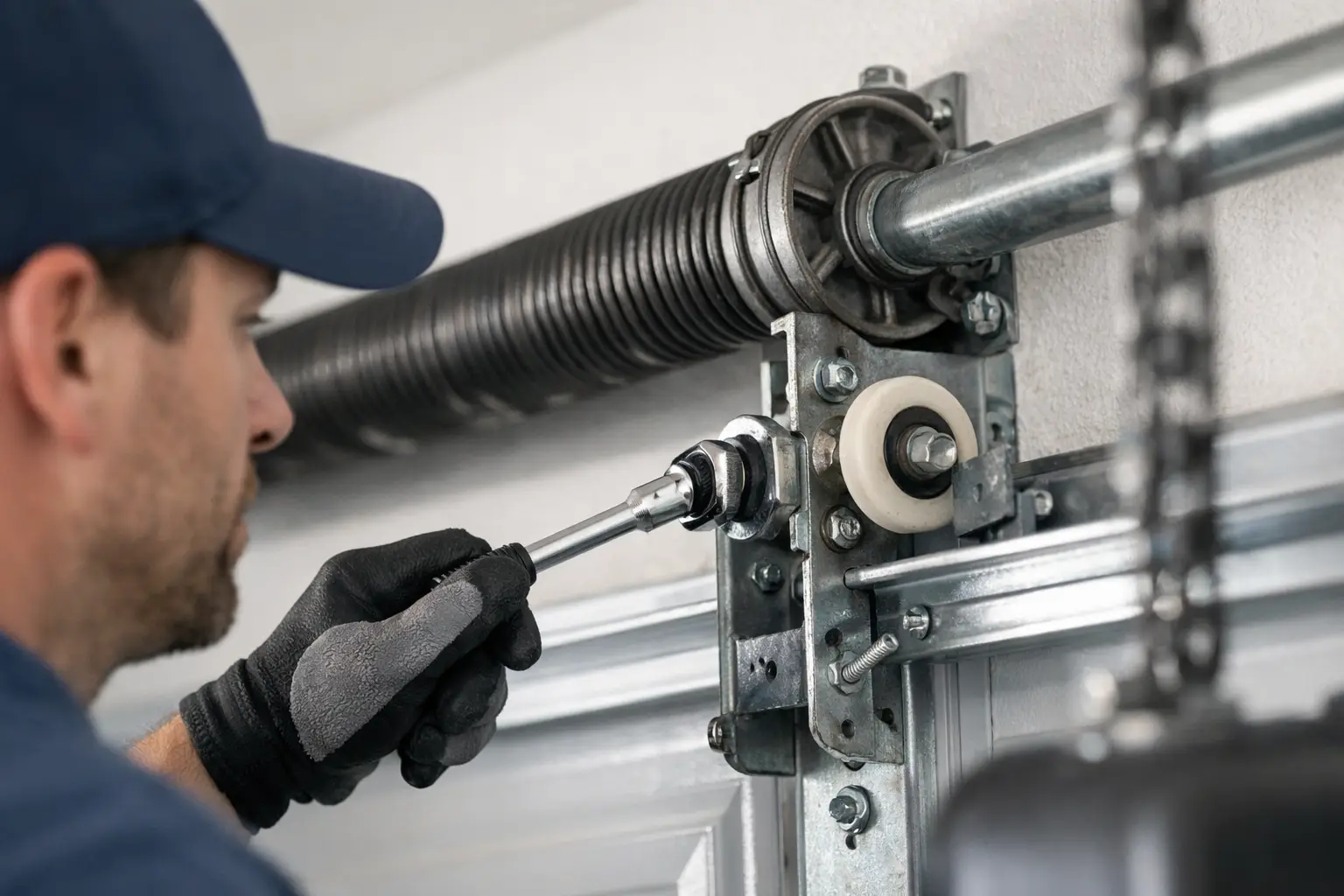
That grinding, rattling, or squealing sound every time the door moves is not just annoying. If you are searching for how to fix noisy garage door problems, there is a good chance something is wearing out, out of alignment, or overdue for service. In many homes, the noise starts small and gets ignored until the door jerks, sticks, or stops working when you need it most.
A noisy garage door usually does not mean you need a full replacement. More often, it points to a few common trouble spots like dry rollers, loose hardware, worn hinges, old springs, or an opener that is working harder than it should. The key is knowing what you can safely check yourself and what should be handled by a garage door repair specialist.
How to fix noisy garage door without making it worse
The first step is figuring out what kind of noise you are hearing. A metal-on-metal squeal often means parts need lubrication. A banging or rattling sound can come from loose bolts, hinges, or track brackets. A grinding noise may point to worn rollers, a bad bearing, or opener issues. If the door pops or jerks during travel, spring tension or track alignment may be involved.
Before touching anything, disconnect the opener and operate the door manually if it is safe to do so. That helps you tell whether the sound is coming from the door itself or the opener. If the noise happens only when the motor runs, the opener or its mounting hardware may be the source. If the door is loud even by hand, focus on rollers, hinges, tracks, and springs.
There is one important line not to cross. Springs and cables are under high tension. Those are not casual weekend repair items. If the door looks crooked, a cable is hanging loose, or a spring appears broken, stop there and schedule service.
Start with lubrication
In a lot of cases, the fix is simple. Garage doors have moving metal parts that need periodic lubrication. When they dry out, they squeak, chatter, and drag.
Use a garage-door-safe lubricant on the rollers, hinges, bearings, and springs. Do not use heavy grease where dust and grit can build up. A proper lubricant helps reduce friction without turning every part into a dirt magnet. Apply a small amount at each hinge pivot point, roller bearing, and spring coil, then run the door a few times to spread it.
Do not lubricate the track itself unless the manufacturer specifically recommends it. The tracks should be clean, not slick. If you coat them, you can create more mess than help.
If the noise improves right away, great. If it gets quieter but not fully solved, that usually means lubrication was part of the problem, not the whole problem.
Tighten loose hardware
Garage doors move up and down several times a day, and that vibration slowly loosens hardware. Nuts, bolts, roller brackets, and hinge screws can all back off over time.
With the door closed, inspect the visible hardware and gently tighten anything loose. Focus on the brackets that hold the track to the wall and the fasteners around the hinges. You want snug, not over-tightened. Stripping hardware or forcing misaligned parts into place can create bigger issues.
If one section of the track looks shifted, bent, or pulled away from the wall, do not try to force it straight unless the adjustment is minor and obvious. Track alignment affects how smoothly the door moves, and a bad adjustment can make the door bind or come off track.
Check the rollers and hinges
Worn rollers are one of the most common reasons a garage door gets loud. Older metal rollers tend to create more racket, especially if the bearings are worn. Nylon rollers are usually quieter, but they wear out too.
Look for rollers that wobble, crack, or stick as they move through the track. Hinges should move smoothly without excessive play. If you see obvious wear, replacement is usually better than trying to keep nursing the part along.
This is one of those areas where it depends on the setup. Some rollers can be replaced fairly simply. Others sit near high-tension components and should be left alone. If you are not sure which type you are dealing with, it is smarter to get a professional opinion than risk a spring-related injury.
Clean the tracks, but do not overdo it
Debris in the tracks can create scraping, rumbling, or uneven movement. Dust, leaves, hardened grease, and small bits of garage grime build up over time.
Wipe the tracks with a clean cloth and clear out visible debris. If there is caked-on residue, a mild household cleaner can help. The goal is a clean running surface, not a polished one. Again, skip the idea of filling the tracks with lubricant. Clean tracks help the rollers move as designed.
If you notice dents, warping, or gaps in the track, that is a different issue. Cleaning will not fix damage. A bent track can make a lot of noise and lead to more serious wear on rollers and hinges.
Look at the opener and mounting points
Sometimes the garage door is not the loud part. The opener itself may be vibrating against the ceiling supports or struggling because of worn internal parts.
Check the opener mounting brackets and fasteners. If the motor unit shakes excessively, loose supports may be amplifying the noise. Also inspect the chain or belt, depending on your opener type. Chain-drive openers are naturally louder than belt-drive systems, but they should not sound harsh or erratic.
A loose chain can slap and rattle. An aging motor can grind. If the opener hums but the door hesitates, force settings or internal gears may be an issue. Basic tightening may help, but opener repairs can get technical fast. If the unit is older and noisy no matter what you do, replacement may make more sense than repeated patchwork.
When the springs are the real problem
If your garage door slams, pops, or feels unusually heavy, springs may be part of the problem. Torsion and extension springs help carry the weight of the door. When they wear out, the opener strains, the door moves unevenly, and noise often gets worse.
This is where DIY should stop. Spring repair is dangerous. The tension involved can cause serious injury if handled the wrong way. The same goes for lift cables. If the noise seems tied to spring movement, or if the door suddenly got much louder and harder to lift, it is time to call for service.
How to tell it is time for professional garage door repair
Some noisy doors just need maintenance. Others are warning you that a part is close to failure. If the door shakes, binds, hangs unevenly, reverses for no clear reason, or makes sharp banging sounds, it is better to get it inspected before a smaller repair turns into a bigger one.
For Longmont homeowners, the practical question is not only how to fix noisy garage door issues, but how much time you want to spend guessing. If the easy checks do not solve it, or if anything involves springs, cables, track damage, or opener failure, a trained garage door tech can usually pinpoint the cause quickly and give you a clear estimate before work starts.
That matters because noise is often just the symptom. The actual problem may be a worn bearing, a cracked hinge, a failing roller stem, or spring wear that is putting stress on the entire system. Fix the wrong part, and the noise comes right back.
A quieter door usually means a safer door
There is a reason homeowners notice garage door noise right away. These systems are heavy, used often, and expected to work every day without much thought. When the sound changes, the condition usually has too. A quiet door is not just nicer to live with. It usually means the parts are moving the way they should.
If you want to handle the basics yourself, start with lubrication, hardware checks, and track cleaning. If the door still sounds rough, moves unevenly, or shows signs of worn parts, bring in a specialist. Repair Bro's helps Longmont homeowners get straight answers, fast repairs, and free estimates when a noisy garage door starts acting like a bigger problem is on the way.
The best time to deal with garage door noise is before it turns into a stuck door, a broken spring, or a car trapped inside on a cold Colorado morning.