
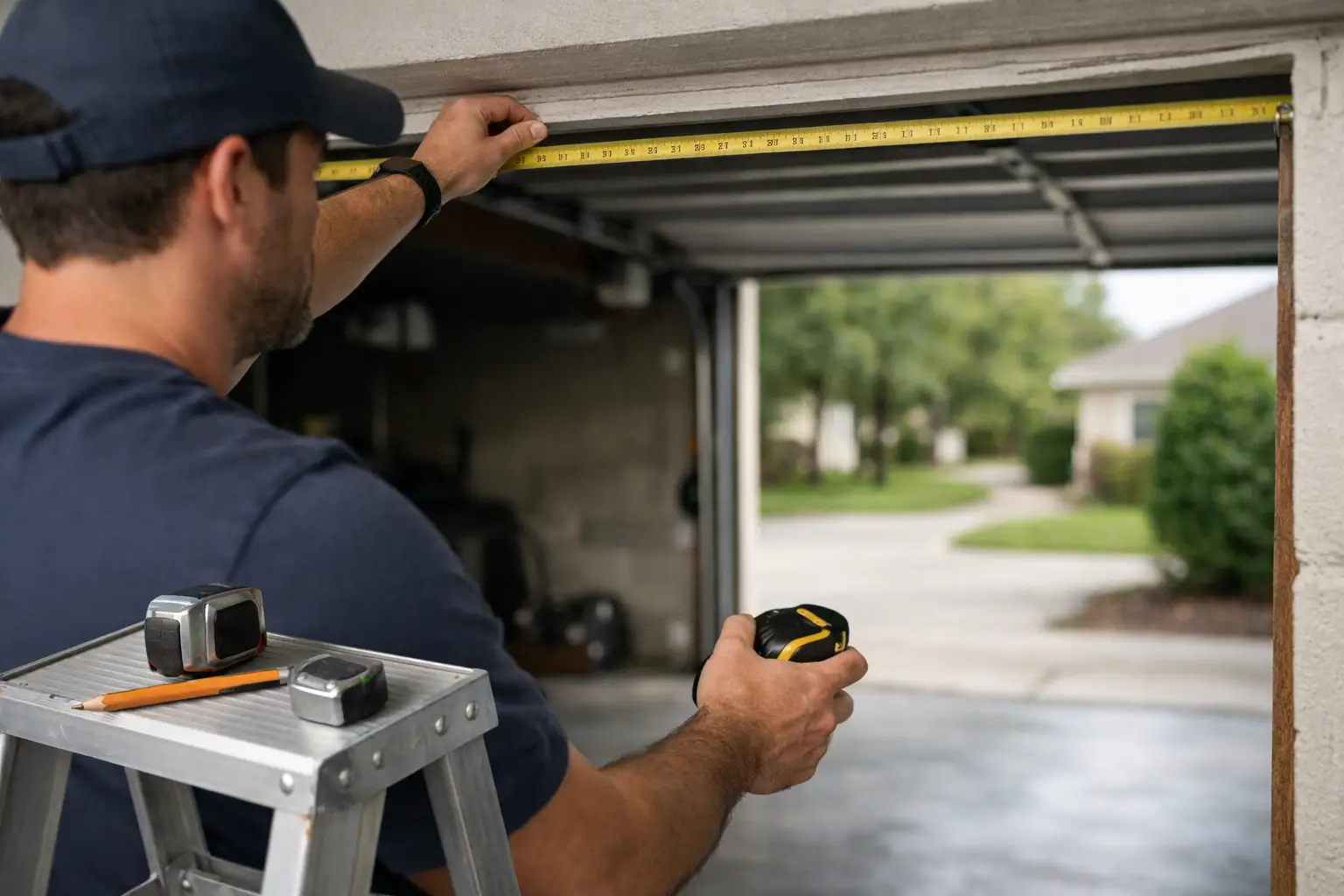
A replacement garage door is not sized by guessing, measuring the old panels, or using the number printed on the opener. To know how to measure garage door opening correctly, measure the finished opening itself, then check the space around it for tracks, springs, and the opener. Those few measurements can prevent ordering a door that will not fit or discovering extra work after installation begins.
For Longmont homeowners, accurate measuring also helps when comparing repair versus replacement. If the opening is square and the framing is in good shape, a standard replacement may be straightforward. If the floor has settled, the header is damaged, or there is limited overhead space, the door setup may need a different track or spring system.
Start With the Actual Opening, Not the Existing Door
A sectional garage door sits behind the opening when it is closed. Its panels overlap the opening on both sides and at the top to help block weather and improve the seal. That means the existing door itself is usually wider and taller than the opening you need to measure.
Use a steel tape measure, a pencil, and a notepad or phone to record dimensions. Measure in feet and inches, and write down every number exactly. A small measuring error can matter when the installer is fitting tracks, seals, and torsion hardware.
Before measuring, clear vehicles, storage bins, and ladders away from the door area. If the door will not open safely, do not force it. A crooked door, broken cable, or damaged spring is a repair issue first, not a measuring project.
How to Measure Garage Door Opening Width
Measure the width from the inside edge of the left finished jamb to the inside edge of the right finished jamb. The jambs are the vertical framing members on each side of the opening. Take this measurement at the bottom, middle, and top of the opening.
Record the smallest measurement if the numbers are different. An opening that is narrower at one point may have shifted framing, added trim, or a damaged jamb. Do not assume the difference is harmless, especially if it is more than a small fraction of an inch.
Most residential garage doors are sold in common nominal sizes, such as 8, 9, 10, 12, 16, or 18 feet wide. Still, do not round your measurement up or down just because a standard size sounds close. The correct door size depends on the finished opening, the condition of the framing, and how the new door will seal against it.
For example, a two-car opening may look like a standard 16-foot opening from the driveway. If it measures 15 feet 11 inches because of interior trim or framing changes, a technician needs to determine whether the trim can be removed, the opening should be corrected, or a custom solution is needed.
Measure Height From the Floor to the Header
Next, measure the height from the finished floor at the center of the opening to the lowest point of the header. The header is the horizontal structural member across the top of the opening.
Take the height measurement on the left, center, and right side. Garage floors are often pitched slightly toward the driveway for drainage, so one side may be lower than the other. That slope affects the bottom seal and can expose gaps when the door is closed.
Write down the shortest height. If the header is uneven, sagging, or covered by trim that changes the measurement, make a note of it. An installer needs to know whether the door will close against solid, level surfaces.
Do not measure to the ceiling unless the ceiling is also the bottom of the header. The usable opening height ends where the door has to pass underneath. For many homes, a 7-foot-tall door is common, but the opening should always decide the size, not the assumption.
Check Headroom Above the Opening
Headroom is the clear vertical space between the top of the opening and the lowest obstruction above it. Measure from the top of the header to the ceiling, joists, ductwork, pipes, lights, or anything else that hangs down. Use the lowest point as your available headroom.
This measurement matters because garage door tracks curve upward, and the spring system needs room above the door. A standard setup often needs roughly 12 inches or more of headroom, but the exact amount depends on the door, track design, torsion springs, and opener. Low-headroom track can work in tight spaces, though it may add cost and limit some equipment choices.
Look closely for garage door springs mounted above the opening. Never loosen, remove, or measure around a spring assembly in a way that puts your hands near cables or winding hardware. Springs are under extreme tension. If anything looks bent, loose, or broken, leave it alone and arrange service.
Measure Side Room on Both Sides
Side room is the clear space beside each side of the opening, measured from the inside edge of the jamb outward to the nearest wall, shelving, pipe, electrical panel, or other obstruction.
You need side room for the vertical tracks and mounting hardware. Many standard installations need several inches of clear space on each side, but torsion hardware, low-headroom setups, and unusual framing can require more. Measure both sides separately because a water heater, furnace, storage shelf, or wall return can make one side tighter than the other.
If there are built-in shelves or cabinets next to the door, do not assume they can stay. Sometimes they are clear of the tracks. Other times, they block a necessary bracket or prevent the door from operating safely. A few inches of storage space is not worth a door that rubs, binds, or cannot be serviced later.
Measure Backroom and Check the Opener Area
Backroom is the distance from the garage door opening back toward the rear wall or the first obstruction in the garage. Measure along the ceiling where the horizontal tracks and opener rail will run.
As a general rule, you need at least the door height plus additional room for the horizontal tracks. An automatic opener usually needs more space beyond that. A 7-foot-high door, for instance, needs significantly more than 7 feet of clear depth behind the opening.
Check for ceiling-mounted storage, light fixtures, attic access panels, and overhead beams. These can interfere with the track path or opener rail even when the opening size is correct. If the garage has a high-lift door, a wall-mount opener, or an unusual track layout, a professional site check is especially useful.
Look for Conditions That Change the Job
Measurements tell part of the story. The condition of the opening tells the rest. While you are measuring, look for cracked or rotted wood, loose brick, bent steel jambs, water stains, damaged drywall, and gaps around the perimeter. These problems can affect how the new track and weather seal are mounted.
Also check the floor where the door closes. A low spot, broken concrete edge, or major slope may cause daylight under the bottom seal. Sometimes a new bottom weather seal handles the issue. In other cases, the floor or threshold needs attention for a proper seal.
If you are replacing an insulated door, pay attention to clearance around interior walls and parked vehicles. Insulated doors are thicker and heavier than basic single-layer doors. They can improve comfort in an attached garage, but they need the right springs and hardware to operate properly.
What to Give a Garage Door Technician
When requesting an estimate, provide the opening width, opening height, headroom, left and right side room, and backroom. Photos taken straight on from inside the garage and from each side can also help identify obvious obstructions before the visit.
Still, a measurement from a homeowner is a planning tool, not the final order sheet. A garage door technician should confirm the dimensions, inspect the framing, verify spring requirements, and make sure the selected door works with the available space. That is how you avoid a replacement that looks right on paper but creates a problem on installation day.
If your door is noisy, off track, hanging unevenly, or will not open, focus on safety before measurements. Repair Bro's provides garage door service in Longmont with free estimates, so you can get a clear recommendation before deciding whether repair or replacement makes more sense.
A tape measure can tell you the size of the opening. A proper inspection tells you whether the whole system can close securely, open safely, and keep working when you need it.