
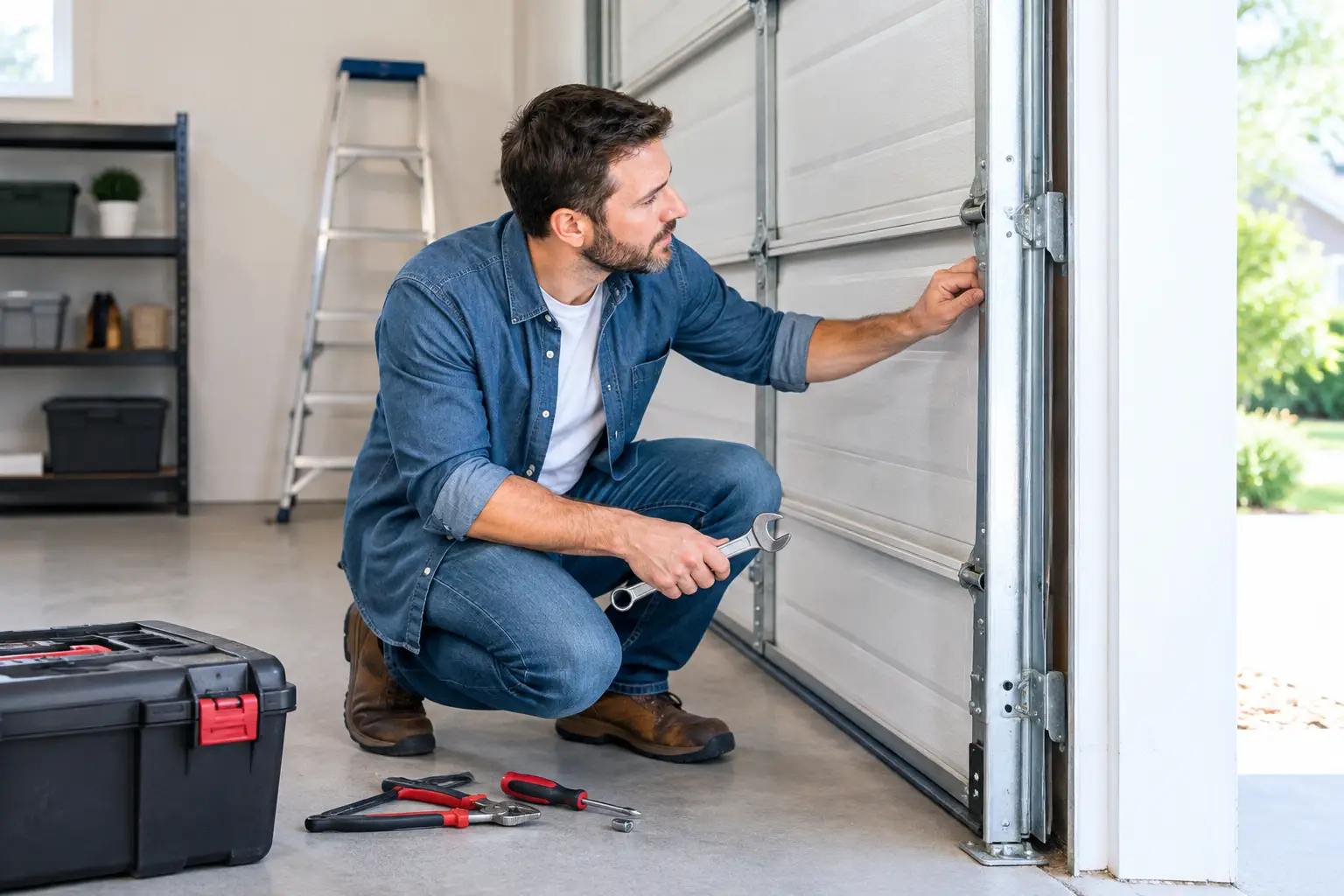
A garage door that will not open, hangs crooked, or makes a grinding noise can disrupt your whole day fast. Knowing how to prepare for garage repair helps the technician get to the real problem sooner, keeps the work area safer, and gives you a clearer repair estimate before work begins.
You do not need to diagnose springs, cables, or the opener yourself. In fact, those are the parts homeowners should avoid handling. Your job is simpler: make the door accessible, take note of what changed, and keep people and vehicles out of harm's way until a garage door specialist arrives.
Start With Safety, Not Troubleshooting
If the door is stuck open, partially open, or off its tracks, treat it as a safety and security issue. Keep children, pets, and anyone not involved away from the garage. Do not stand or walk under a door that looks uneven, has a loose cable, or will not stay in place.
A broken torsion spring, frayed cable, bent track, or damaged roller can put a heavy door under unpredictable tension. Pulling hard on the emergency release or trying to force the opener can make a manageable repair more complicated. If the door has fallen or appears ready to fall, do not try to catch, lift, or brace it yourself.
When possible, park vehicles outside until the repair is complete. This gives the technician room to work and prevents a car from being trapped if the door stops moving altogether. If your garage is attached to the house and the door is stuck open, secure the interior entry door and remove easy-to-reach valuables from view.
Clear the Garage Door Work Area
Garage door repairs need more room than most people expect. A technician may need access to the opener, tracks, springs, cable drums, hinges, and both sides of the door. Clearing the area before the appointment saves time and makes it easier to inspect the entire system.
Move vehicles out of the garage if the door can be operated safely. Then move bikes, storage bins, ladders, tools, and seasonal items away from the door opening and side tracks. If items are stored directly under the opener rail, clear those as well.
Aim for a clear path from the driveway to the back wall of the garage. The technician should be able to use a ladder without working around boxes or equipment. It also helps to sweep up loose gravel, leaves, or clutter near the threshold, especially after a windy Longmont day.
If you cannot move a heavy item, just mention it when scheduling service. A good repair technician can work around some limitations, but knowing about them ahead of time helps set realistic expectations.
Write Down What the Door Is Doing
You do not need technical terms to describe a garage door problem. Simple details are often enough to point a technician in the right direction. Think about when the issue started and what you noticed immediately before it happened.
For example, did the door make a loud bang and then refuse to open? Does it reverse before reaching the floor? Does one side rise higher than the other? Does the motor hum while the door stays still? These details can help distinguish between an opener issue, a broken spring, an alignment problem, or a worn moving part.
Before the appointment, make a quick note of the following:
- Whether the door is open, closed, or stuck partway
- Any unusual sounds, including squealing, popping, grinding, or a single loud snap
- Whether the wall button, remote, keypad, or all controls are affected
- Recent events such as a power outage, a vehicle bump, freezing weather, or a new noise
If it is safe to do so, take a few photos or a short video from a distance. A picture of a bent track, a gap in the spring, or an error light on the opener can be useful. Do not climb a ladder or get close to damaged hardware just to collect photos.
Check the Simple Things Without Taking Risks
There are a few basic checks that are reasonable for homeowners, provided the door is closed or stable and nothing looks broken. Make sure the opener is plugged in and check whether a tripped breaker has cut power to the garage. Replace remote batteries if only one remote has stopped working.
You can also look for leaves, ice, packed snow, or a loose object blocking the photo-eye sensors near the bottom of the tracks. Wipe the sensor lenses gently if they are dirty, and make sure the sensors are facing each other. If the door still will not close, do not bypass the sensors or hold down the wall button as a long-term workaround.
Skip any DIY adjustment involving springs, cables, bottom brackets, tracks, or opener force settings. These parts are not a place for trial and error. A small adjustment in the wrong place can lead to a damaged door, damaged opener, or serious injury.
Make Access Easy for the Appointment
A repair visit moves faster when someone who can approve work is available. If you are a landlord or property manager, arrange for the tenant to provide access and make sure the technician has a current phone number for the person authorized to make repair decisions.
Keep the driveway open if possible. Garage door parts and tools are easier to bring in when the service vehicle can park close to the garage. If your home is in a neighborhood with a gate, parking restrictions, or a required visitor code, provide those details ahead of time.
Dogs should be secured in another room or yard during the visit. Even friendly dogs can get stressed by ladder work, power tools, and a moving garage door. Let the technician know about any special access concerns, such as a steep driveway, low overhead clearance, or a detached garage behind the home.
Have the Right Information Ready
The make and model of your opener can help, but do not delay service if you cannot find it. Most technicians can identify the system during an inspection. If you have paperwork from a previous installation, repair, or warranty, keep it nearby for reference.
It is also useful to know the door's approximate age and whether the problem has happened before. A door that is more than 15 years old may have several worn parts, while a newer door with one broken component may be a straightforward repair. The right answer depends on the condition of the full system, not just the part that failed first.
Be direct about your priorities. If you need the door operating before work, school, or a trip, say so. If you are deciding between repairing an older door and replacing it, ask for clear options and pricing. Repair Bro's provides free estimates for Longmont homeowners, so you can understand the recommended repair before committing.
Prepare for Repair or Replacement Decisions
Some garage door problems are simple fixes: a worn roller, misaligned sensor, damaged hinge, or failing remote. Others can reveal larger concerns, such as multiple broken sections, recurring track damage, an aging opener, or hardware that no longer matches the weight of the door.
Do not assume replacement is always necessary because the door is noisy or stuck. On the other hand, the cheapest immediate repair is not always the best value if several major parts are nearing the end of their life. Ask what caused the failure, what parts need attention now, and what may need attention later.
A clear estimate should separate the urgent repair from optional improvements. That gives you room to choose based on safety, budget, and how long you plan to keep the door. If the door is a main entrance to your home, reliability and security may matter more than squeezing another year from worn equipment.
What Not to Do While You Wait
Avoid repeated attempts to run a door that is binding, crooked, or making harsh noises. Stop using the opener if it strains, shudders, or only moves the door a few inches. Repeated operation can burn out the motor or worsen damage to the door panels and tracks.
Do not cut cables, remove brackets, loosen spring hardware, or use clamps as a permanent hold. Online videos can make garage door work look simple, but the tension in these systems is real. Leave the dangerous parts for a trained repair professional with the right tools.
A little preparation means less time spent moving boxes, guessing at symptoms, or dealing with avoidable access problems. Clear the space, keep the door area safe, and be ready to explain what changed. That puts you in the best position for a quicker diagnosis and a repair decision you can feel good about.