
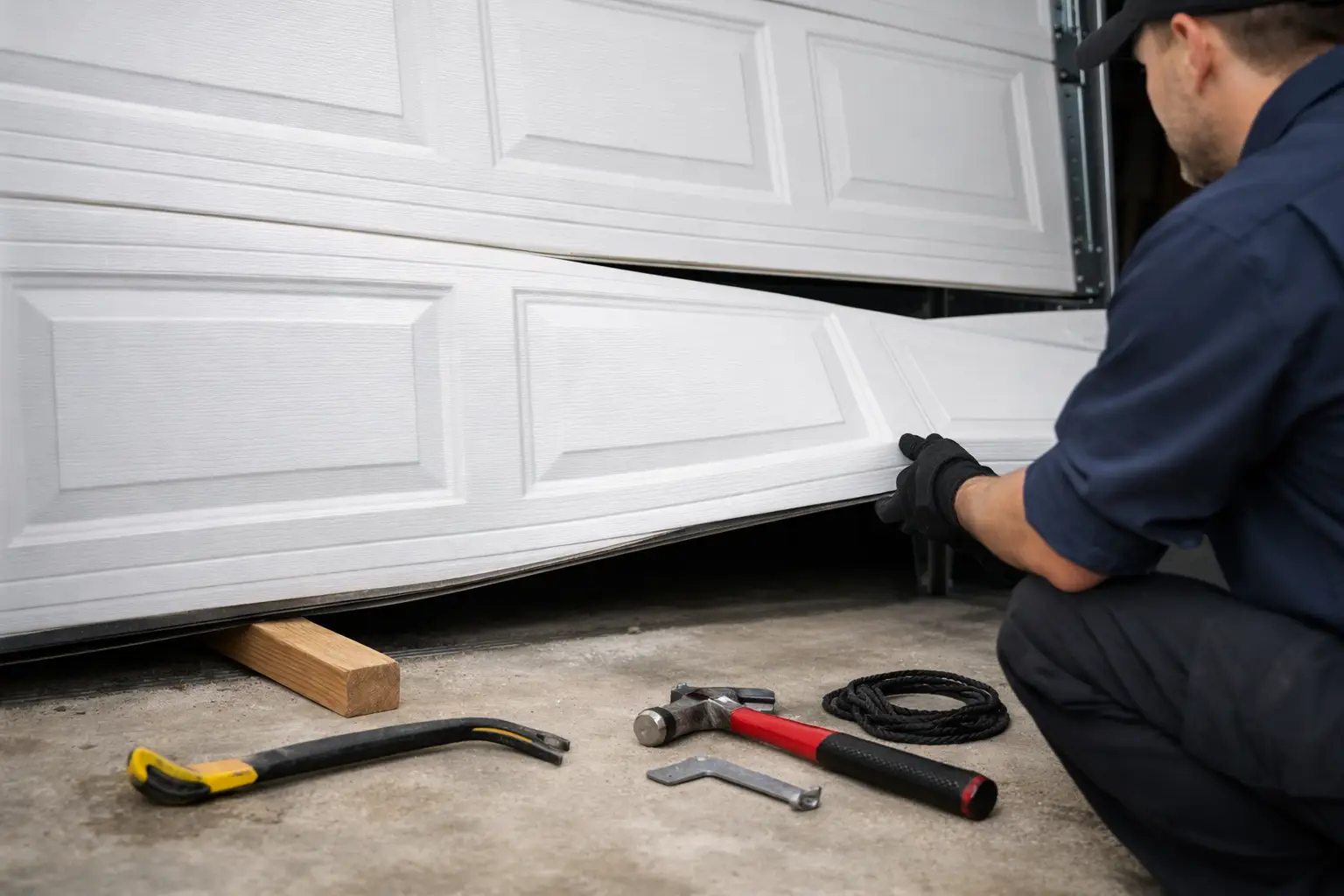
A garage door that will not close is more than an inconvenience. It can leave vehicles, tools, storage, and the door into your home exposed. Knowing how to secure a broken garage door gives you a safer temporary solution while you arrange a professional repair.
The goal is not to force the door back into working condition. The goal is to prevent injury, keep the garage from becoming an easy entry point, and avoid turning a manageable repair into a damaged door, broken opener, or dangerous spring problem.
Start by Checking What the Door Is Doing
Stand clear of the door and look at its position before touching anything. Is it fully open, partly open, off its track, sagging on one side, or closed but unable to lock? The safest temporary fix depends on the problem.
If the door is hanging crooked, has come off the tracks, or has loose cables, do not try to move it. A heavy garage door can shift without warning, especially when a cable or spring has failed. Keep people, pets, and vehicles away from the opening until it can be inspected.
If the door is down and simply will not open, it is usually safer to leave it closed. Secure the inside lock if the door has one, unplug the opener if it is behaving erratically, and use another entrance to the home.
How to Secure a Broken Garage Door That Is Stuck Open
A door stuck in the open position needs prompt attention. If it is safe to move and appears to be sitting evenly in both tracks, you may be able to close it manually. First, make sure no one is underneath the door and remove cars or belongings from its path.
Disconnect the opener only when the door is stable
Pull the red emergency release cord only if the door is fully open and stable in the tracks, or if it is resting securely on the ground. Disconnecting the opener lets you operate the door by hand, but it also removes the opener's support. If the door is crooked, heavy, or moving on its own, leave the release alone.
With a stable door, have one adult on each side if possible. Lower it slowly and evenly. Do not jerk it down, and do not use the opener to push a damaged door shut. If the door binds, becomes uneven, or takes more strength than expected, stop immediately.
Lock the door from inside once it is closed
When the door reaches the floor, use the manual slide lock if your garage door has one. Many doors have a lock bar or latch on the inside panel that slides into the track. This is the simplest way to keep a closed door from being lifted manually.
If there is no built-in lock, a C-clamp or locking pliers can be placed on the track directly above a roller. This prevents the door from traveling upward. Use a sturdy clamp rated for the job, and position it where it cannot slip. This is a temporary measure, not a repair.
Do not rely on the garage door opener alone to secure a damaged door. An opener is designed to move the door, not serve as a security lock. If the door is not sitting flat on the floor or the opener will not stay engaged, arrange service as soon as possible.
If the Door Cannot Be Closed
Sometimes a broken garage door cannot be moved safely. It may be jammed in the opening, bent, off track, or held up by damaged hardware. In that situation, do not leave the garage open overnight if you can avoid it.
Start by securing the door that leads from the garage into the house. Confirm it is locked, and do the same for nearby windows and any side or service door. Move portable valuables out of plain sight, including bicycles, power tools, lawn equipment, and boxes that advertise expensive purchases.
If the opening must remain exposed for a short time, block access from the inside with a solid, temporary barrier only if it can be done without touching or loading the garage door. Plywood fastened to a stable interior frame can help, but do not screw or nail into the door tracks, panels, cables, or opener rail. Those parts may need to be adjusted or replaced during the repair.
A vehicle can also be parked inside the garage to reduce access, provided the door is stable and there is room to do so safely. Never park beneath a door that is hanging, crooked, or off track.
Do Not Try to Repair Springs, Cables, or Tracks Yourself
Garage door springs and cables carry serious tension. A broken spring may make the door feel unusually heavy, while a damaged cable can cause one side to lift or drop faster than the other. These are not parts to reset with household tools.
Avoid winding a spring, loosening cable brackets, removing bottom brackets, or straightening bent tracks. A mistake can cause the door to fall or hardware to release suddenly. It can also make the eventual repair more expensive if panels, rollers, or the opener are damaged in the process.
The same applies to a door that has come off track. It may look like a roller can simply be pushed back into place, but the reason it came out matters. A worn roller, broken cable, bent track, loose bracket, or impact from a vehicle can all be involved.
Turn Off the Opener When It Is Not Safe to Use
If the garage door reverses unexpectedly, grinds loudly, strains to move, or runs without moving the door correctly, unplug the opener from its ceiling outlet. This stops someone from repeatedly pressing the remote and putting more stress on the system.
Keep the wall button and remotes away from children until the issue is resolved. If you have a keypad, consider temporarily disabling it or changing the code after the repair if you are concerned that the garage was accessible while the door was malfunctioning.
A power outage is different from a mechanical failure. If the door itself is in good condition and only the power is out, manual operation may be reasonable. But if the door is heavy, noisy, crooked, or hard to move, treat it as a mechanical issue and leave it alone.
Watch for Signs That Service Cannot Wait
A garage door repair should be scheduled quickly whenever the door will not close or lock. It becomes more urgent when the door is stuck open, hanging unevenly, has a broken spring or cable, is off track, or leaves the home accessible.
Longmont weather can make an open garage even more frustrating. Wind can blow debris inside, cold temperatures can affect stored belongings, and a sudden storm can create water damage. If the garage connects directly to the house, a broken door also affects the security of the whole property.
When you call for help, explain whether the door is open, closed, crooked, off track, or making unusual sounds. Mention whether a vehicle is trapped inside. Clear details help a garage door technician arrive prepared with the right parts and equipment.
Get the Door Checked Before Using It Again
Once the immediate security issue is handled, avoid testing the door over and over. One failed cycle is enough to show there is a problem. Repeated attempts can strip opener gears, damage rollers, or cause a weak spring to fail completely.
A proper repair starts with identifying the cause, not guessing at a quick fix. Repair Bro's provides garage door repair in Longmont with free estimates, so homeowners can get a clear recommendation before committing to work. Depending on the condition of the door, the right answer may be a spring, cable, roller, track, opener, or panel repair. In some cases, replacement makes more sense than putting money into an older, severely damaged door.
Until the door is repaired, keep the area clear, keep the opener off if it is malfunctioning, and use the safest available entry to your home. A temporary lock or barrier can buy time, but a properly repaired garage door is what restores everyday security.