
You usually know something is wrong before you know exactly what failed. The garage door may stop halfway, slam shut, feel unusually heavy, or make a sharp bang that sounds like something snapped inside the garage. If you are wondering how to spot broken torsion spring problems, the main thing to know is this: when that spring breaks, your garage door often becomes unsafe to lift and unreliable to use.
For many Longmont homeowners, this starts as a normal morning problem. You hit the opener, the motor hums, and the door barely moves. Or it lifts a few inches and drops back down. That is often not an opener issue at all. It is a spring issue, and the torsion spring does most of the heavy lifting.
How to spot broken torsion spring trouble fast
A torsion spring is mounted above the garage door on a metal shaft. Its job is to store tension and help raise and lower the door with control. When it breaks, the opener is left trying to move a door that suddenly feels much heavier than it should.
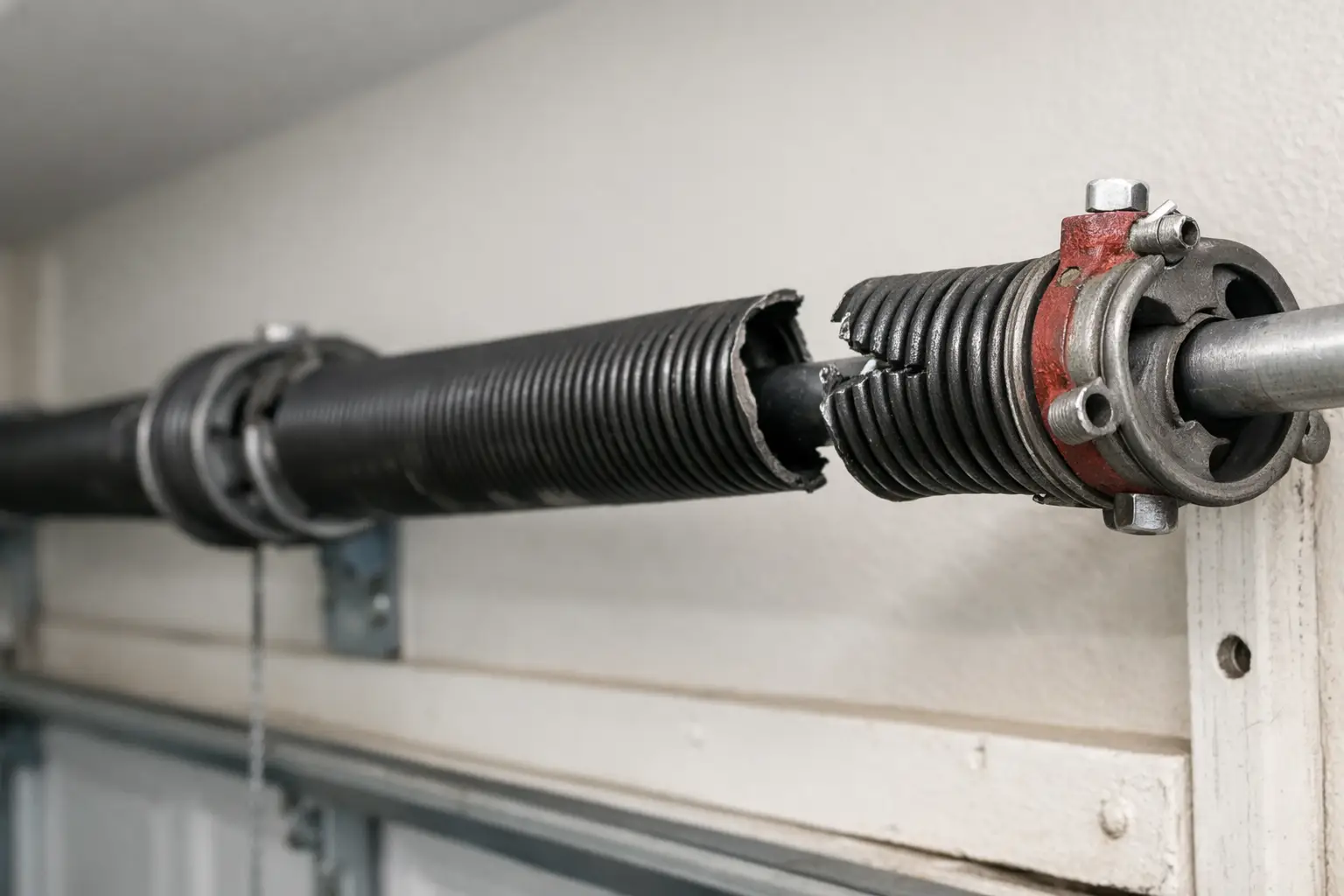
One of the clearest signs is a visible gap in the spring. A working torsion spring is tightly wound. A broken one usually has a separation of a couple of inches somewhere along the coil. If you look above the door and see that gap, that is a strong sign the spring has snapped.
Another common sign is the loud noise. Homeowners often describe it as a gunshot, a pop, or a metal bang from the garage. That sound happens because the spring breaks under tension. If you heard that noise and the door stopped working properly right after, the spring is a likely cause.
The door itself also gives clues. A broken torsion spring can make the door lift unevenly, stop partway, or refuse to open at all. In some cases, the opener strains and pulls but cannot get the door moving. In others, the door opens a little and then reverses. That depends on the size of the door, the weight, the opener strength, and whether one spring or two are installed.
What a broken torsion spring looks and feels like
The easiest visual check is above the top section of the garage door. If the spring is broken, you may see the coil split into two sections. On a two-spring system, one spring may still look normal while the other has a gap. That can confuse homeowners because the door may still move a little, just not correctly.
You may also notice the door suddenly feels extremely heavy if you try to lift it manually. That is because the spring is what offsets most of the door's weight. Without that tension, a double garage door can feel far too heavy for safe handling.
Sometimes the cables look loose or come off the drum after a spring breaks. That does not always happen, but when it does, it is another sign the counterbalance system has failed. If the door looks crooked and one side sits lower than the other, stop using it. A crooked door can bind in the tracks and create a bigger repair.
There is also the opener behavior to watch for. The opener may jerk, strain, or fail to close the door smoothly. Some people assume the motor burned out. But openers are not designed to carry the full weight of the door on their own. A failing opener can be the result of a broken spring, not the original cause.
Why garage doors act differently when a spring breaks
Not every broken spring looks exactly the same in real life. A lighter single-car door may still move with help from the opener, while a heavier insulated double door may not move at all. That is why homeowners sometimes miss the problem at first.
It also depends on whether your system has one torsion spring or two. If one spring breaks on a two-spring setup, the second spring may still provide partial support. The door may open crooked, move slowly, or look normal for the first few inches before struggling. That partial movement does not mean it is safe to keep using.
Cold weather can also make spring failures more common. In Colorado, temperature swings put stress on metal parts. If a spring is already worn, a cold snap can be enough to finish it off. Age, rust, and cycle wear all matter too. Most springs wear out over time from normal use, especially on homes where the garage door opens and closes several times a day.
How to check safely without making the problem worse
You do not need to disassemble anything to spot the likely issue. Start with a simple visual check from a safe distance. Look above the garage door for the spring or springs mounted on the torsion shaft. If you see a clear gap in one spring, that is your answer.
Next, look at the door position. Is it hanging unevenly? Are the lift cables loose? Does the opener try to lift but fail? Those details help confirm that the counterbalance system is compromised.
If the door is closed, leave it closed. That is usually the safest position for a door with a broken torsion spring. If the door is open when the spring fails, use extra caution and do not stand under it. A door without proper spring support can fall unexpectedly.
Do not loosen set screws, remove brackets, or try to unwind the spring yourself. Torsion springs are under high tension. This is not like replacing a loose hinge or weather seal. A spring repair can cause serious injury if handled without the right tools and training.
Signs it is not just a minor adjustment
Homeowners sometimes hope the fix is a quick opener reset or a track tweak. That would be easier, but the symptoms of a broken torsion spring are usually more obvious than a small adjustment issue.
If the door was working normally and then suddenly stopped after a loud snap, that points strongly to the spring. If the opener is running but the door barely moves, that also fits. If the door feels much heavier than usual or will not stay in position when manually lifted, the spring system is not doing its job.
A door with sensor trouble usually will not close properly, but it can still open normally. A door with a broken torsion spring often has trouble going up in the first place. That distinction helps narrow down the cause.
You may also see a bent top section or a stressed opener rail if the opener kept trying to lift a heavy door after the spring failed. That is why using the opener repeatedly after a spring breaks can turn one repair into several.
When to stop troubleshooting and call for service
Once you know how to spot broken torsion spring issues, the next step is knowing when to stop. If there is a visible spring gap, a heavy door, a loud snap, uneven movement, or loose cables, it is time for professional repair. Those are not symptoms to watch for a few more days.
Garage doors are one of the biggest moving parts in your home. When the spring fails, safety becomes the main issue, not just convenience. That matters even more if the garage is your primary entry point, you have kids around the home, or the door is stuck in an open position.
A trained garage door technician can confirm the failure, check whether other parts were affected, and replace the correct spring based on the door's weight and size. That last part matters. Springs are not one-size-fits-all, and the wrong spring can cause poor balance, extra wear, and repeat breakdowns.
For homeowners in Longmont, fast service matters because a stuck garage door can throw off your whole day. Repair Bro's focuses on local garage door repair with free estimates, which helps when you need a clear answer before committing to the work.
What to do right now if you think the spring is broken
Keep people clear of the door, avoid forcing it with the opener, and do not try to lift it unless a technician specifically advises you on the safest next step. If your car is trapped inside, that is frustrating, but forcing the system can damage panels, cables, rollers, and the opener.
Take a quick look for the spring gap above the door and note any other symptoms like loud noise, crooked travel, or sudden heaviness. That information helps speed up diagnosis when you schedule service.
Most of all, trust what the door is telling you. A garage door that suddenly gets heavy, loud, or unstable is not having a small off day. It is asking for repair before it gets more expensive or more dangerous.