
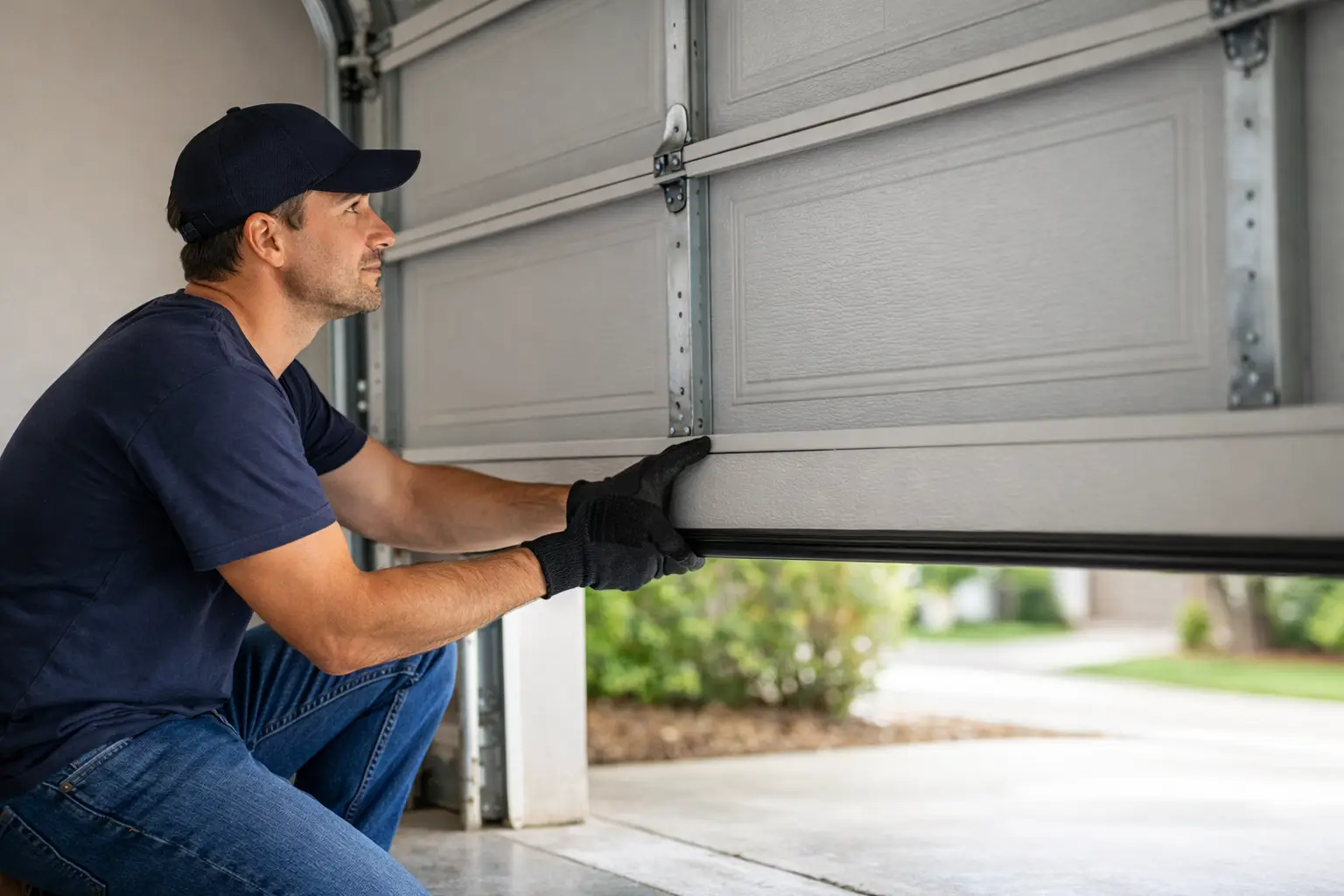
A garage door that feels a little heavier than usual is not something to ignore. When homeowners ask how to test garage door balance, they are usually trying to figure out whether the door is just aging or whether a spring problem is starting to build into a bigger repair.
A balanced garage door should stay in place when you stop it halfway. It should not slam shut, shoot upward, or feel like all the weight is fighting you. If it does, the spring system is no longer carrying the door the way it should, and that can put extra strain on the opener, the rollers, and the tracks.
How to Test Garage Door Balance Step by Step
Before you start, keep one thing in mind: you are testing the door, not repairing the springs. Torsion and extension springs are under serious tension. A simple balance test is safe for most homeowners when done carefully, but spring adjustment is a job for a trained garage door technician.
Start with the door in the fully closed position. Unplug the automatic opener if possible, or at least make sure nobody will accidentally press the wall button while you are working. Then pull the emergency release cord to disconnect the opener from the door. This lets you move the door by hand and tells you whether the spring system is doing its job.
Once the opener is disconnected, lift the door slowly by hand to about waist height or halfway open. Let go carefully and watch what happens. A properly balanced garage door should stay close to that position with only minor movement. If the door drops quickly, the springs are likely not providing enough counterbalance. If it rises on its own, the spring tension may be too high.
After that, move the door to a few other positions. Raise it to about one-quarter open, then three-quarters open, and see whether it stays reasonably steady. A door that behaves well in one spot but drifts hard in another can still be out of balance. The goal is not perfect stillness. The goal is controlled movement without strong pulling in either direction.
Finally, lower the door carefully back to the floor by hand. It should move smoothly and feel manageable. If it feels unusually heavy, jerky, or crooked, stop there. That points to a spring issue, cable problem, or track-related trouble that needs professional inspection.
What a Balanced Door Should Feel Like
Most homeowners expect the test to be all about what they see, but what you feel matters just as much. A balanced garage door should feel controlled, not loose and not dangerously heavy. You should not have to brace yourself to keep it from crashing down.
If the door takes real effort to lift, that usually means the spring system is not offsetting enough of the door's weight. If the door feels eager to fly upward, that can mean over-tensioned springs. Either way, the opener may still force the door through a full cycle for a while, which is why balance issues often go unnoticed until a motor starts struggling or a spring breaks.
This is also why some doors seem fine when they are powered but fail the manual test. The opener can hide balance problems for a while. It is doing extra work in the background, and that extra strain usually shows up later as a bigger repair bill.
Signs Your Garage Door Is Out of Balance
Sometimes the balance test confirms what you already suspected. Other times, the door has been giving warnings for weeks. If your garage door is out of balance, you may notice it closes too fast, opens unevenly, makes louder noises than usual, or reverses for no clear reason.
Another common sign is opener strain. You might hear the motor working harder, or you may notice the door hesitates before moving. In some cases, the top section jerks when opening, or the door shakes as it travels. Homeowners in Longmont often first notice the problem during colder weather, when worn components stop tolerating extra stress as well as they used to.
A crooked door is another red flag. If one side appears lower than the other when the door is partially open, the issue may not be balance alone. It could involve cables, drums, or hardware wear. That is where a simple DIY check should end.
Why Garage Door Balance Matters More Than People Think
A lot of people assume balance is just about making the door easier to lift. It matters for that, but the bigger issue is wear and safety. A garage door can weigh well over a hundred pounds. The springs are there to carry most of that load. When balance is off, the opener and hardware start absorbing stress they were never meant to handle alone.
That can shorten the life of your opener, wear out rollers faster, loosen brackets, and create rough travel in the tracks. It also raises the chance of a sudden failure. A door that is badly out of balance is more likely to slam shut or become difficult to control by hand.
For households that use the garage as the main entry point, this is more than a maintenance detail. It affects security, convenience, and day-to-day safety. A small spring problem can turn into a stuck door at the worst possible time - when you are leaving for work, getting home late, or trying to secure the house.
When Not to Test It Yourself
A basic balance check is usually fine if the door is moving normally and you are only disconnecting the opener to lift it by hand. But there are situations where even that simple test is not worth the risk.
Do not test the door if you see a broken spring, a hanging cable, bent track, damaged roller brackets, or a door section that looks cracked or separated. If the door is already jammed or visibly off-track, leave it alone. Trying to force movement can make the damage worse and create a safety hazard.
Use extra caution with older wood doors or oversized insulated doors, since they carry more weight and can be harder to control. The same goes for doors that already feel heavy even when fully closed. If you are unsure, it is smarter to schedule a service call than to find out the hard way that the spring system is failing.
Common Mistakes Homeowners Make During a Balance Test
The biggest mistake is testing with the opener still connected. If the opener is attached, you are not really checking balance. You are checking whether the motor can move the door.
Another mistake is letting go too quickly. Always keep your hands ready and release the door carefully at the halfway point. If the springs are badly off, the movement can be sudden.
Some homeowners also confuse poor lubrication with a balance problem. A dry door can be noisy and rough without actually being out of balance. On the other hand, lubrication will not fix a spring issue. If the door is heavy or will not stay put, the problem is not something a spray lubricant is going to solve.
And then there is the biggest one of all - trying to adjust springs without the right tools and training. That is where DIY turns dangerous fast.
What to Do If the Door Fails the Test
If the door drops, rises, or feels too heavy, reconnect the opener only if the door can still be operated safely. Then schedule a professional inspection. Most balance issues trace back to worn or improperly tensioned springs, but cables, drums, track alignment, and roller condition can all play a role.
This is one of those repairs where accurate diagnosis matters. Replacing the wrong part or adjusting the wrong component can waste time and leave the real issue untouched. A proper service visit should identify what is causing the imbalance and whether repair or replacement makes more sense.
For local homeowners who want a straightforward answer, Repair Bro's handles garage door diagnostics and repair in Longmont with free estimates. That is often the fastest way to get from guessing to knowing.
How Often Should You Test Garage Door Balance?
For most homes, checking garage door balance a couple of times a year is enough. If you use the garage as your main entrance, more frequent checks make sense because the door cycles more often and parts wear faster.
You should also test it any time the door starts sounding different, moving unevenly, or putting more strain on the opener. Balance problems usually do not fix themselves. They tend to get worse in small steps until something finally breaks.
A quick test now can save you from a dead opener, damaged hardware, or a door that will not open when you need it most. If the door does not feel right, trust that instinct and get it looked at before it turns into a bigger problem.