
A garage door can look fine from the street and still make your house colder, louder, and less secure than it should be. When homeowners compare insulated vs non insulated garage doors, the real question is usually not which one is “better.” It is which one makes sense for the way your Longmont home, garage, and budget actually work.
If your garage is attached to the house, holds a workshop, or has a bedroom above it, insulation can make a noticeable difference. If it is a detached building used only for parking and storage, a non-insulated door may be the practical choice. The right answer starts with the garage itself, not a sales pitch.
Insulated vs Non Insulated Garage Doors: The Main Difference
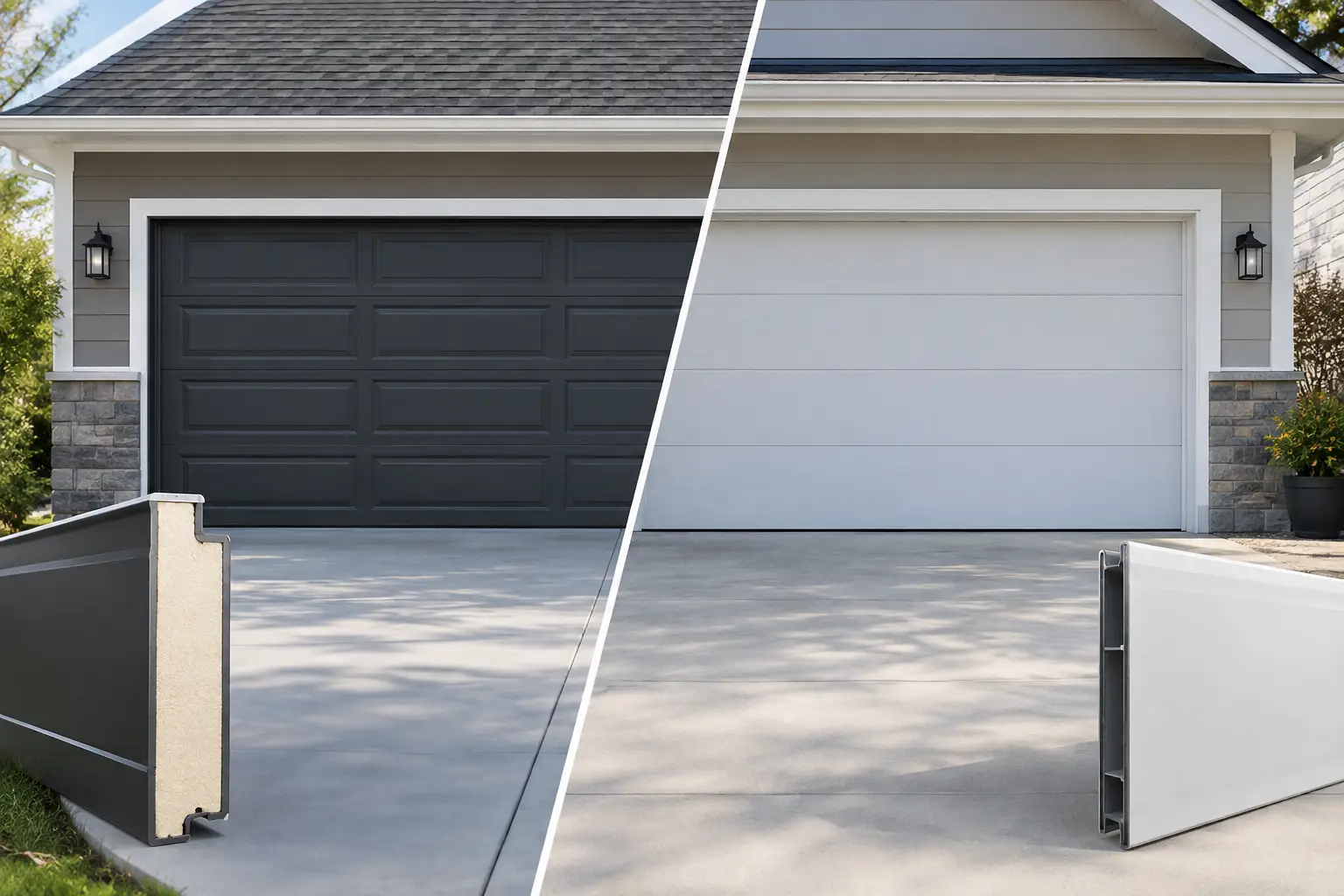
A non-insulated garage door is usually a single layer of steel, aluminum, wood, or composite material. It is lighter, simpler, and generally costs less upfront. There is no insulating core between the front and back panels.
An insulated garage door has at least two layers, with insulation between them. The insulation is commonly polystyrene or polyurethane. Polystyrene is a rigid foam panel placed inside the door, while polyurethane is injected between the layers and expands to fill the space. Polyurethane doors usually offer better insulation and a firmer, stronger feel, but they cost more.
That construction changes more than the temperature. Insulated doors tend to run quieter, resist dents better, and feel less flimsy during daily use. Non-insulated doors keep initial replacement costs down and may be all a simple detached garage needs.
Why Garage Insulation Matters in Longmont
Longmont weather puts garage doors through real temperature swings. Cold winter nights, hot sunny afternoons, wind, hail, and snow can all affect how a garage feels and how hard the door system works. A metal, non-insulated door can transfer outdoor temperatures directly into the garage. In summer, it can turn the space into an oven. In winter, it can make the floor, walls, and rooms next to the garage feel colder.
An insulated door does not turn an unheated garage into a living room. That is a common misunderstanding. If the walls, ceiling, and gaps around the door are not insulated or sealed, heat will still escape. But an insulated door reduces one of the largest exposed surfaces in the garage, which can make the space less extreme.
This matters most in attached garages. The wall and ceiling between the garage and the house have to deal with those temperature changes. If there is a bedroom, home office, laundry room, or family room over or beside the garage, a better-insulated door can help make that nearby room more comfortable.
Comfort and Energy Use
For an attached garage, insulation is usually about comfort first and energy savings second. A colder garage can pull warmth from the rooms around it. A hot garage can add heat to adjacent spaces during the summer. The exact effect on utility bills depends on your home’s layout, HVAC system, weather sealing, and other insulation.
Still, homeowners often notice a practical difference after replacing a thin single-layer door. The garage is less drafty, tools are less cold to handle in winter, and the room above the garage is not as difficult to heat or cool.
A detached garage is different. If you do not spend time there and do not heat or cool it, the energy benefit may be modest. Insulation can still help protect temperature-sensitive items, but it may not justify the added cost for every homeowner.
Noise: A Reason Many Homeowners Overlook
Garage door noise is not always caused by a broken opener or worn rollers. A thin, non-insulated steel door can rattle, flex, and amplify sound as it moves. Outside noise also comes through more easily.
Insulated doors are usually quieter because the added layers stiffen the panels and absorb some vibration. That can matter a lot when someone leaves early for work, teenagers come home late, or a bedroom sits above the garage. You will still hear the opener, springs, rollers, and hinges, especially if they need service. But a solid insulated door takes away some of the hollow, shaking sound common with lightweight doors.
If your existing door suddenly gets louder, do not assume a replacement is the only answer. Loose hardware, dry rollers, worn bearings, damaged hinges, and a failing opener can all create noise. A garage door technician can tell you whether the problem is in the door itself or the operating system.
Strength and Durability
Insulation adds structure. A two- or three-layer garage door generally resists everyday dents better than a single-layer steel door. That matters if bikes, trash bins, sports gear, or vehicles regularly move in and out of the garage.
It also matters in Colorado weather. Wind and hail can damage any door, and insulation will not make a garage door indestructible. But a thicker door often holds its shape better over time than thin sheet metal. Less panel flex can also reduce strain on hinges and rollers.
There is a trade-off. Insulated doors weigh more. Your springs, opener, cables, and tracks must be correctly sized and adjusted for that door. Replacing a light door with a heavier insulated model without checking the counterbalance system is not a good DIY shortcut. A door that is not balanced properly can damage the opener and create a safety risk.
Upfront Cost vs Long-Term Value
Non-insulated garage doors are usually the lower-cost option. They are a sensible choice when the garage is detached, unconditioned, lightly used, and not close to living space. They can also work well for landlords or property owners who need a dependable replacement without adding features the property does not need.
Insulated doors cost more because of the extra material and construction. The price difference can be worth it when the garage is attached, used as a work area, or located under a bedroom. Better noise control, improved comfort, a sturdier feel, and possible energy savings all add value beyond the R-value on the product label.
Do not choose by R-value alone. R-value measures resistance to heat flow, but it does not tell the whole story. A high-R-value door with damaged bottom weatherstripping or wide gaps around the frame will still let in cold air, dust, and moisture. The condition of the seals, track alignment, and door hardware matters too.
When a Non-Insulated Door Makes Sense
A non-insulated door is not a bad door. It is simply built for a different need. It often makes sense when your garage is detached and used only for vehicles, lawn equipment, or basic storage. It can also be the right fit if your primary concern is keeping replacement costs low after storm damage or a failed older door.
For a detached garage that is not heated, the practical benefits of insulation may be limited. If you rarely spend time inside and nothing stored there is temperature-sensitive, a quality non-insulated steel door can provide reliable access and security without paying for features you will not use.
The key is choosing a door with good construction and having it installed correctly. Even a basic door should open smoothly, sit level, seal at the bottom, and have properly adjusted springs.
When an Insulated Door Is Worth It
An insulated garage door is usually the stronger choice for an attached garage, especially if it shares walls with living space or has a finished room above it. It is also a good fit for homeowners who use the garage as a workshop, exercise area, hobby space, or place to work on vehicles.
Choose insulation when comfort matters, when the door gets direct afternoon sun, or when garage noise is disrupting the house. It can also make sense if your current thin door is dented, noisy, or flexing heavily as it operates. In those cases, replacing it with a better-built insulated model addresses more than one problem at once.
If you are planning to sell in the near future, an insulated door can also improve the day-to-day feel of the home. It is not a guarantee of a higher sale price, but a quiet, solid-looking garage door is a feature buyers notice.
Do Not Forget Weather Seals and Repairs
Whether you choose insulated or non-insulated, the door needs good weather sealing. The bottom seal, side seals, top seal, and threshold area do a lot of work in Longmont. They help keep out wind, snow, leaves, water, pests, and dust.
A door with broken springs, bent tracks, loose cables, damaged rollers, or an unreliable opener needs attention before it becomes a bigger problem. Do not try to adjust torsion springs or lift cables yourself. Those parts are under heavy tension and should be handled by a trained garage door professional.
Repair Bro's can inspect the door, hardware, balance, and weather seals, then provide a free estimate for repair or replacement. That gives you a clear picture of whether your current door has useful life left or whether a new insulated door is a smarter investment.
Before you choose, stand in your garage on a cold morning or hot afternoon and think about how you use the space. The best garage door is not the most expensive one on the showroom floor. It is the one that fits your home, operates safely every day, and solves the problem you actually have.