
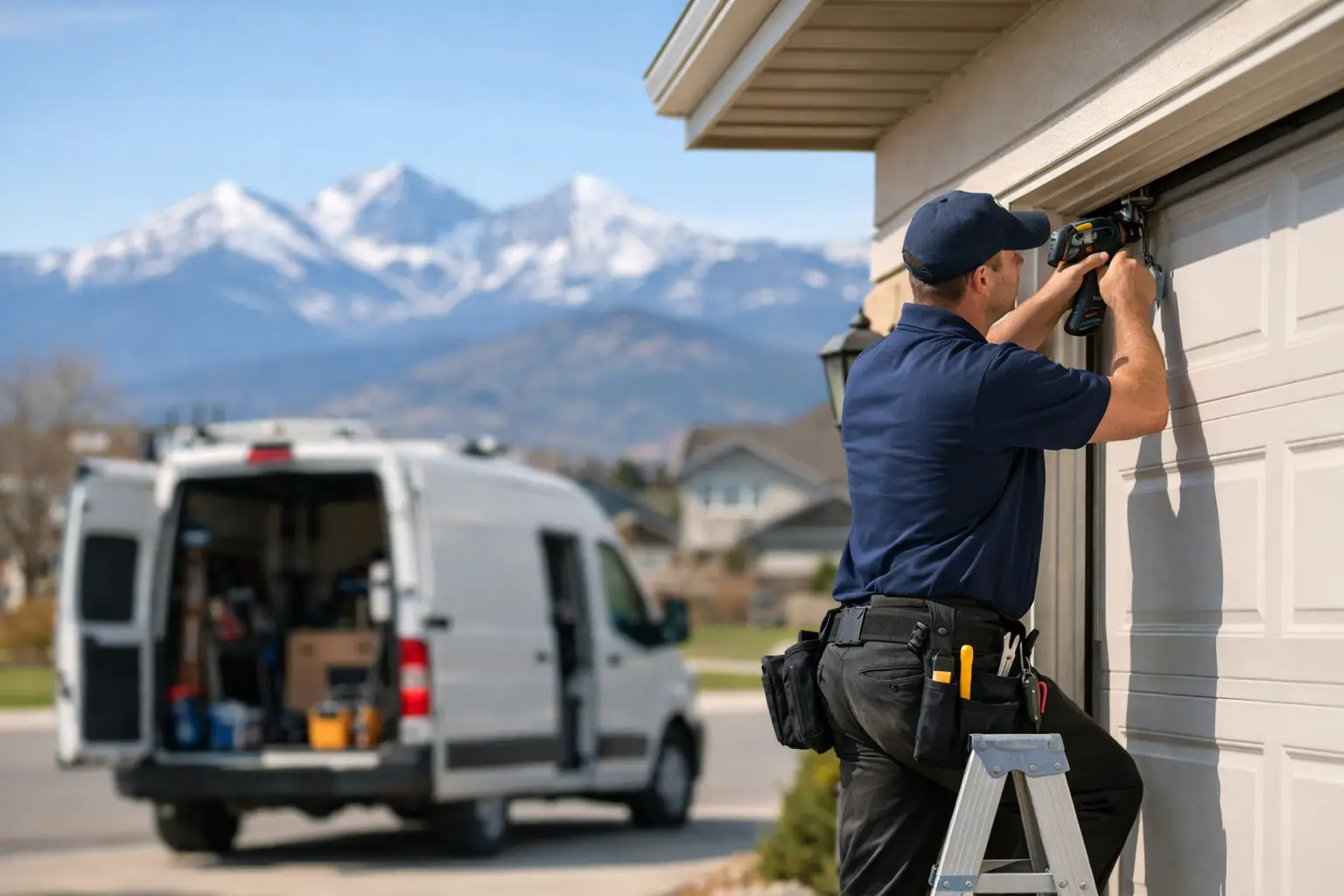
A garage door usually picks the worst possible time to stop working. You are heading to work, trying to get the kids out the door, or pulling in after dark, and suddenly the opener hums, the door jerks, or nothing happens at all. That is when local garage door repair matters most - not next week, not after a long sales pitch, but now, from a company that knows Longmont and can get the problem diagnosed fast.
When homeowners look for help, they usually are not looking for a long lesson on garage door engineering. They want to know what is wrong, what it will take to fix it, and what it is going to cost before they commit. That is exactly why a local specialist is the right call. Garage doors are heavy, under tension, and tied directly to your home’s security and daily routine. A quick, accurate repair can save you from a bigger breakdown, and just as important, it can save you from wasting time on a guess.
Why local garage door repair is the smart move
A garage door problem is rarely convenient. If the door will not close, your home may be left exposed. If it will not open, your car may be stuck inside. If it is moving unevenly, grinding, or dropping too fast, it may be a safety risk. In those moments, choosing local garage door repair is about more than convenience. It is about getting someone out who works on these systems every day and can spot the issue without turning it into a drawn-out process.
Local service also tends to be more practical. You are dealing with a team that understands the area, serves nearby neighborhoods, and is focused on residential garage door systems rather than trying to be everything to everyone. That matters because garage doors have enough moving parts to create a range of problems, but most repairs come down to a few common causes. An experienced local crew can usually narrow things down quickly and explain what actually needs attention.
There is also the pricing side. When a company offers free estimates, it removes a lot of the hesitation homeowners feel when something breaks. You can get a clear idea of the issue and the likely repair before deciding how to move forward. For busy households and property managers, that kind of clarity matters.
The problems homeowners in Longmont see most
Some garage door issues show up all at once. Others start small and get worse over time. A loud squeal, a shaky movement, or a door that hesitates for a second may not seem urgent at first, but those signs usually mean a part is wearing down or a system is slipping out of alignment.
Broken springs are one of the biggest reasons people call for service. When a spring breaks, the door may become extremely heavy, stop opening, or open only a few inches before reversing. Springs carry a lot of tension, which is why this is not a good do-it-yourself repair. The same goes for cable issues. If a cable frays, slips, or snaps, the door can lift unevenly or jam completely.
Openers are another common trouble spot. Sometimes the motor runs but the door does not move. Other times the remote stops responding, the wall switch fails, or the opener struggles because the real problem is elsewhere in the system. Tracks and rollers also take a beating over time. Bent track sections, worn rollers, and loose hardware can all make the door noisy, jerky, or unreliable.
Panels, sensors, and weather sealing come up often too. A damaged panel affects both appearance and function. Misaligned safety sensors can keep a door from closing properly. Worn bottom seals and perimeter seals may not stop the door from operating, but they can let in dust, moisture, and cold air, which is not ideal in Colorado weather.
What a professional diagnosis should include
A good repair visit starts with diagnosis, not guesswork. If a company shows up ready to replace parts before checking the full system, that is a red flag. Garage doors work as a connected system, so one visible symptom may have a different root cause.
A proper inspection should look at springs, cables, rollers, tracks, hinges, panels, opener settings, and safety components. Balance matters too. If the door is out of balance, it puts added strain on the opener and can wear out parts faster. In some cases, what looks like a bad opener is really a spring issue. In other cases, a noisy door may need hardware tightening and roller replacement rather than a major repair.
That is where a local specialist brings real value. Instead of taking a broad, upsell-heavy approach, a focused garage door company can tell you whether the fix is simple, moderate, or a sign that replacement should be considered. Sometimes a repair is the clear answer. Sometimes it depends on the age of the door, the condition of the parts, and how often the system has already been patched.
Repair or replacement? It depends on the door
Most homeowners would rather repair than replace, and in many cases that makes sense. If the issue is isolated - a broken spring, worn rollers, sensor alignment, or opener adjustment - repair is usually the fastest and most cost-effective option. If the door itself is in decent shape and the main components are still serviceable, there is no reason to replace the whole system.
But not every garage door is worth continuing to patch. If the door has severe panel damage, repeated track issues, an outdated opener, or multiple failing components, replacement may be the better long-term call. That is especially true when repair costs start stacking up over time. Spending less today is not always the cheaper decision if another breakdown is right around the corner.
The honest answer is that homeowners need a straight assessment. Not every older door needs to be replaced, and not every repair is a smart investment. A good estimate should reflect that. It should explain the immediate fix, any related concerns, and whether the system is still in good working shape overall.
What to expect from local garage door repair service
When you call for service, speed matters, but so does communication. Homeowners want to know when someone can arrive, what kind of issue they may be dealing with, and whether they are likely looking at a repair or a larger job. The best service experience is simple: show up, inspect the door, explain the problem in plain language, and provide a clear estimate.
That direct approach works well for urgent calls and routine service alike. If your garage door is stuck open, the priority is securing the home and restoring operation. If the door is just noisy or slow, the focus may be on preventing a larger failure. Either way, the process should feel practical, not complicated.
This is also where a neighborhood company has an edge. A local business is built around service calls like these. It is not trying to route you through a giant call center or sell you on work unrelated to the door. It is there to solve the garage door problem and get your day back on track.
How to know it is time to call now
Some garage door problems can wait a day or two. Others should be handled right away. If the door is crooked, hanging unevenly, slamming shut, refusing to close, or making a sudden loud bang before failing, it is time to stop using it and call for help. Those are not minor annoyances. They are signs that an important part may have failed.
You should also act quickly if the garage is your main entry point. For many Longmont households, the garage door is the door that gets used the most. When it goes down, daily life gets disrupted fast. Add in the security risk of a door that will not close properly, and prompt service becomes the obvious move.
If you have been putting off a repair because you are unsure about cost, that is where a free estimate helps. You get a better sense of the problem without committing blind. For many homeowners, that is the difference between waiting too long and getting the issue handled before it turns into something bigger.
For Longmont homeowners, local service should feel simple. If your garage door is stuck, noisy, off-track, or just not acting right, the next step is not to wrestle with it. It is to get a clear diagnosis, a fair estimate, and a repair plan that makes sense for your home.