
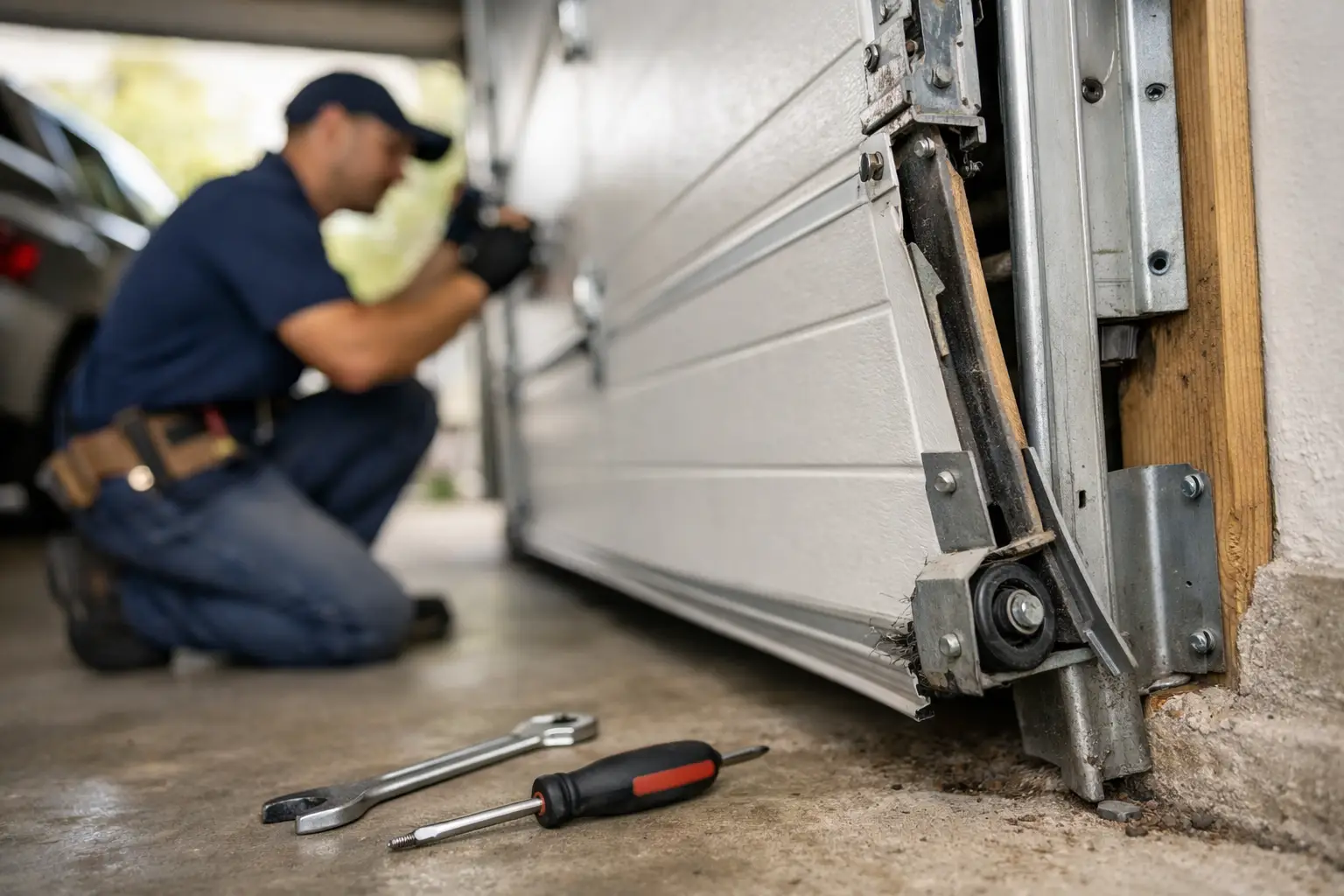
A garage door can come off track in a matter of seconds. One minute it is moving normally. The next, it is crooked in the opening, grinding loudly, or stuck halfway down. This off track garage door repair example shows why the problem needs a careful inspection instead of a quick shove back into place.
For Longmont homeowners, an off-track door is more than an inconvenience. A heavy door that is hanging unevenly can damage the tracks, bend rollers, strain the opener, and create a real safety risk. The right repair depends on what knocked the door out of alignment in the first place.
A Realistic Off Track Garage Door Repair Example
Picture a two-car residential garage door that starts making a scraping sound on the way down. The homeowner notices that the door is moving slower than usual, but it still closes. A few days later, the door catches about two feet from the floor. One side drops lower than the other, and a roller on the low side slips outside the vertical track.
At that point, the homeowner stops the opener. That was the right move. Continuing to run the opener could pull the door farther out of position, twist the top section, or strip gears inside the opener.
A technician inspecting this situation would usually find more than one issue. In this example, the track near the bottom has been bumped inward by a vehicle or stored equipment. The impact narrowed the path for the roller. At the same time, a loose track bracket allowed the rail to shift slightly away from the wall. The roller finally caught at the damaged spot and popped out.
The repair is not simply putting that roller back into the track. The technician first secures the door so it cannot fall or move unexpectedly. Then they disconnect the opener when appropriate, inspect the rollers and hinges, straighten or replace the damaged track section, tighten and realign the brackets, and set the rollers back in place. The door is then run by hand and with the opener to make sure it travels evenly.
If the rollers were cracked, worn flat, or badly bent, they would need replacement too. Reusing damaged parts can lead to another derailment soon after the service call.
What Usually Knocks a Garage Door Off Track?
Garage doors do not normally leave their tracks without a reason. Sometimes the cause is obvious, such as a vehicle bumping the door or track. Other times, the problem builds slowly through worn hardware, poor alignment, or years of use.
A bent track is one of the most common causes. Even a small bend can stop a roller from moving smoothly. Loose mounting brackets can also let the track spread or shift. When the track is no longer in the correct position, the roller may climb out instead of following its normal path.
Worn rollers are another frequent problem. Rollers take a lot of daily use, especially in households where the garage is the main entry point. As they age, they can become noisy, loose, cracked, or difficult to turn. A roller that does not move cleanly through the track puts extra pressure on the entire door system.
Broken or weak cables can cause a more serious version of the same problem. The cable helps lift the door evenly. If one cable comes off the drum, frays, or breaks, one side of the door may lift while the other side stays down. That uneven pull can force rollers out of the track quickly.
Other possible causes include a damaged hinge, an obstacle in the door's path, a door that was manually forced, or an opener that continued pushing after the door became stuck. Colorado temperature swings can also expose worn parts. Cold weather may not directly knock a door off track, but it can make a stiff, neglected system more likely to bind.
Why Forcing the Door Is a Bad Idea
It is tempting to grab the door and try to lift it straight, especially when the car is trapped inside. That can make a manageable repair much worse.
A typical residential garage door is heavy, and its springs and cables are under significant tension. When the door is crooked or off track, the weight is no longer supported evenly. Pulling on one side can bend sections, tear hinges, damage the track further, or cause the door to drop.
Do not keep pressing the opener button to see if it will correct itself. An automatic opener is designed to move a balanced door along a clear path. It cannot fix a door with a roller outside the track. Repeated operation can burn out the motor or cause additional damage to the door panels.
If the door is partly open, keep people, pets, and vehicles away from the opening. If it is safe to do so, turn off the opener and leave the door where it is until a garage door technician can inspect it. Avoid touching the springs, cables, drums, or bottom brackets. Those parts are not a safe do-it-yourself repair.
What a Proper Repair Visit Should Include
A good off-track repair starts with finding the cause, not just addressing the visible roller. If the underlying problem is missed, the door may come off track again the next day.
The technician should check the condition and alignment of both vertical and horizontal tracks, the track brackets, roller stems, hinges, cables, drums, springs, and opener settings. They should also inspect the door sections for cracks, bends, or separation at the hinges.
In many cases, the repair is straightforward: realign a track, secure loose hardware, replace a roller or hinge, and test the door. In other cases, the damage points to a bigger issue. A door that came off track after a cable failure may need cable service and a full balance check. A door hit by a vehicle may need panel replacement or new tracks if the metal cannot be safely straightened.
This is where a clear estimate matters. Homeowners should know whether the repair is limited to alignment and hardware or whether damaged parts need replacement. Repair Bro's provides Longmont garage door repair with free estimates, so you can understand the problem and recommended work before moving forward.
Can You Prevent an Off-Track Door?
You cannot prevent every accident, but basic attention can catch problems before a roller leaves the rail. Listen for new grinding, popping, squealing, or scraping noises. Watch the door from a safe distance as it opens and closes. It should move evenly, without jerking, shaking, or gaps between the rollers and track.
Keep the tracks clear of tools, bicycles, boxes, and other items that could get bumped into them. Do not use the track as a storage shelf or attach items to it. Check that nothing is rubbing against the door as it travels.
Lubrication can help moving metal parts operate more smoothly, but it is not a fix for a bent track, worn rollers, or a loose cable. In fact, coating the track heavily with grease can collect dust and debris. If the door is noisy or dragging, a professional inspection is more useful than adding more lubricant and hoping for the best.
An annual service check is a practical option for older doors or doors used multiple times each day. Small corrections to rollers, hinges, brackets, and balance can help avoid a larger repair when the door is stuck open at the worst possible time.
When to Call for Garage Door Repair in Longmont
Call for professional help as soon as you see a roller outside the track, a crooked door, a loose cable, or a door that will not move normally. Same-day attention is especially important if the garage cannot be secured, the door is hanging open, or a vehicle is trapped.
The best next step is simple: stop using the door, keep the area clear, and have the system inspected. A fast repair can often protect the door, opener, and your home's security from a much more expensive problem.