
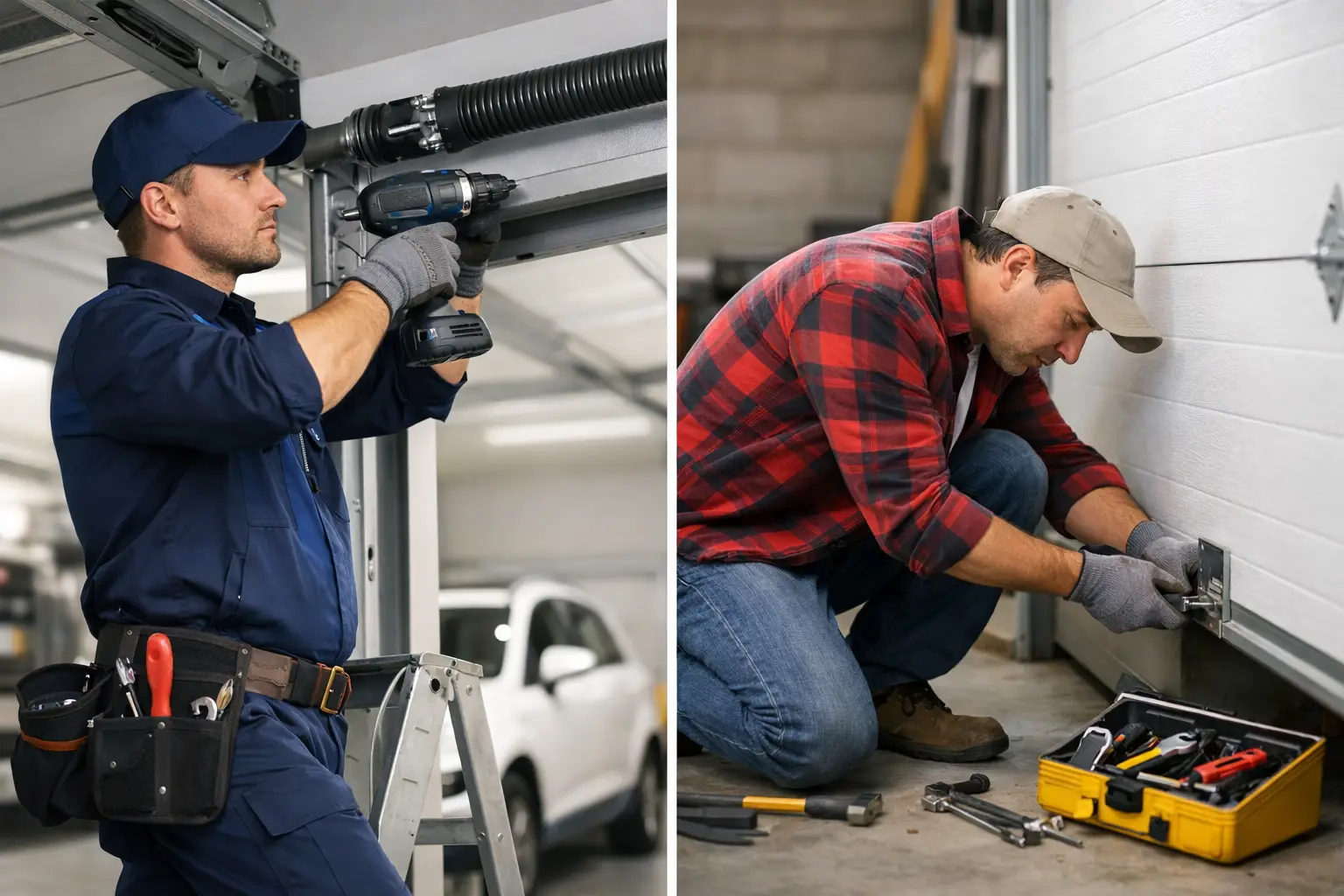
A garage door that stops halfway at 7 a.m. is not a good time to test your handyman skills. In the professional vs diy garage repair decision, the real question is not whether you can find a video or buy a part. It is whether the repair can be done safely, correctly, and without creating a bigger problem for your home, vehicle, or family.
Some simple maintenance tasks are reasonable for a homeowner. Other jobs involve high-tension springs, heavy doors, electrical components, and moving parts that can cause serious injury when handled the wrong way. Knowing the difference can save time and money.
When DIY Garage Door Repair Makes Sense
Homeowners can handle a few basic garage door tasks when the door is otherwise operating normally and there is no sign of damaged hardware. These jobs are mostly maintenance, cleaning, and simple troubleshooting.
Start with the obvious. Check whether the garage door opener is plugged in, whether a breaker has tripped, and whether the remote needs a fresh battery. If the door will not close, look at the safety sensors near the bottom of the tracks. Dirt, cobwebs, leaves, or a knocked-out alignment can keep the sensors from communicating.
You can also keep tracks clear of debris, tighten visibly loose bolts on the door and opener bracket, and lubricate rollers, hinges, and springs with a garage-door-rated lubricant. Do not use heavy grease on the tracks. It collects dirt and can make the door run worse over time.
If a replacement remote or keypad needs programming, the opener manual can usually walk you through it. The same goes for replacing a weather seal along the bottom of the door, provided the door itself is stable and working as it should.
These tasks are good examples of practical home maintenance. They do not require taking apart the counterbalance system or supporting the full weight of the door. Still, stop if you find a broken cable, loose bracket, bent track, or spring problem. Those are not minor details.
Professional vs DIY Garage Repair: The Safety Line
A residential garage door may weigh 150 pounds or more. The springs and cables offset that weight so the door can move smoothly. When those parts fail or are adjusted incorrectly, the door can fall, bind in the tracks, or release stored tension suddenly.
Torsion springs, mounted above the garage door opening, are especially dangerous. They are tightly wound under significant pressure. A wrong tool, a slipping winding bar, or an incorrect adjustment can lead to severe injury. Extension springs also carry risk, particularly if they do not have properly installed safety cables.
Call a professional for a broken spring, snapped or loose cable, off-track door, damaged roller, bent track, or a door that is hanging unevenly. The same applies if the door is heavy to lift manually, slams shut, reverses unexpectedly, or makes grinding, popping, or loud banging sounds.
Electrical problems deserve caution as well. An opener that hums without moving, trips the breaker, overheats, or has intermittent operation may need more than a reset. The issue could be a worn gear, capacitor, circuit board, motor, or wiring concern. Guessing at parts can turn one repair into several.
The Cost Question: Cheap Repair or Expensive Mistake?
DIY work can save money when the issue is truly simple. A battery, sensor cleaning, lubrication, or weather seal replacement costs less than a service visit, and there is nothing wrong with taking care of those basics.
The cost equation changes when a repair requires specialized tools, replacement parts, or a second person to safely support the door. Buying the wrong spring, roller, or opener component is common because garage door parts are not one-size-fits-all. Springs must match the door’s weight and setup. Rollers come in different stem lengths and materials. Tracks and cables must be sized and installed correctly.
A repair that looks successful for one day can become costly if the door is not balanced afterward. An unbalanced door puts extra strain on the opener, which can wear out gears and motors faster. It can also damage panels, tracks, and brackets over time.
Professional service is not just paying someone to install a part. A trained technician checks the full system: springs, cables, drums, rollers, hinges, tracks, sensors, opener settings, and door balance. That diagnosis matters because the part you can see is not always the part that caused the failure.
For Longmont homeowners, a free estimate makes that decision easier. You can get a clear look at what is wrong and what the repair will involve before approving the work.
Signs You Should Stop and Call for Garage Door Service
Do not keep running a garage door that is clearly struggling. Repeatedly pressing the opener button can make a damaged system worse, especially if the door is off track or a cable has come loose.
Call for professional garage door repair when you notice any of the following:
- The door has a broken spring or a cable that is loose, frayed, or off the drum.
- The door is crooked, stuck, off its tracks, or will not stay open.
- The opener runs but the door does not move, or the door moves only a few inches.
- The door closes too fast, feels unusually heavy, or will not open manually.
- You hear a sharp bang from the garage, grinding metal, or repeated popping noises.
- A vehicle is trapped inside, the door will not secure, or the opening creates a home security concern.
In these situations, pull vehicles away from the door, keep children and pets clear of the area, and avoid pulling on cables or springs. If the door is partially open and unstable, do not walk or drive under it.
What a Professional Repair Visit Should Accomplish
A good garage door repair visit should begin with inspection, not a guess. The technician should identify why the door failed, explain the condition of the affected parts, and provide repair options that fit the door’s age and condition.
Sometimes the right answer is a targeted repair, such as replacing a spring, cable, roller, hinge, or sensor. Other times, several worn components make a larger repair more sensible. If the door has extensive panel damage, wood rot, poor insulation, or an obsolete opener, replacement may be the better long-term value.
You should also expect the door to be tested after the repair. It should open and close smoothly, reverse properly when the safety system is triggered, and sit level when fully closed. The opener should not be doing all the lifting. A properly balanced door protects the opener and reduces future trouble.
Repair Bro's focuses on garage door problems in Longmont, from doors that will not open to noisy systems and damaged hardware. The goal is straightforward: find the cause, explain the fix, and get your door working safely again.
A Simple Rule for Deciding
DIY is a reasonable choice for basic maintenance and low-risk troubleshooting. Clean the sensors, replace the remote battery, lubricate moving parts, and check the power source. Those are useful first steps.
If the job involves springs, cables, tracks, door balance, major hardware, or electrical diagnosis, professional repair is the safer choice. Garage doors are one of the largest moving systems in a home. Treat a sudden change in how yours operates as a repair signal, not something to force through.
A fast inspection can prevent a stuck car, a damaged opener, or an unsafe door from turning into an all-day problem. When the door does not feel right, trust that instinct and get a clear repair estimate before the damage grows.