
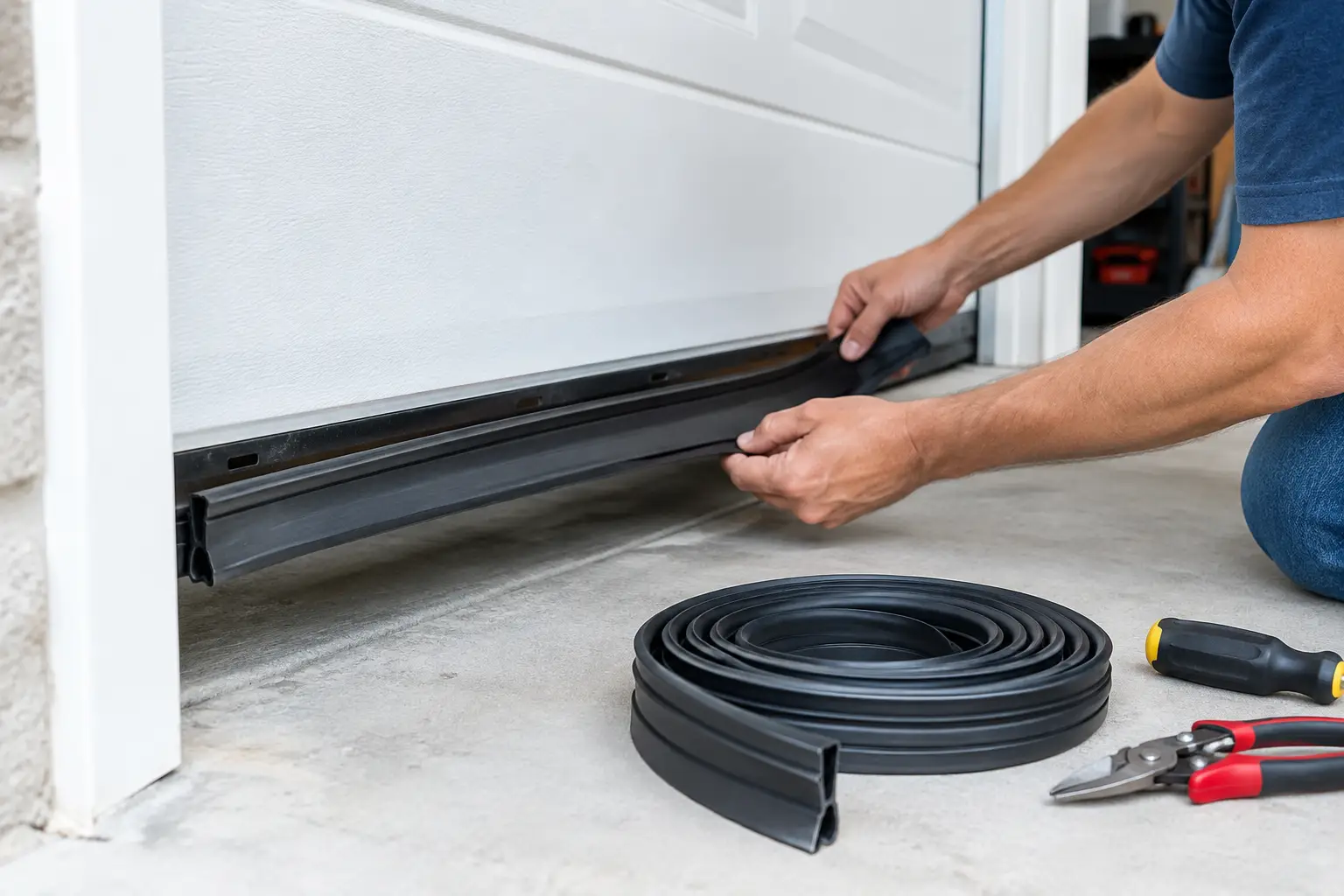
A worn bottom seal can turn a perfectly good garage door into an open invitation for cold air, windblown dust, water, and pests. If you need to replace garage door bottom seal material, the job may be simple - but only if you buy the correct seal and confirm the door itself is sitting level.
For Longmont homeowners, that gap at the floor matters. Winter cold, spring runoff, and debris carried by Front Range winds all find their way through a flattened or cracked seal. A new seal is a practical repair, but it is not a cure for every gap under a garage door.
Signs Your Bottom Seal Needs Replacement
Look at the rubber or vinyl strip along the bottom edge of the closed door. A good seal is flexible and makes even contact with the concrete. It should compress slightly without folding over, splitting, or leaving daylight underneath.
Replacement is usually due when the material is brittle, torn, permanently flattened, or pulling out of the metal track. You may also see water marks near the threshold, leaves collecting inside the garage, or a clear gap at one or both corners. Rodent activity is another reason to act quickly. A small opening at the bottom can become a regular entry point.
Do not judge the seal only by appearance. Close the door during daylight and check from inside with the garage lights off. If light shows under a straight, otherwise level door, the seal may be worn. If the gap is much larger on one side, the problem could be an uneven floor, bent track, worn rollers, or a door that is out of adjustment.
Choose the Right Garage Door Bottom Seal
The biggest DIY mistake is ordering a seal that looks right but does not fit the retainer on the bottom of the door. Garage door bottom seals are not one-size-fits-all. The rubber may slide into a metal or plastic channel, attach with screws, or wrap around the bottom edge.
A common style has a T-shaped bead that slides into a retainer. Other doors use U-shaped astragal seals, bulb-style seals, or seals with round bead ends. Before buying anything, measure the width of your garage door and inspect the existing seal where it enters the track. If possible, take a short section of the old material with you when matching a replacement.
Material makes a difference, especially in Colorado. Vinyl is common and affordable, but it can become stiff in hard cold. EPDM rubber generally stays more flexible through temperature swings and is often worth considering for a door exposed to weather. The right choice depends on the retainer, the door style, and how much direct sun and snow the opening gets.
A seal that is too narrow will not close the gap. One that is too wide may bunch up, drag across the floor, or make the opener work harder than it should. If the old retainer is bent, cracked, or loose, replacing only the rubber will not give you a dependable result.
How to Replace Garage Door Bottom Seal Safely
For many sectional garage doors, replacing the bottom seal is a manageable maintenance task. The work is easiest with the door fully open, but that is also where safety matters most. The bottom bracket area is connected to the lift cables and high-tension springs. Do not loosen, remove, or adjust bottom brackets, cables, or springs to change a seal.
Start by unplugging the opener or using its disconnect function so nobody can run the door while you are working. Secure the open door with locking pliers or clamps on the vertical tracks below the bottom rollers. This prevents the door from moving down unexpectedly.
Remove the old seal by sliding it out from one end of the retainer. You may need to trim off a damaged section first. If it is stuck, avoid prying hard against the retainer. A bent channel can make the new seal nearly impossible to install.
Clean the channel thoroughly. Dirt, rust flakes, old adhesive, and packed debris create friction and can tear a new seal during installation. Check the retainer from end to end. If it has sharp edges, crushed sections, or screws backing out, address that before installing new material.
Lightly lubricate the channel with a product safe for rubber and vinyl if the new seal is difficult to slide through. Do not soak it. Feed both edges of the seal evenly into the retainer, then pull it across slowly. Having a second person guide the seal at the far end helps prevent twisting, especially on a double-wide door.
Leave a small amount of extra material at each end before trimming. Close the door and inspect how the seal meets the floor. The seal should spread slightly and close the opening without folding under itself. Once the fit looks right, trim the ends cleanly with a utility knife. Some systems use end caps, retainers, or small fasteners to keep the seal from sliding out.
When a New Seal Will Not Fix the Gap
A fresh seal cannot compensate for a door with a larger mechanical problem. If one corner stays off the ground, if the door reverses before closing, or if you hear grinding and popping during operation, stop treating it as a weatherstrip issue.
An uneven concrete floor is one common exception. A thicker bulb seal may help bridge a minor low spot, but an oversized seal can create drag and strain the opener. A technician can assess whether the issue is the floor, the door setup, or a damaged retainer and recommend a fix that makes sense.
Door balance is another concern. If the door feels unusually heavy when disconnected from the opener, will not stay partially open, or slams shut, the springs may need professional adjustment or replacement. Springs and cables are not DIY parts. They store enough force to cause serious injury or damage when handled incorrectly.
You should also call for service if the bottom seal replacement reveals rusted door sections, loose bottom fixtures, damaged rollers, or a track that has shifted. These problems can affect security and can turn a simple repair into a door that will not close safely.
Keep the New Seal Working Longer
A bottom seal lasts longer when the garage door is operating smoothly. Sweep gravel, ice melt, and debris away from the threshold so the rubber is not constantly scraped as the door closes. During winter, clear packed snow and ice before using the opener. Forcing a frozen seal loose can tear it or put extra load on the door system.
Check the seal a few times a year, particularly after heavy weather. Look for compression, cracking, and separation at the ends. It is also smart to watch the door close from a safe distance. It should travel evenly, meet the floor without a hard slam, and reverse properly when the safety sensors are triggered.
For property managers and landlords, a quick seal inspection between tenants can prevent moisture, pest, and energy-loss complaints later. It is a small part, but it protects the space where many homes store tools, vehicles, and equipment.
If your garage door still leaves gaps after you replace the seal, do not keep adding thicker material and hoping for the best. Repair Bro's can inspect the door, identify what is causing the poor fit, and provide a free estimate for the repair that actually solves the problem.