
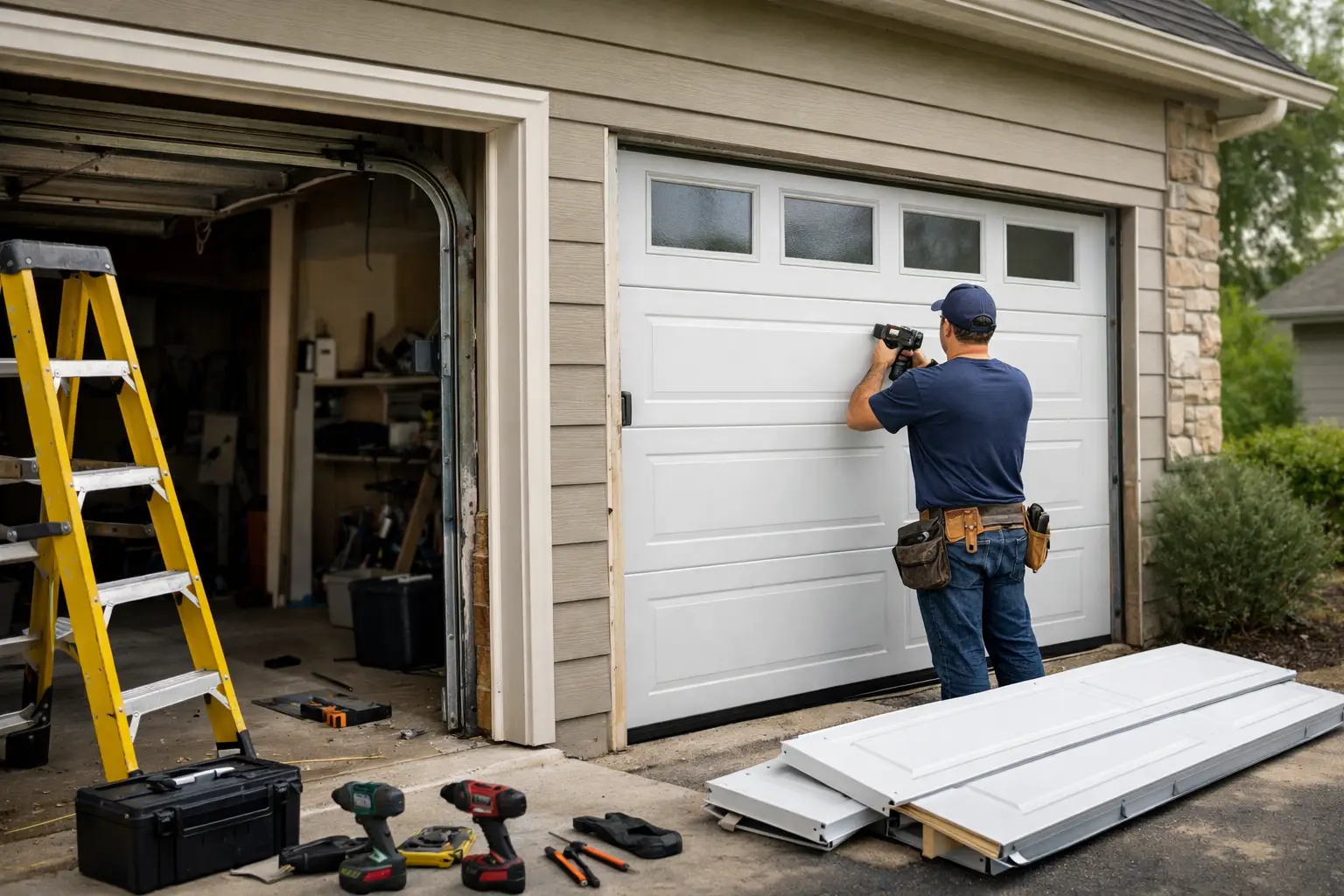
A garage door usually gets ignored until the morning it refuses to open, hangs crooked, or sounds like it is tearing itself apart. This residential garage door replacement guide is for homeowners in Longmont who need a clear answer on when replacement makes more sense than another repair, what affects cost, and what to expect before the job starts.
When garage door replacement is the right call
Not every bad garage door needs to be replaced. Some problems are simple. A worn roller, broken spring, bad sensor, or off-track section can often be repaired without changing the full system. But there is a point where repair money starts stacking up on an old door that is still noisy, unreliable, or unsafe.
Replacement is usually the smarter move when the door has major panel damage, heavy rust, wood rot, track damage tied to an impact, or repeated failures across multiple parts. Age matters too. If your garage door is 15 to 25 years old and has already had several repairs, you may be spending good money on a setup that is near the end of its service life.
A door that is badly out of balance, hard to lift, or visibly sagging should be taken seriously. That is not just about convenience. It can turn into a safety issue fast, especially if the opener is straining or the door is dropping unevenly.
Residential garage door replacement guide: repair or replace?
The real question for most homeowners is simple: should you fix this one more time or start over? The answer depends on the condition of the door, not just the latest symptom.
If one part failed and the rest of the system is in decent shape, repair is often the better value. If the current door still seals well, the tracks are solid, the sections are not bent, and the opener is compatible, a targeted repair can buy you more time.
If you are dealing with repeated spring issues, loud operation, damaged sections, poor insulation, and an older opener all at once, replacement usually saves frustration. You stop patching one issue at a time and get a system that works together correctly.
This is where a free estimate matters. A good technician should tell you plainly whether the door is worth repairing or whether replacement is the more practical option. That matters because homeowners do not need a sales pitch. They need a real assessment.
What affects garage door replacement cost
Garage door replacement cost is not one flat number. It depends on the door size, material, insulation level, design, hardware, and whether related parts also need to be changed.
Material is one of the biggest factors. Steel doors are common because they are durable, lower maintenance, and available at several price points. Wood doors look great, but they cost more and require more upkeep. Aluminum and glass can give a modern look, but they are not the best fit for every home or budget.
Insulation also changes the price. In Colorado, insulated doors are often worth the extra money, especially if the garage is attached to the home or used as a workspace. They help with temperature control and usually operate with less rattling than thinner doors. If your current garage gets extremely hot in summer or cold in winter, this upgrade makes a difference.
Style matters too. A basic raised-panel door will generally cost less than carriage-house designs, custom windows, or specialty finishes. Decorative hardware and upgraded colors can push the total higher, but for many homeowners, curb appeal is a valid reason to spend a little more.
Then there are the parts around the door. Sometimes the opener can stay. Sometimes it cannot. If the tracks are bent, the springs are undersized, or the hardware is worn out, replacing only the panel sections is not always the right move. A proper quote should break that out clearly.
Choosing the right material for your home
The best garage door is not always the most expensive one. It is the one that fits your home, weather conditions, and how you actually use the garage.
Steel is the most practical choice for many Longmont homeowners. It is strong, relatively low maintenance, and available in insulated and non-insulated options. For most homes, it gives the best balance of price and durability.
Wood has a classic look that some homeowners love, especially on custom homes or older properties. The trade-off is maintenance. Wood can warp, crack, or need refinishing over time, especially with exposure to sun, moisture, and temperature swings.
Aluminum is lighter and resists rust, which can be useful in some cases, but thinner models may dent more easily. Full-view glass and aluminum doors can look sharp on contemporary homes, though they usually cost more and may not provide the same privacy or insulation as a traditional steel door.
If your priority is dependable daily use with fewer headaches, insulated steel is often the safe bet.
Don’t overlook insulation, noise, and weather seal
A new garage door does more than open and close. It affects noise, energy efficiency, and how well your garage stays protected from dust, drafts, and moisture.
Insulated doors tend to run quieter because they are built with more structure and less vibration. That matters if there is a bedroom near the garage or if family members leave early and come home late. Better bottom seals and perimeter weather stripping also help keep out cold air, debris, and blowing dirt.
This is one area where cheaper is not always better. A lower-priced door might look fine at first, but if it is thin, loud, and poorly sealed, homeowners often regret saving that money.
What happens during a garage door replacement
Most homeowners do not need every technical detail, but it helps to know the basics. First comes the inspection and estimate. Measurements are checked, the opening is evaluated, and the technician looks at the condition of the tracks, springs, hardware, and opener.
Once the new door is selected, the old door and related hardware are removed. The new sections, track system, springs, and hardware are installed and adjusted. If the opener is being reused, it gets tested with the new door to make sure the force settings and travel are correct. If the opener is old or underpowered, this is usually the point where replacement gets recommended.
After installation, the door should be balanced, aligned, and tested for safe operation. The sensors, auto-reverse function, and manual release should all work correctly. A garage door is heavy and under tension, so this is not the kind of job where shortcuts are acceptable.
Signs your opener should be replaced too
A new door can expose the weakness in an old opener. If the opener is loud, slow, inconsistent, or missing modern safety features, replacing it at the same time may save money and hassle.
This is especially true if the opener is struggling with a heavier insulated door, lacks battery backup, or still uses older safety technology. On the other hand, if the opener is fairly new and in good condition, it may be fine to keep it. That is another it-depends situation where an on-site inspection matters.
Local conditions matter in Longmont
Wind, dust, temperature swings, and general wear from daily use all affect garage doors in Colorado. Homes with attached garages often benefit more from insulation and tighter seals. Rental properties and busy family homes may need tougher, lower-maintenance materials that can handle frequent use.
Style also matters at resale. A dented or outdated garage door can drag down curb appeal fast because it takes up a lot of the front view of the house. Replacing it is not just about fixing a problem. It can improve the look of the whole property.
How to make the replacement process easier
Start with the door’s condition, not the cheapest number you can find. Ask whether the problem is isolated or part of a bigger pattern. Ask what is included in the estimate, whether springs and hardware are being replaced, and whether your current opener is a good fit for the new door.
It also helps to think about your priorities before the appointment. If you care most about quiet operation, say that. If insulation matters because the garage shares a wall with the house, bring that up. If you want something durable and low maintenance because you are tired of repairs, make that clear from the start.
For homeowners who want a straightforward local option, Repair Bro's focuses on residential garage door service in Longmont with free estimates, which helps take some guesswork out of the decision.
A garage door replacement is a real home expense, but waiting too long can turn a manageable problem into a bigger one. If your door is damaged, unreliable, or costing you one repair after another, getting it checked now can save time, stress, and a lot of second-guessing later.