
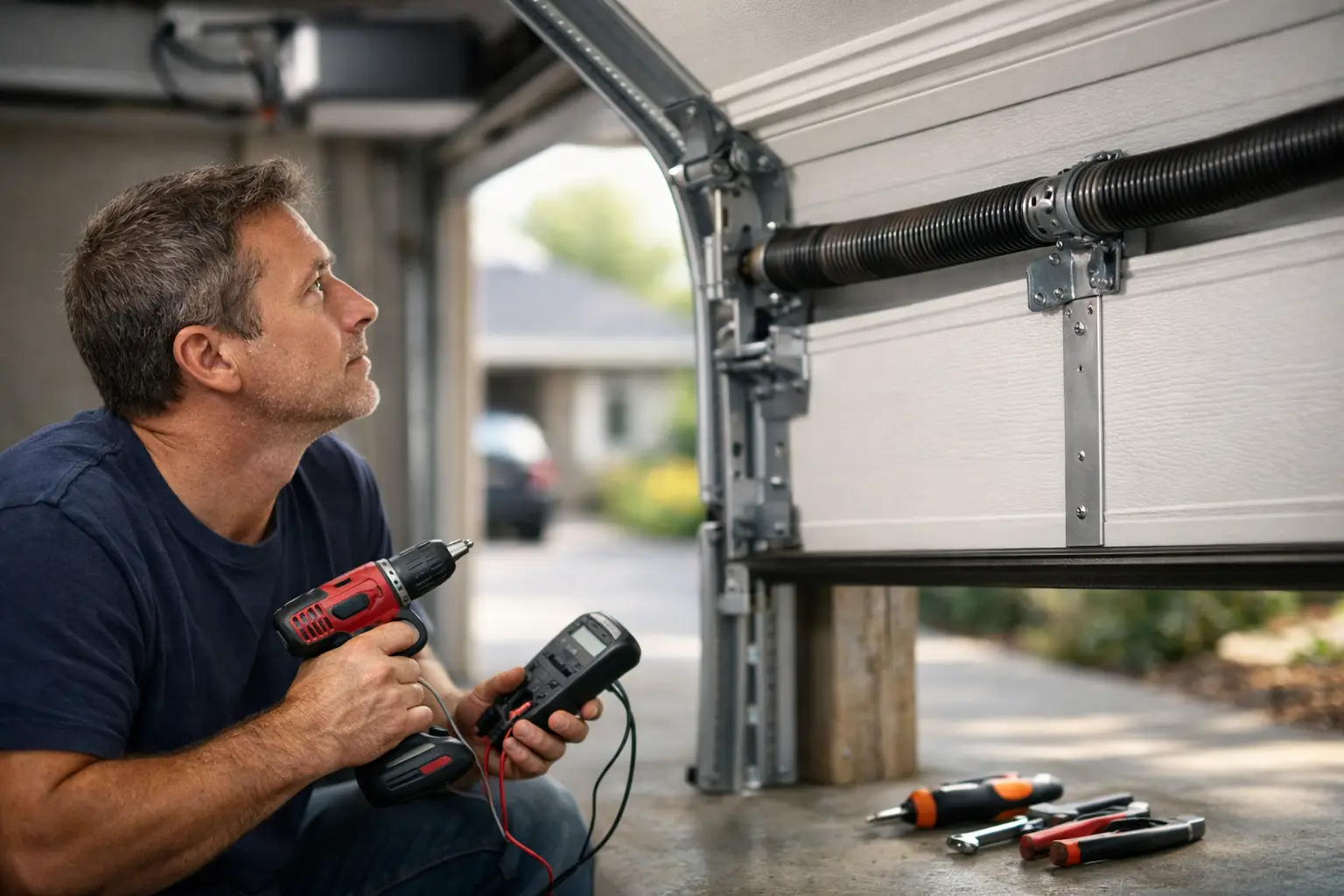
A garage door that stops halfway at 7 a.m. is not a minor inconvenience. It can trap your car, leave your home exposed, or create a real safety hazard. Residential garage door troubleshooting starts with identifying what the door is doing - or not doing - without taking risks around high-tension parts.
For Longmont homeowners, the weather can add another layer to the problem. Cold mornings, windblown debris, worn rollers, and regular daily use all take a toll. Some issues have a simple fix. Others need a garage door technician before a small problem turns into a broken spring, damaged opener, or door that will not close.
Start Residential Garage Door Troubleshooting Safely
Before checking anything, make sure children, pets, vehicles, and other people are clear of the door. Do not stand under a door that is hanging crooked, moving unpredictably, or stuck open. If the door is open and you cannot safely close it, keep the garage secured from inside the home when possible and arrange service promptly.
Never loosen, remove, or adjust the springs, cables, bottom brackets, or hardware attached to the cable system. Those parts are under serious tension. A spring or cable repair is not a standard weekend project, even for a homeowner who is comfortable with tools.
You can safely inspect the visible tracks, photo-eye sensors, remote batteries, and the area around the door. The goal is to gather useful clues, not force the system to work.
The Door Will Not Open
When the opener hums but the door does not move, the issue may be a broken spring. Look above the door for a visible gap in the torsion spring. Extension springs, which run along the horizontal tracks, can also break or stretch out. A loud bang from the garage is a common sign of a spring failure.
If the opener runs and the door stays in place, the emergency release may also be disconnected. This can happen after a power outage, manual operation, or someone pulling the red release cord. With the door fully closed, check whether the trolley has reconnected to the opener rail. The correct reset process depends on the opener model, so avoid pulling or forcing parts if you are unsure.
A door that opens a few inches and stops may be binding in the tracks, struggling against a damaged roller, or dealing with a failing spring. Do not keep pressing the opener button. Repeated attempts can strain the motor and make the repair more expensive.
If there is no sound at all, start simple. Confirm the opener is plugged in, check the breaker, and see whether the wall button works. If the wall button operates the door but the remote does not, replace the remote battery first. If neither control works and power is present, the opener itself may need diagnosis.
Power Outages and Manual Operation
During a Longmont power outage, you may need to use the emergency release to open the door manually. Only do this when the door is fully closed and appears balanced. A door with a broken spring can be extremely heavy and may not stay open.
If the door feels unusually heavy, will not lift smoothly, or starts dropping when you let go, stop. That is a service call, not a door to muscle open. A technician can restore safe operation and check whether the opener was damaged by the underlying issue.
The Door Will Not Close or Reverses
A garage door that starts down and immediately reverses is often reacting to its safety sensors. These small photo-eye units sit near the floor on each side of the opening. They need a clear line of sight to one another. Leaves, dirt, snow, storage items, or even a spiderweb can interrupt the beam.
Check that both sensors are facing each other and that their indicator lights are on. Wipe the lenses with a soft cloth, then clear the area between them. If a sensor is loose or knocked out of alignment, it may need a small adjustment. Do not bypass the sensors or hold the wall button down as a regular solution. The sensors protect people, pets, and property from a closing door.
The door can also reverse because it is hitting resistance. Look for ice near the bottom seal during freezing weather, debris in the track, bent track sections, or a roller that has come out of place. If the track is bent or the door is off its track, stop using the opener immediately. Running it can twist panels, damage cables, and turn a repair into a replacement conversation.
Check the Bottom Seal in Cold Weather
After a snowstorm or hard freeze, the bottom seal can stick to the concrete. Avoid yanking the door open with the opener. Carefully clear ice around the bottom edge if it can be done safely. If the door still will not release, call for service. Forcing the opener against a frozen door can strip gears or burn out the motor.
A Noisy Garage Door Is Asking for Attention
Squeaking, grinding, popping, and rattling are not all the same problem. A light squeak may come from dry rollers, hinges, or bearings. A sharp grinding noise can point to damaged rollers, worn bearings, an opener issue, or track trouble.
Start by looking for loose bolts on the hinges and track brackets. Do not touch the bottom brackets or spring hardware. You can also check whether the rollers are cracked, worn, or visibly wobbling. Steel rollers often become louder as they age, while nylon rollers generally run quieter but still wear out over time.
Use a garage-door-specific lubricant on moving metal parts when appropriate. Do not coat the tracks with grease. Tracks need to stay clean so rollers can travel properly. Heavy grease collects dirt and can create more resistance.
A noisy door may still work today, but it is worth scheduling an inspection if the sound is new or getting worse. Catching worn rollers or loose hardware early is usually easier than waiting for a roller to fail and pull the door out of alignment.
The Door Is Crooked, Sagging, or Off Track
A door that hangs lower on one side, has a loose cable, or looks crooked in the opening needs professional attention. Cable trouble can be caused by a broken spring, damaged drum, worn roller, obstacle in the track, or an opener pulling against a binding door.
Do not try to put a cable back on its drum or force the door level by hand. The weight of the door and tension in the spring system make this one of the higher-risk garage door repairs. Disconnecting the opener does not make the cable system safe to handle.
If the door is partially open and off track, keep everyone away from it. Do not park under it or attempt to pull it shut. A technician can secure the door, reset the rollers and cables, inspect the track, and determine whether damaged sections need repair or replacement.
When the Opener Is the Problem
Not every garage door problem is a door problem. Openers can fail because of worn gears, stripped sprockets, bad logic boards, damaged drive belts or chains, failing capacitors, and age-related electrical issues.
A flashing opener light, clicking sound, intermittent operation, or remote that works only from very close range can all point to an opener concern. Sometimes the fix is as simple as a remote battery or sensor alignment. Other times, replacing an aging opener makes more sense than repairing it, especially if it lacks modern safety features or has had repeated failures.
The best decision depends on the age of the opener, the condition of the door, and the cost of the repair. A good technician should explain the cause, show you the relevant wear or damage, and give you a clear estimate before work begins.
Know When to Call for Garage Door Repair
Call for prompt service when you see a broken spring, loose cable, bent track, damaged panel, off-track roller, or a door that will not stay open. The same goes for a door that has become suddenly heavy, closes too fast, or keeps reversing after the sensors and pathway have been checked.
For smaller concerns, such as minor squeaks or a weak remote, you may have time to monitor the issue. But garage doors rarely fix themselves. A door is a large moving system, and small wear can spread to rollers, hinges, tracks, springs, and the opener.
Repair Bro's provides garage door repair in Longmont with free estimates, so homeowners can get a clear diagnosis before deciding on a repair or replacement. If your door is making you second-guess whether it is safe to use, trust that instinct and get it checked before the next time you need to leave the house.