
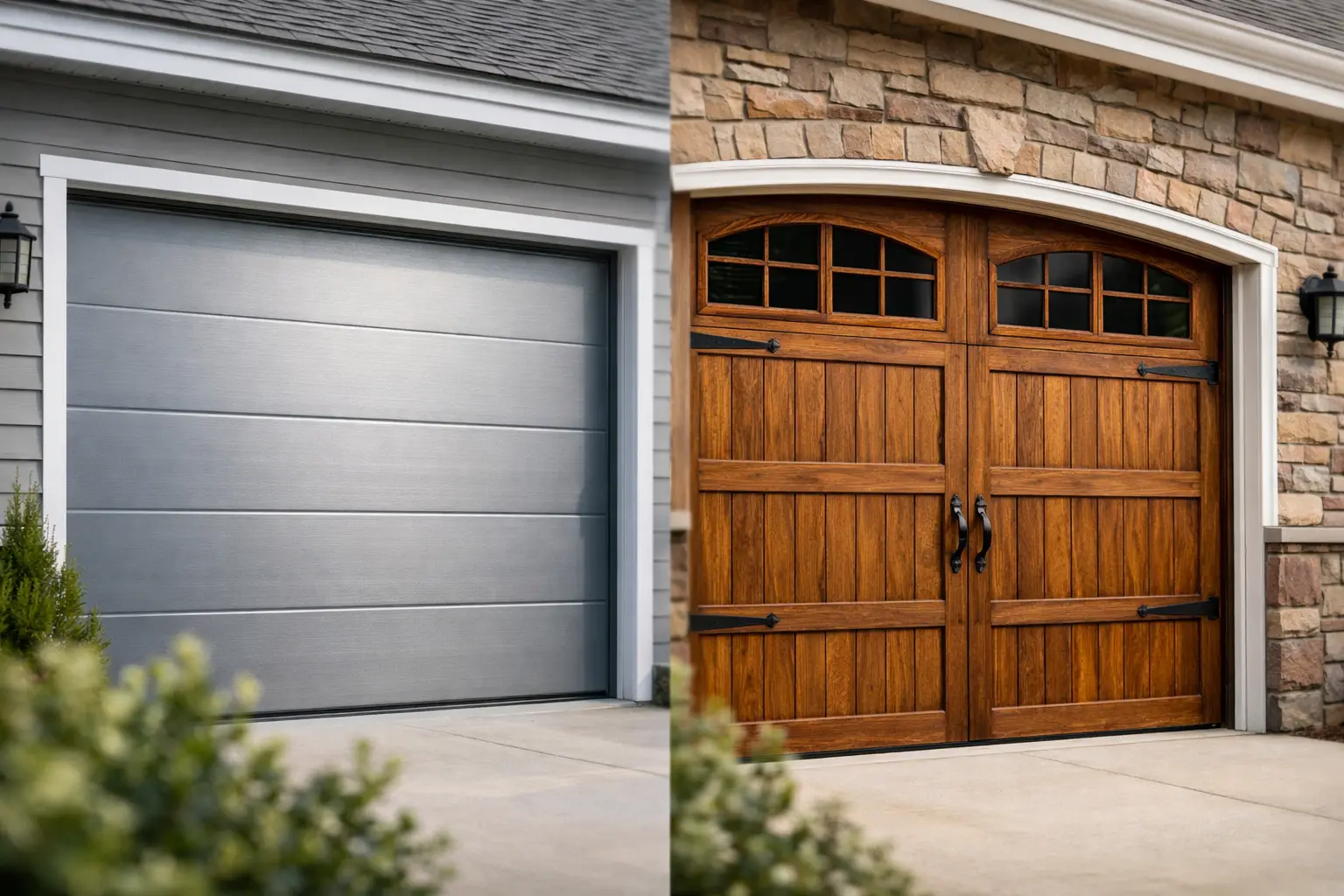
A garage door takes up a large part of your home's front exterior, but it also has a job to do every day. For Longmont homeowners comparing steel vs wood garage doors, the right answer comes down to more than looks. You need a door that fits your budget, stands up to Colorado weather, works reliably, and does not create a maintenance project you did not ask for.
Wood can bring a high-end, traditional look that is hard to copy. Steel is usually the practical choice for durability, insulation options, and lower upkeep. Neither material is automatically right for every house. Here is what to consider before scheduling a replacement.
Steel vs Wood Garage Doors: The Main Difference
Steel garage doors are manufactured in a wide range of styles, from basic raised-panel doors to carriage-house designs with realistic wood-grain finishes. They are usually lighter on the wallet than real wood, widely available, and easier to maintain. Many models include insulated cores that help reduce temperature swings inside an attached garage.
Wood garage doors are built from real wood or wood components and can be painted or stained to match the home. They offer natural grain, depth, and custom design options that steel cannot fully duplicate. The trade-off is higher upfront cost and regular care to protect the door from moisture, sun exposure, and seasonal movement.
For many homes in Longmont, steel offers the best balance of appearance, performance, and cost. But a well-built wood door can make sense when curb appeal, historic character, or a custom architectural style is the priority.
Cost: Upfront Price and Long-Term Expenses
Steel generally costs less than wood. A standard steel replacement door is available in many price ranges, so homeowners can choose a basic non-insulated model or spend more for thicker steel, insulation, windows, and decorative hardware. Because steel doors are common, replacement panels and matching parts are often easier to source as well.
Wood doors cost more because of the materials, craftsmanship, and finishing work involved. Custom sizing, specialty wood species, and detailed carriage-house designs can push the price much higher. Installation may also require extra attention because solid wood doors can be heavy.
The purchase price is only part of the equation. Wood needs periodic painting, staining, sealing, and inspection for peeling finish or water damage. Steel has lower routine costs, though it may eventually need paint touch-ups if the surface is scratched or chipped. A dented steel panel may need replacement if it affects operation or appearance.
If you plan to stay in the home for years and want a specific architectural look, the extra investment in wood may be worthwhile. If you want dependable performance without ongoing refinishing work, steel usually makes more financial sense.
Colorado Weather Makes Maintenance Matter
Longmont homes see strong sun, cold winter temperatures, snow, wind, and occasional hail. Every garage door material responds to those conditions differently.
Steel does not rot, warp, or absorb moisture. That makes it a dependable option through snow and spring moisture. Quality steel doors have protective coatings that resist rust, but deep scratches should be covered before exposed metal starts corroding. Hail or a hard impact can dent thin steel, especially on lower-cost doors. Heavier-gauge steel is more resistant to dents, although it costs more.
Wood is more vulnerable to weather if the finish is not maintained. Sun can fade stain and dry out protective coatings. Moisture can lead to swelling, cracking, rot, or separation around joints and panels. Colorado's dry conditions can also cause wood to expand and contract over time. A properly finished wood door can last and look excellent, but it needs regular attention to do so.
Homeowners who prefer wood should plan on checking the finish at least once a year. Look closely at the bottom edge, window trim, joints, and any spot where the paint or stain has worn away. Small touch-ups are far easier than repairing widespread water damage later.
Insulation and Garage Comfort
The material alone does not determine how well a garage door insulates. Construction matters just as much. A single-layer steel door with no insulation will not keep a garage comfortable during a cold Front Range winter. An insulated steel door with a polyurethane or polystyrene core can make a noticeable difference, especially when the garage is attached to the house or has a room above it.
Wood naturally provides some insulation, but a solid wood door is not automatically more energy efficient than a well-insulated steel door. Modern insulated steel doors often have higher R-values and tighter construction. Weatherstripping around the sides and bottom of the door also matters. Gaps can let in cold air, dust, pests, and moisture no matter which door material you choose.
If the garage is used for a workshop, home gym, storage area, or laundry space, insulation should be high on the list. It can also reduce outside noise and help protect items stored near exterior walls. A garage will never be as controlled as your living room, but the right door can make it less punishing in January and more manageable in July.
Curb Appeal: Where Wood Still Has an Edge
Real wood has character. Grain patterns, stain colors, and handcrafted details give it a depth that many homeowners want for Craftsman, rustic, traditional, and custom-built homes. It can be designed around unusual openings and painted or stained exactly the way you want.
Steel has come a long way, though. Wood-look steel doors can provide carriage-house styling, faux grain finishes, windows, and decorative hardware without requiring the same level of upkeep. From the street, a good steel door can look sharp and complement a wide range of Longmont homes.
The decision often comes down to how close someone will be looking and what the rest of the home demands. If you have genuine wood siding, exposed beams, or a historic exterior, real wood may tie everything together. If you want an attractive door that stays easier to care for, insulated steel is usually the safer choice.
Weight, Hardware, and Day-to-Day Reliability
A garage door is not just a panel across an opening. It works with springs, cables, rollers, tracks, hinges, brackets, and an opener. The door's weight has a direct effect on the system.
Wood doors can be significantly heavier than steel doors. That weight requires correctly sized springs and properly adjusted hardware. When springs wear out or the door is out of balance, a heavy wood door can become difficult or unsafe to operate. It may also put more strain on the opener when the system is not maintained.
Steel doors are generally lighter, especially compared with solid wood, and are easier for standard residential hardware to handle. That does not mean they are maintenance-free. Rollers wear down, cables fray, tracks get damaged, and springs eventually break on any door. But a properly balanced steel door is often easier on the whole system.
Do not try to adjust or replace garage door springs yourself. Springs hold serious tension and can cause injury or damage when handled incorrectly. If the door is crooked, will not open, slams shut, or makes grinding noises, it is time for a professional inspection.
Repairs and Replacement Considerations
Steel repairs can be straightforward when the problem involves rollers, hinges, sensors, cables, or springs. If one section is dented, a replacement panel may be available, depending on the door model and age. Color fading can make a new panel stand out, so sometimes repainting is needed for a clean match.
Wood repairs can range from simple refinishing to more involved work. Minor cracks and finish damage may be repairable. Rot, warped sections, delamination, or damaged custom panels can be more expensive and harder to match. A replacement section may need to be specially made, which can add time and cost.
Before replacing a door because it looks worn, have the entire system checked. A door that is noisy or unreliable may have a hardware issue rather than a material problem. On the other hand, if the door has repeated panel damage, extensive rot, poor insulation, or unavailable replacement sections, a new door may be the better long-term move.
Which Garage Door Should You Choose?
Choose steel if you want a lower-maintenance door, reliable insulation options, broad style choices, and a more manageable budget. It is a strong fit for most homeowners who want the garage to work every day without frequent exterior upkeep.
Choose wood if your home calls for authentic natural material, custom craftsmanship, or a look that steel cannot fully provide. Be prepared to protect the finish and budget for more maintenance over the life of the door.
If you are unsure whether a repair, panel replacement, or full door replacement makes sense, get an on-site opinion before making the call. Repair Bro's provides garage door service and free estimates in Longmont, so you can get a clear recommendation based on your actual door, hardware, and budget. A good garage door should look right on your home, open safely when you need it, and not become the next problem on your weekend list.