
A garage door usually gives you a warning before it quits. Maybe it starts grinding on the way up, pauses halfway down, or makes you hit the wall button twice before anything happens. If you are noticing the top signs garage door needs repair, waiting rarely makes the problem cheaper or safer.
For a lot of Longmont homeowners, the garage door is the main way in and out of the house. When it acts up, it is not just annoying. It can leave your car trapped, make your home less secure, or create a real safety issue for your family.
Top signs garage door needs repair before it fails
Some garage door problems look minor at first. The trouble is that doors are heavy, under tension, and made up of moving parts that all depend on each other. A small issue with a roller, spring, cable, or track can turn into a bigger breakdown fast.
One of the clearest warning signs is unusual noise. Garage doors are not silent, but they should not suddenly start screeching, banging, popping, or grinding. A squeal might point to worn rollers or hardware that needs attention. A loud bang can mean a spring has snapped. Grinding often suggests parts are out of alignment or wearing down harder than they should.
Another common sign is slow or hesitant movement. If the door used to open smoothly and now struggles, jerks, or moves in short bursts, something is off. That could be a problem with the opener, track alignment, spring tension, or worn-out components. It depends on the setup, but smooth operation should be the norm.
A door that looks crooked when opening or closing is also a red flag. If one side rises higher than the other, or the door seems to wobble, stop using it until it is checked. Uneven movement can mean cable issues, track problems, or failing springs. These are not the kinds of problems that improve on their own.
When your garage door sounds wrong
Noise is easy to ignore because the door may still technically work. But sound changes are often the first sign that parts are under stress.
If you hear rattling, some of the hardware may have loosened over time. Vibrations from daily use can back off bolts and brackets, especially on older doors. If you hear scraping, the door may be rubbing against the track or frame. That usually means alignment is off somewhere.
Popping sounds deserve extra attention. Springs carry a lot of force, and when one breaks, it can sound like something hit the wall or roof. In many cases, the opener may still try to lift the door, but it is not designed to carry the full door weight by itself. That is where more damage can start.
Not every noisy door needs a major repair, but a sudden change in sound is reason enough to have it inspected. Catching worn parts early is usually a lot simpler than dealing with a full system failure later.
Top signs garage door needs repair around movement and balance
A healthy garage door should move evenly and stay balanced. When it does not, you can usually see it before you understand the exact cause.
If the door slams shut instead of lowering in a controlled way, that is a serious problem. Broken springs or damaged cables are common causes, and both affect safe operation. A heavy door dropping faster than normal is not something to test a few more times just to see what happens.
A door that will not stay open is another clear warning. If it starts drifting down after being raised, the counterbalance system is likely not doing its job. Springs wear out over time, and once they weaken, the opener has to work harder than it should.
You may also notice the opener straining. Maybe the motor sounds louder than normal, or the door only moves a few inches before stopping. Sometimes that points to an opener issue. Other times, the opener is fine but another part is forcing it to overcompensate. That is why diagnosing the whole system matters.
Visual damage you should not brush off
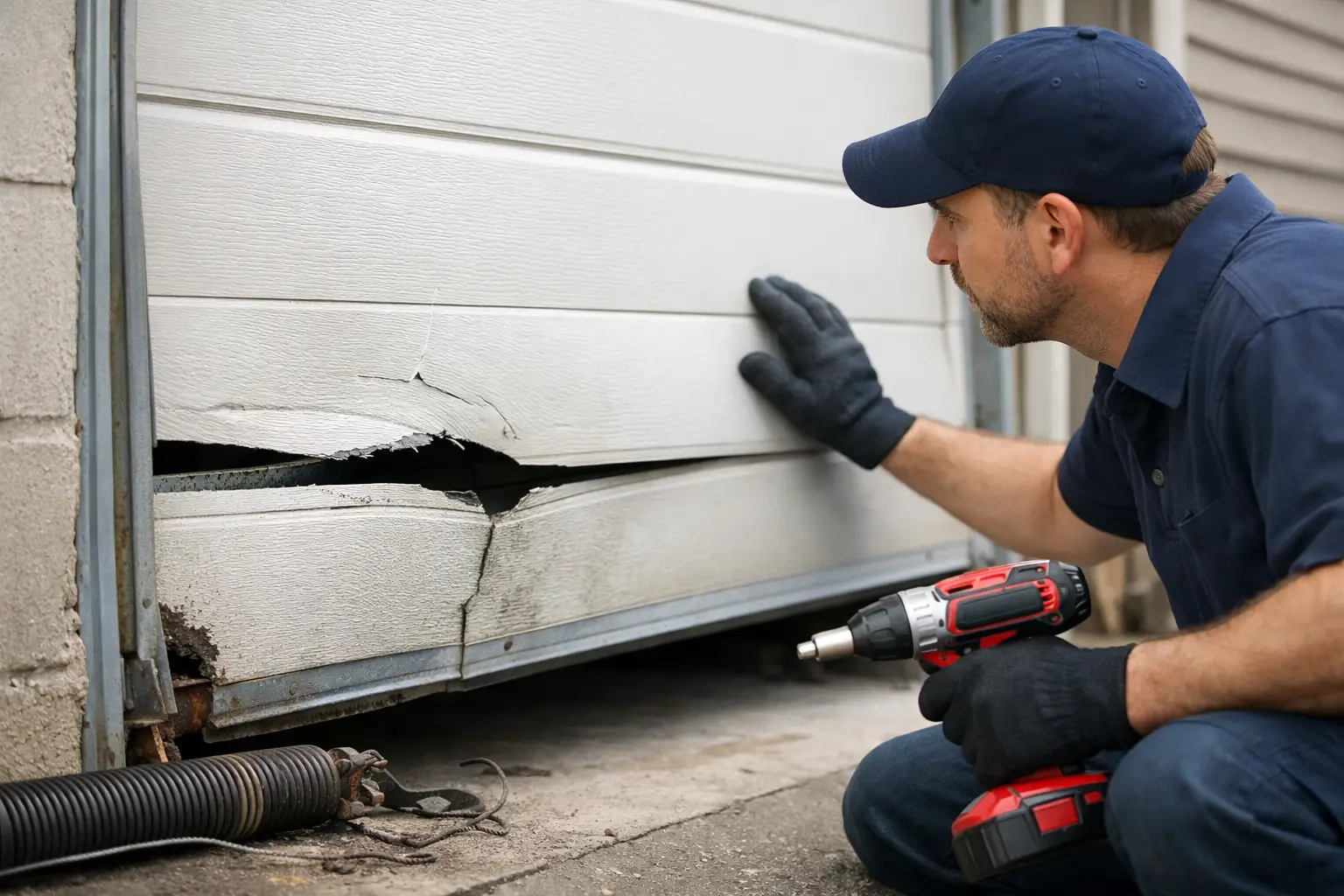
Some of the top signs garage door needs repair are visible from the driveway. Dented panels, bent tracks, frayed cables, loose hinges, and worn rollers all matter more than they may seem.
Bent tracks can keep the door from traveling correctly. Even a small warp can change how the rollers move and put extra stress on the opener. Frayed cables are especially important because they support the door during lifting and lowering. Once a cable starts wearing out, failure becomes a matter of time.
Look at the springs too, but do not touch them. If you see a gap in a torsion spring, that usually means it has broken. Extension springs may appear stretched out or uneven when they are failing. Because springs are under high tension, this is not a casual DIY fix.
Weather seal damage is another one people overlook. If the bottom seal is cracked or missing, water, dirt, drafts, and pests can get into the garage more easily. That may not stop the door from opening today, but it can lead to bigger issues with insulation, moisture, and wear around the bottom edge.
Remote, wall switch, and safety sensor problems
Not every repair starts with a loud mechanical failure. Sometimes the first clue is that the remote becomes unreliable or the wall switch responds off and on.
If the opener only works sometimes, it could be electrical, sensor-related, or tied to the opener itself. Safety sensors near the floor are a frequent trouble spot. When they are dirty, misaligned, or damaged, the door may reverse for no obvious reason or refuse to close at all.
This is one of those situations where the symptoms can feel minor, but the cause still needs attention. Safety features are there for a reason. If your garage door closes halfway and then goes back up, do not just force it through repeated button presses and hope for the best.
Power issues can also point to worn opener components. Gears, logic boards, and internal motor parts do wear out. In some cases a repair makes sense. In others, replacement may be the better long-term call, especially if the opener is older and giving you repeated problems.
Why small garage door issues get expensive fast
Garage doors are connected systems. When one part starts failing, the other parts often take on more strain. A weak spring can overwork the opener. A bad roller can wear down the track. A misaligned door can stress cables and hinges.
That is why putting off service often costs more than dealing with the problem early. What starts as a noisy roller or balance issue can turn into a snapped cable, damaged opener, or a door that will not open when you are already late for work.
There is also the safety side. Garage doors are one of the biggest moving parts on a home. If the door is jerking, dropping, binding, or running unevenly, it is worth taking seriously. The trade-off with waiting is simple: you might squeeze a little more time out of the system, but you also increase the chance of a more disruptive and more expensive failure.
When to call for garage door repair in Longmont
If the door is loud, uneven, slow, off track, reversing for no reason, or not opening and closing the way it should, it is time to have it checked. The same goes for broken springs, frayed cables, visible damage, or an opener that sounds like it is struggling every time you use it.
For homeowners in Longmont, fast service matters because garage door problems tend to hit at the worst time. You need your home secure, your car accessible, and a clear answer on what is wrong and what it will cost to fix. That is why local service with a free estimate makes a difference. A company like Repair Bro's can inspect the system, pinpoint the problem, and tell you whether a repair or replacement makes more sense based on the actual condition of the door.
If your garage door has been warning you lately, trust what you are seeing and hearing. A small problem today is usually the easiest point to deal with it.