
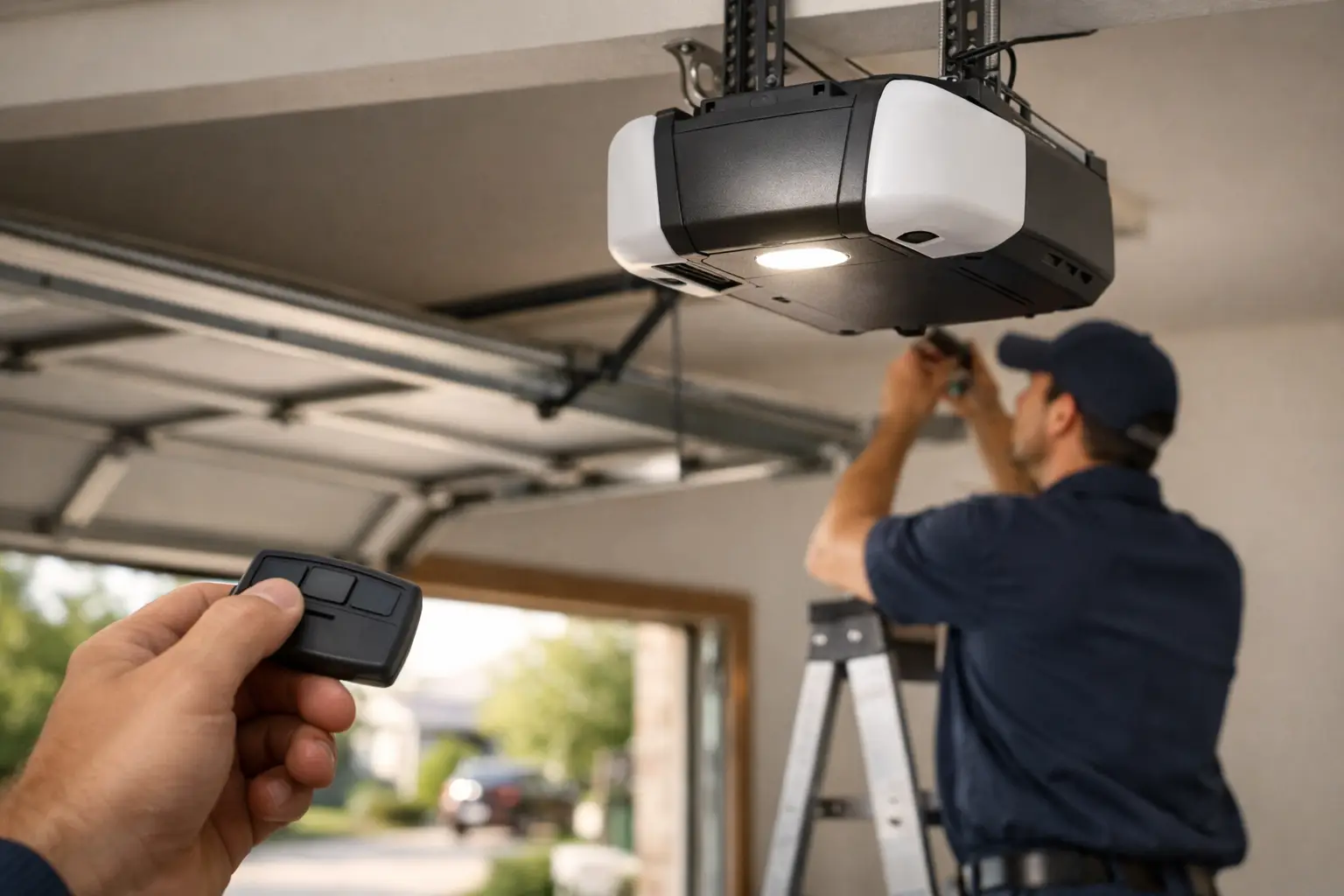
A garage door opener usually gives homeowners warning before it quits for good. The trouble is that those warnings can look a lot like a simple garage door problem: a door that reverses, a remote that works only sometimes, or a motor that suddenly gets loud. If you are searching for when replace garage door opener, the right answer depends on the opener's age, the condition of the door itself, and whether a repair will actually make the system dependable again.
For Longmont homeowners, this matters because the garage is often the main way in and out of the house. A failed opener can leave a vehicle trapped, a door unsecured, or a busy morning at a standstill. Here is how to tell whether you need a repair or it is time to plan for a replacement.
When to Replace a Garage Door Opener Instead of Repairing It
An opener does not need to be replaced every time it acts up. Worn rollers, a bent track, weak door springs, bad remote batteries, and sensor alignment problems can all affect operation without meaning the opener is done. A professional diagnosis should start with the full door system, not just the motor unit on the ceiling.
Replacement makes more sense when the opener has multiple problems, is near the end of its expected service life, or no longer has the safety features your household needs. Most openers last roughly 10 to 15 years, though quality of the unit, weather exposure, maintenance, and how often the door runs all affect that timeline.
A newer opener can also be a practical choice after a major door repair. If you are replacing an old, heavy garage door or correcting serious balance issues, an aging opener may not be the best unit to keep. Matching the opener to the door's weight, size, and daily use helps prevent repeat trouble.
Five Signs Your Opener Is Near the End
These problems do not automatically mean replacement, but they are strong reasons to have the opener inspected:
- The motor runs, but the door does not move. A stripped gear, broken trolley, or drive-system failure may be repairable. On an old opener with other issues, replacement can be the better value.
- The opener makes grinding, screeching, or rattling noises. Noise can come from the door hardware, but a loud motor or worn internal gears may signal a failing unit.
- The door reverses without a clear obstruction. Dirty or misaligned safety sensors are common causes. If sensors, wiring, and adjustments check out, the opener's control board or force settings may be failing.
- Remotes and wall controls work inconsistently. First rule out dead batteries and interference. Ongoing problems may point to a failing receiver, wiring issue, or outdated electronics.
- The opener has no modern safety reversal system. Older units without photo-eye sensors should be replaced. A garage door that cannot detect a person, pet, bike, or object in its path is a safety risk.
Age Matters, but Condition Matters More
A 12-year-old opener that runs quietly, reverses properly, and receives basic maintenance may still have useful life left. On the other hand, a seven-year-old unit that has been straining to lift an unbalanced door can wear out early. The opener is designed to guide the door, not force a heavy door through damaged tracks or failing springs.
That is why a garage door should be checked before a new opener is selected. If the door is hard to lift by hand when disconnected from the opener, slams down, or will not stay around the halfway point, the door balance needs attention. Replacing only the opener in that situation can lead to another breakdown and may void manufacturer coverage.
For rental properties and homes with frequent garage use, reliability may matter more than squeezing another year or two from a questionable unit. A landlord dealing with repeated tenant calls or a family using the garage several times each day may reasonably choose replacement sooner than someone who uses the door once a week.
Repair or Replacement: Make the Cost Comparison Honestly
A single repair on a newer opener is usually worth considering. Replacing a worn gear, sensor, remote, or control component can restore normal operation at a lower cost than installing a new unit.
The calculation changes when repairs start stacking up. If an older opener needs a major part, has unreliable remotes, lacks battery backup, and has become noisy, putting more money into it may only delay replacement. A new opener comes with new components, updated safety features, and a manufacturer warranty. It can also reduce the inconvenience of another sudden failure.
Ask for a clear estimate that separates the immediate repair from replacement options. That gives you a real choice instead of a guess. Repair Bro's provides free estimates for garage door service in Longmont, so homeowners can see what the problem is and what each option costs before deciding.
Features That Can Make a New Opener Worth It
Modern garage door openers are not all the same, and the least expensive unit is not always the best fit. The right choice depends on your door, garage layout, and how you use the space.
A belt-drive opener is typically a good fit for an attached garage because it runs more quietly than a traditional chain-drive system. Chain-drive openers remain a practical, durable option for detached garages or homeowners more focused on cost than noise. Wall-mount openers free up ceiling space, but they require the right side clearance and door setup.
Battery backup is worth considering in Colorado. If a power outage hits, a battery-equipped opener lets you get the car in or out without relying on the emergency release. Smart controls can also be useful for homeowners who want to check whether the door was left open, let in a service provider, or receive an alert when the door moves. Those features are convenient, but they should not replace reliable mechanical operation and working safety sensors.
Safety Problems Should Not Wait
Some opener issues are inconvenient. Others need prompt attention. Stop using the automatic opener and arrange service if the door closes unexpectedly, will not reverse when it meets an object, hangs crookedly, or has a broken spring or cable. Do not try to adjust springs, cables, or the opener's high-tension components yourself.
You can safely do a few basic checks before calling. Make sure nothing is blocking the photo-eye sensors near the bottom of the tracks. Wipe the sensor lenses clean, confirm both sensor lights are on, and check that the tracks are clear of obvious debris. Replace remote batteries if needed. If the issue continues, avoid repeatedly pressing the button to force the door to move. That can make a small problem worse.
The manual release should also be treated carefully. Pulling it disconnects the door from the opener, which can be useful during an outage. But if the door has a broken spring or is badly out of balance, it may be very heavy and difficult to control. Keep people clear and call a garage door technician.
Choosing the Right Time for Replacement
The best time to replace an aging opener is before it fails on a cold morning, during a storm, or when you need to leave for work. If your opener is old, loud, inconsistent, or missing safety features, schedule an inspection while it is still operating. You will have time to compare repair and replacement costs, choose useful features, and make a decision without being stuck with an emergency.
A dependable garage door opener should open and close the door smoothly, reverse when it should, and give you confidence that your home is secure. If yours is doing the opposite, a straightforward inspection and free estimate can give you a clear next step before the problem turns into a locked-in or locked-out day.