
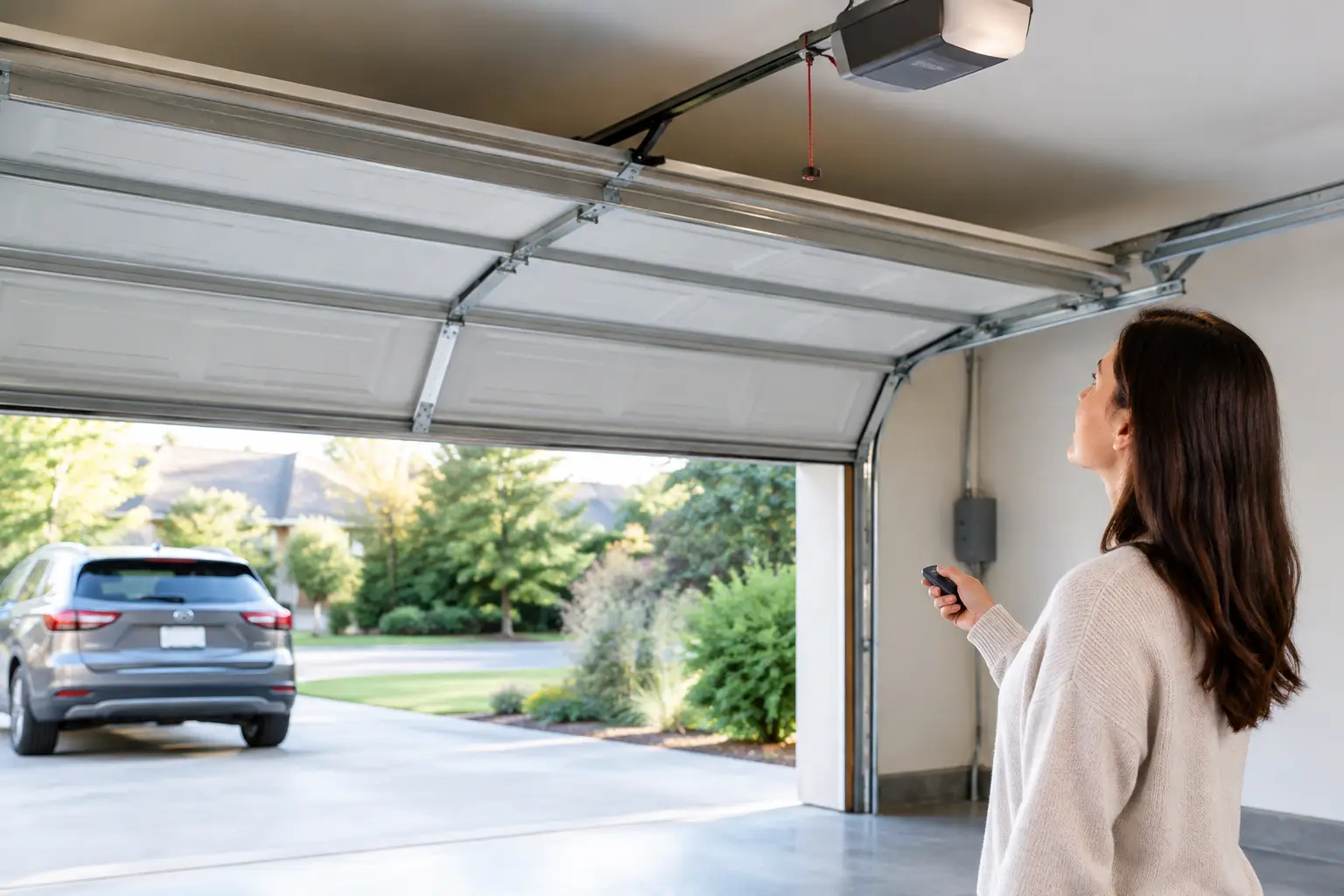
A garage door that starts down, then suddenly heads back up, is not just being stubborn. When you are asking why garage door reverses, the answer is usually tied to the door's built-in safety system or a mechanical problem that makes the opener think something is in the way.
That safety feature protects people, pets, vehicles, and property. But it can also leave you with a garage door that will not close when you need to leave for work, secure your home for the night, or keep the weather out. In Longmont, snow, windblown dirt, and changing temperatures can all contribute to the issue.
Why a Garage Door Reverses When Closing
Modern garage door openers are designed to reverse if they detect an obstruction or too much resistance. The opener does not always know the difference between a bicycle tire, a child, a dirty sensor, or a door that is binding in the tracks. It only knows that closing did not go as expected.
The most common causes are photo-eye sensor trouble, a blocked or damaged track, an out-of-balance door, worn rollers, or an opener force setting that needs adjustment. Some problems are simple to spot. Others involve high-tension parts that should be handled by a garage door technician.
Photo-Eye Sensors Are Blocked or Misaligned
The photo-eye sensors sit near the bottom of the garage door tracks, usually a few inches above the floor. One sensor sends an invisible beam to the other. If that beam is interrupted, the opener will reverse the door rather than allow it to close.
A leaf, cobweb, snow buildup, storage box, or even a broom leaning in the wrong place can block the beam. Dirty sensor lenses are another common issue. Wipe both lenses gently with a clean, soft cloth, then make sure nothing is sitting between them.
Check the small indicator lights on the sensors as well. The lights vary by manufacturer, but a blinking or unlit sensor often means alignment is off. A light bump from a trash bin, kids' bike, or parked car can move one sensor just enough to break the beam. Carefully straighten the sensors so they face each other, but do not force damaged brackets into place.
The Door Is Binding in the Tracks
Your door may reverse because it is physically struggling as it travels down. Bent tracks, loose mounting hardware, worn rollers, and buildup inside the tracks can create enough resistance for the opener to stop and reverse.
Look at the tracks while the door is fully open, with the opener disconnected only if you know how to do so safely. You may notice dents, loose brackets, gaps, or rollers that are cracked and no longer turning smoothly. Do not grease the tracks. Heavy lubricant in the track channel collects dirt and can make the problem worse. Garage door rollers and hinges need the right lubricant, applied sparingly.
If the door shakes, scrapes, jerks, or gets louder before it reverses, mechanical resistance is more likely than a sensor issue. Continuing to run it can strain the opener and turn a roller or track repair into a larger repair bill.
The Door Is Out of Balance
A properly balanced garage door should not feel excessively heavy when the opener is disconnected and the door is moved manually. If a spring is weak, broken, or improperly tensioned, the opener has to work much harder to move the door. That extra strain can trigger a reversal.
This issue may show up as a door that closes partway, reverses, or slams shut. You may also hear a loud bang from the garage when a torsion spring breaks. A broken spring can leave the door hundreds of pounds heavier than normal.
Do not attempt to adjust, wind, or remove garage door springs yourself. Springs and cables are under serious tension and can cause severe injuries when handled without the proper tools and training. This is a job for a garage door repair specialist.
Opener Travel or Force Settings Need Adjustment
Your opener uses travel limits to determine where the door should stop when fully open or closed. It also uses force settings to sense resistance. If either setting is off, the opener may believe the door has hit the floor too soon or encountered an obstruction before it actually has.
This is more likely if the problem started after an opener installation, a power outage, a recent repair, or seasonal temperature changes. A door that reverses at nearly the same point every time may have a travel-limit issue. A door that reverses randomly or only when it is cold may be dealing with friction, balance, or sensor trouble instead.
The owner's manual can explain how to adjust limits for your specific opener model. Still, avoid turning force settings up simply to make the door close. That can reduce a key safety protection and hide the real mechanical problem.
Safe Checks to Make Before Calling for Repair
A few basic checks can solve a minor problem without putting you near dangerous parts. Start by making sure nothing is under the door or crossing the sensor beam. Clean both photo-eye lenses and check whether their indicator lights are steady.
Next, inspect the visible sections of the tracks and rollers. You are looking for obvious obstructions, loose hardware, bent metal, or damage. Listen closely during a closing cycle. Grinding, popping, squealing, or hard scraping are signs the door needs professional attention.
You can also try closing the door with the wall button held down continuously. On many openers, holding the button bypasses the photo-eye system only while you maintain pressure on it. If the door closes this way but reverses when you press and release the remote or wall button, the sensors are likely the problem.
Stay with the door while using this test. Do not use it to defeat the safety system long-term, and never close the door if a person, pet, or object could be in its path.
When a Reversing Garage Door Needs a Pro
Call for garage door repair if cleaning and aligning the sensors does not fix the issue, or if the door is noisy, crooked, heavy, or visibly damaged. Those symptoms point to parts that need a trained inspection.
You should stop using the door and arrange service promptly if you notice any of the following:
- A broken or hanging cable
- A visible gap in the torsion spring above the door
- A door that is crooked in the opening
- A door that slams down, shakes hard, or will not stay open manually
- Bent tracks, damaged rollers, or an opener that hums without moving the door
These are not problems to solve by increasing the opener force or repeatedly pressing the remote. The opener is not designed to lift an unbalanced door, and repeated operation can burn out its motor or damage additional components.
Why Quick Repair Matters for Longmont Homes
A garage door that will not stay closed creates an immediate security and weather problem. It can expose stored belongings, tools, vehicles, and access to the home itself. Even if the door eventually closes, unreliable operation is a sign that something is out of adjustment or wearing out.
For Longmont homeowners, waiting through cold nights or wet weather can make a small issue more frustrating fast. A local technician can identify whether the problem is a sensor alignment, worn roller, broken spring, damaged track, or opener setting, then give you a clear repair recommendation before work begins.
Repair Bro's provides garage door repair in Longmont with free estimates, so you can get a straightforward diagnosis without guessing which part is causing the reversal. The right repair depends on what the door is telling you, not on a one-size-fits-all fix.
If your garage door reverses once after a sensor gets dirty, a quick cleaning may be all it needs. If it keeps reversing, gets noisy, or feels heavy, treat that behavior as an early warning and get it checked before the door leaves your home stuck open or unable to move at all.