
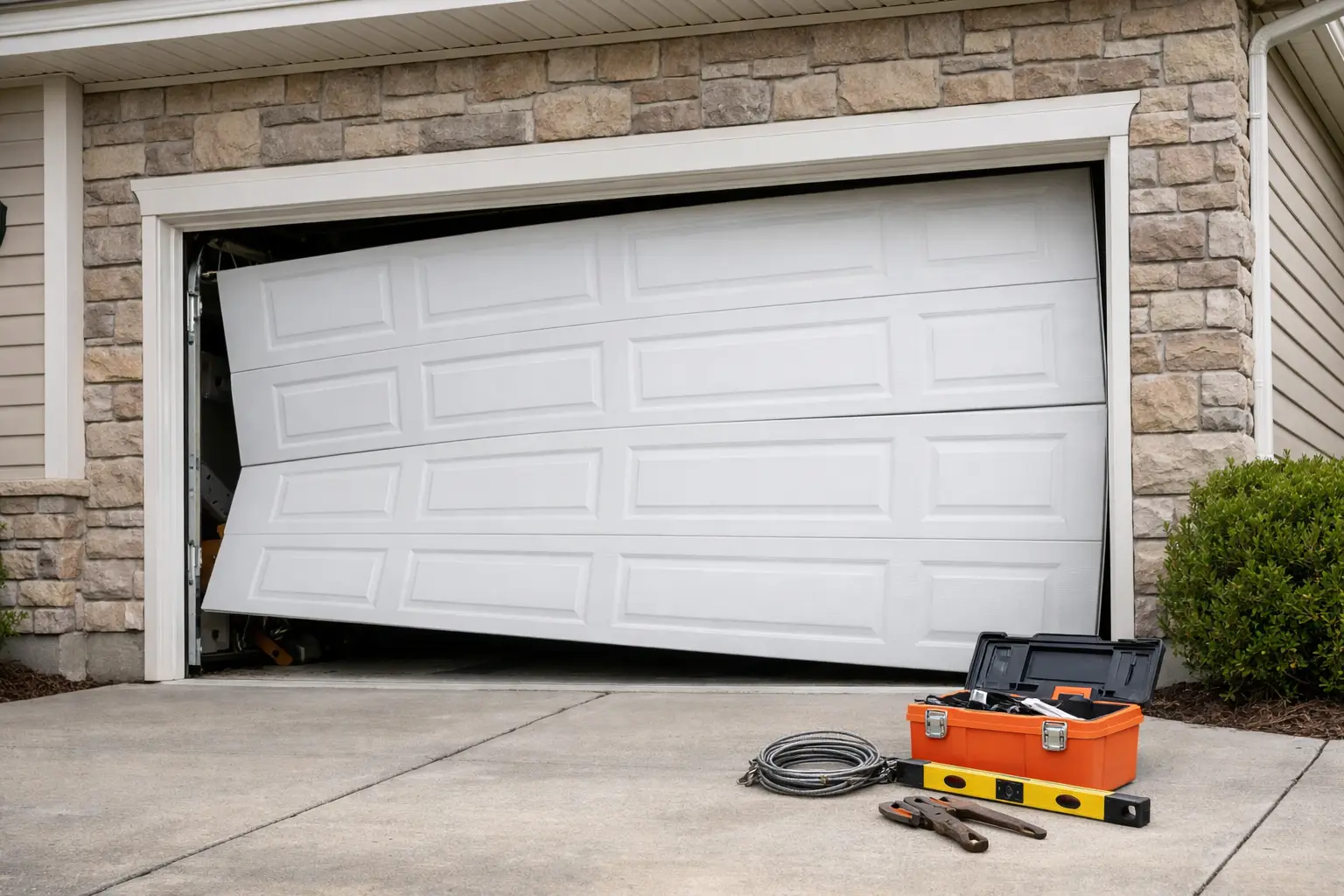
A garage door that hangs lower on one side, leaves an uneven gap at the floor, or looks twisted in the opening is not just a cosmetic problem. If you are asking, “why is my garage door crooked,” the usual answer is that a lifting or guiding part has failed, shifted, or worn out. Continuing to run it can turn a manageable repair into a stuck door, damaged opener, or safety hazard.
For Longmont homeowners, a crooked garage door often shows up at the worst time: when you are leaving for work, getting kids out the door, or trying to secure the house at night. The practical move is to stop using the opener until the cause is checked. A door that is out of level can bind in the tracks, come off a roller, or put dangerous stress on the springs and cables.
Why Is My Garage Door Crooked? Start With the Cables
The most common cause is a loose, frayed, or broken lift cable. Your garage door has cables on both sides that work with the spring system to raise and lower the door evenly. When one cable slips off its drum or breaks, one side may stay near the floor while the other side rises.
You may notice a cable hanging loose near the top of the door, wrapped unevenly around a drum, or lying near the side of the door. The door might also look crooked only when it is partly open. Do not try to pull the cable back into place yourself. Garage door cables are under tension, especially when connected to torsion springs, and a wrong move can cause serious injury.
A cable problem can happen because of age and wear, but it may also point to another issue. A bent track, damaged roller, weak spring, or door that has been hit can make a cable come off. The cable needs to be reset, but the underlying cause needs attention too.
A Broken or Uneven Spring Can Pull the Door Out of Level
Garage door springs carry most of the door’s weight. If one spring breaks or loses tension, the door may lift unevenly or feel much heavier than normal. On a two-spring setup, one broken spring can leave the remaining spring trying to do work it was not designed to handle.
Signs of a spring issue include a loud bang from the garage, a door that only rises a few inches, an opener that strains or hums, and a door that suddenly looks uneven. You may see a visible gap in a torsion spring above the door. Extension springs, which run along the sides or ceiling tracks, can also fail and affect how the door moves.
Springs are not a do-it-yourself repair. They are tightly wound and release a lot of stored force. A professional garage door technician can identify whether the spring is broken, improperly sized, or simply worn out, then make sure the door is balanced after the repair.
Bent Tracks and Bad Rollers Make a Door Bind
The tracks on each side of the opening guide the rollers as the door moves. If a track is bent, loose, misaligned, or blocked, the rollers cannot travel smoothly. That can pull one side of the door ahead of the other and make the whole door appear crooked.
A track may get bent after a vehicle bumps the door, a bike or tool strikes the lower section, or the door binds repeatedly. Even a small bend can create a problem if it catches a roller at the wrong point. Loose mounting brackets can also allow a track to shift away from the wall.
Worn rollers create similar trouble. Nylon rollers can crack, while steel rollers can wear down, rust, or stop turning freely. When one roller drags, pops out, or catches in the track, the door can tilt and shake as it moves. The longer that continues, the more likely it is that a cable will come loose.
A technician can determine whether the track can be safely realigned or whether it needs replacement. Track adjustments need to be precise. Moving a track by guesswork can make the door bind worse.
Damaged Door Sections, Hinges, or Bottom Brackets
Sometimes the garage door itself is the reason it looks crooked. A cracked hinge, bent panel, loose reinforcement strut, or damaged bottom bracket can allow one section to sag or shift. This is especially common on older steel doors, wood doors exposed to moisture, and doors that have been bumped by a car or heavy equipment.
Bottom brackets deserve special caution. They connect the lift cables to the bottom of the door, and they are under spring tension. Never remove or loosen a bottom bracket while the door is closed or the cables are loaded. What looks like a simple loose bolt can become a dangerous repair fast.
If the door is crooked while fully closed but seems to travel normally, inspect it from a distance for obvious panel damage or an uneven floor. An uneven concrete slab can create a visible gap on one side, although it does not usually make the door itself tilt while opening. A properly adjusted bottom seal may help with a minor floor gap, but it will not fix a mechanical alignment issue.
The Opener May Be a Symptom, Not the Cause
Homeowners often blame the opener when the garage door stops moving straight. In most cases, the opener is not the original problem. The opener guides the door from the center, but springs, cables, tracks, and rollers control whether the door stays balanced.
If the door is crooked, do not keep pressing the remote to force it open or closed. An opener can bend its rail, strip gears, or pull the door farther out of the track when it is trying to move an unbalanced load. If the door is safe and fully closed, leave it closed. If it is stuck open, crooked in the tracks, or creating a security problem, arrange service as soon as possible.
What You Can Safely Check Before Calling
You do not need to take the system apart to give a repair technician useful information. With the door closed and the opener left alone, look for visible changes around the door. Check whether one lift cable is loose, whether a roller is out of the track, whether a track is bent, and whether there is an obvious broken spring above the opening.
Listen for what happened just before the problem started. A sharp bang may suggest a broken spring. Grinding or scraping can point to rollers or tracks. A door that began moving unevenly after being hit often has damaged hardware, a shifted track, or a bent section.
Take note of whether the door is fully closed, partly open, or stuck overhead. This helps determine how urgent the situation is. A door hanging crooked overhead should not be walked under, and children and pets should stay clear of the garage until it is secured.
When a Crooked Garage Door Needs Immediate Service
A crooked door needs prompt attention when it is off the track, has a loose cable, will not close, or is stuck open. These conditions can leave your home exposed and can worsen quickly if the door moves again. It also needs quick service if the opener is straining, the door is visibly sagging, or you see a broken spring.
For a minor uneven gap when the door is closed, the urgency may be lower, but it is still worth scheduling an inspection. Gaps let in wind, dirt, moisture, and pests. In Colorado, that can mean a colder garage, more debris inside, and extra wear on the bottom seal.
Repair Bro’s provides garage door repair in Longmont with free estimates, so homeowners can get a clear diagnosis before deciding on a repair or replacement. The right fix depends on what failed. A worn roller is a different job from a snapped cable, and a damaged door section may make replacement a better value than repeated repairs.
A crooked garage door rarely straightens itself out. Leave the door in the safest position you can, avoid touching springs, cables, and bottom brackets, and have a garage door specialist find the cause before one uneven side turns into a door that will not move at all.