
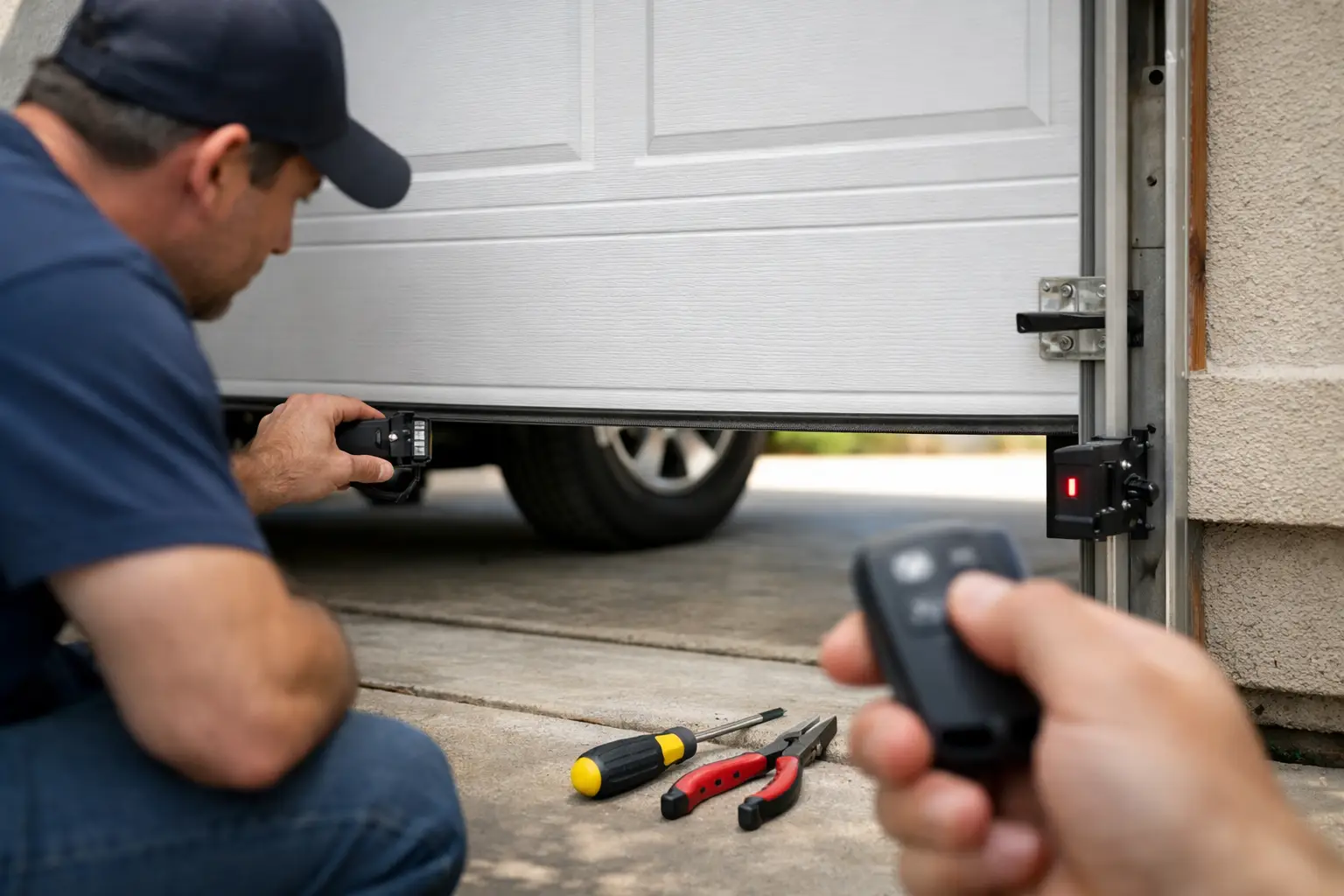
When you are leaving for work, pulling in after dark, or trying to secure a rental property, a garage door that refuses to shut is more than an annoyance. If you are asking, “why won’t garage door close,” the cause may be as simple as a blocked safety sensor or as serious as a damaged cable. The key is knowing which checks are safe to make yourself and when to stop before a small issue becomes a costly repair.
Why Won’t My Garage Door Close?
Modern garage doors rely on several parts working together: the opener, remote or wall button, safety sensors, tracks, rollers, springs, cables, and the door itself. A problem with any one of them can keep the door from closing fully.
Start by watching what the door does. Does it move down a few inches and reverse? Does the opener hum without moving the door? Does the door close only when you hold down the wall button? Those details point to different problems and help a technician diagnose the issue faster.
The safety sensors are blocked or out of alignment
If your garage door starts down and then immediately reverses, the photo-eye safety sensors are the first thing to check. They sit near the floor on each side of the door opening and send an invisible beam across the opening. If the beam is interrupted, the opener assumes something is in the way and will not allow the door to close.
Look for leaves, boxes, tools, cobwebs, mud, or snow around the sensor lenses. Wipe both lenses gently with a soft cloth. Then check whether the sensors are pointing directly at each other. Most units have small indicator lights. A blinking or unlit light often means the sensors are misaligned, dirty, or have a wiring problem.
You can carefully adjust a loose sensor bracket and tighten it, but do not force damaged wiring or try to bypass the sensors. Bypassing a safety device can put people, pets, and vehicles at risk.
Something is in the door’s path
A garden hose, trash bin, bicycle tire, piece of lumber, or even a buildup of ice can stop the door. Clear the opening completely and inspect the threshold. In Longmont, winter moisture can freeze along the bottom seal and make the door stick to the concrete.
Do not keep pressing the opener if the door is frozen in place. Repeated attempts can strain the opener gear, bend a door section, or damage the bottom seal. Carefully remove loose ice around the outside edge if you can do so safely. If the door will not release, it is better to have it inspected than to pull hard on the door or emergency release.
The remote, wall button, or lock setting is the issue
Sometimes the door is fine and the control is not. Replace the remote battery first. If the wall button works but the remote does not, the remote may need to be reprogrammed or replaced.
If neither control works, check whether the opener has power. Make sure it is plugged in, then check the breaker and any GFCI outlet in the garage. Some wall consoles also have a vacation lock feature. When that feature is turned on, remotes may not operate the door even though the opener has power.
A wall button that works only when held down is a strong sign of a sensor problem. The opener may allow you to close the door in constant-contact mode because it is not receiving a clear signal from the safety eyes. Stay with the door and keep the opening in view if you use this temporary method. It is not a long-term fix.
Garage Door Closes Partway Then Reopens
This is one of the most common calls for garage door repair. The issue can be sensor-related, but it can also be caused by the opener’s travel or force settings.
The travel setting tells the opener how far the door should move before it reaches the floor. If it is set incorrectly, the opener may think the door has hit an obstacle and reverse before the door is fully closed. Force settings control how much resistance the opener allows before it stops or reverses.
These settings can drift over time, especially after a power outage, a door replacement, or a change in weather. Still, adjustment is not always the right answer. If the door is binding in the tracks, has worn rollers, or is out of balance, increasing the force can make the problem worse. The opener should not be used to overpower a heavy or sticking door.
Bent tracks, damaged rollers, or an obstruction
Look at the tracks on both sides while the door is fully open or closed. You may see a loose bracket, dented track, worn roller, or debris lodged in the path. A door that shakes, scrapes, moves unevenly, or makes a loud grinding sound may be binding before it reaches the floor.
Avoid hammering on tracks or loosening major track brackets. Garage door tracks are under pressure from the door’s weight and spring system. Small alignment changes can create a bigger issue quickly. A technician can determine whether the track can be adjusted or whether a damaged section needs replacement.
A broken spring or cable problem
If the opener runs but the door barely moves, feels unusually heavy, hangs crooked, or has a visible gap in the spring above the door, stop using it. A broken torsion spring is a common reason a garage door will not close or open correctly.
Cables can also slip off their drums or fray near the bottom brackets. When that happens, the door may become uneven and jam in the tracks. Springs, cables, and bottom brackets are not DIY repair items. They carry high tension and can cause serious injury if handled incorrectly.
Safe Checks You Can Make Before Calling
A quick check can save time, but keep it simple. Confirm the opener has power, replace the remote battery, clear the doorway, clean and align the safety sensors, and look for obvious damage from a safe distance.
If the door is stuck open, do not leave the home unsecured if you can avoid it. Move valuable items away from the garage entrance and avoid trying to force the door down by hand. A crooked door can come off its tracks, and a door with a broken spring can drop unexpectedly.
You should call for service right away if you see a broken spring, loose cable, bent track, cracked door panel, smoke from the opener, or a door that has come off track. Those problems need a proper inspection, not more trial-and-error with the remote.
When the Opener Is the Problem
Not every closing issue is caused by the door hardware. Older openers can develop worn gears, failed circuit boards, stripped drive components, or limit-switch problems. You may hear a clicking sound, a hum, or the motor running without the door moving.
An opener repair can make sense when the unit is otherwise in good shape and has reliable safety features. Replacement may be the better value if the opener is outdated, repeatedly failing, or lacks modern safety and security functions. The right answer depends on the age of the opener, the condition of the door, and the cost of the repair compared with a new unit.
For Longmont homeowners, Repair Bro’s can inspect the full system, explain what is causing the problem, and provide a free estimate before repairs begin. That matters because a door that will not close is often one symptom, not the whole issue.
Keep a Small Problem From Becoming a Stuck Door
Most garage doors give warning signs before they stop working. New squealing, popping, scraping, shaking, slow movement, or an uneven gap under the door are worth addressing early. Lubricating approved moving parts, keeping sensors clean, and scheduling service when the door starts acting differently can prevent an inconvenient failure later.
If your garage door will not close tonight, focus on safety first: clear the sensors, check for an obstruction, and do not touch springs or cables. A quick professional diagnosis can get the door secured and help you avoid being stuck with a bigger repair at the worst possible time.